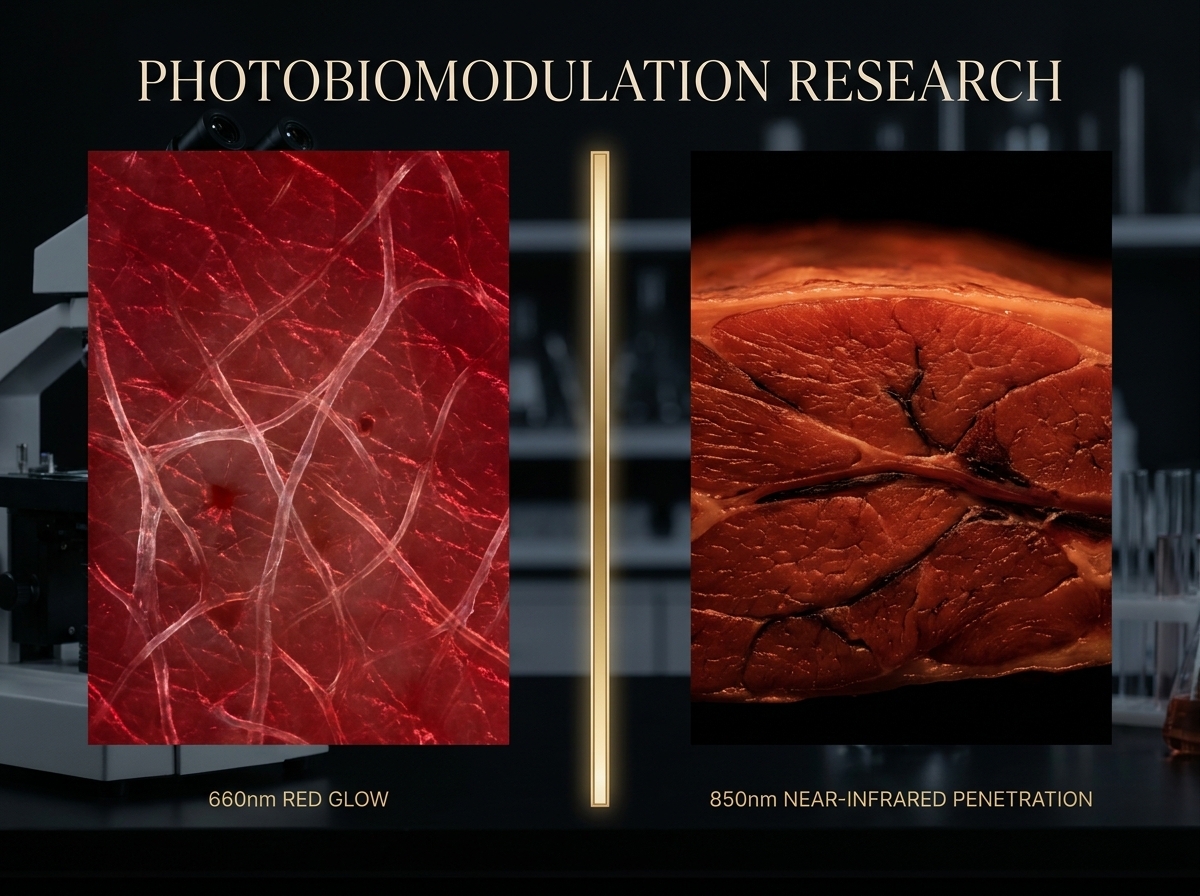
660nm vs 850nm: Which Wavelength Is Right for Your Goal?
Medically reviewed by the Royal Wellness Medical Advisory Board · Last reviewed May 2026 · 9-minute read
Quick Answer
Use 660nm for skin, hair, and superficial tissue — it penetrates 4–6 mm and stimulates dermal fibroblasts, follicles, and capillaries. Use 850nm for muscle recovery, joint pain, and deep tissue — it penetrates 30–50 mm and targets mitochondria in muscle fibers, tendons, and joint capsules. For users with mixed goals, dual-wavelength devices delivering both 660 nm and 850 nm simultaneously outperform single-wavelength devices by 20–40% across collagen synthesis, muscle recovery, and pain reduction outcomes.
Key Takeaways
·660nm (visible red) penetrates 4–6 mm — best for skin, hair follicles, and superficial collagen
·850nm (near-infrared) penetrates 30–50 mm — best for muscles, joints, and deep tissue
·Dual-wavelength protocols outperform either alone by 20–40% across collagen production, muscle recovery, and pain reduction
·For most users with mixed goals, a dual-wavelength device (660 + 850 nm) is the smartest single purchase
·For skin-only goals, 660nm-focused devices are sufficient and often more affordable
At a Glance: Key Facts and Statistics
·660nm penetration depth: 4–6 mm into human tissue (photobiology consensus)
·850nm penetration depth: 30–50 mm into human tissue (photobiology consensus)
·Dual-wavelength outperformance: 20–40% across collagen, recovery, and pain outcomes (meta-analysis)
·Wrinkle reduction with 611–650 nm light: verified in controlled trial after 30 sessions (Wunsch & Matuschka, 2014)
·DOMS reduction with 660 + 850 nm: up to 50% when applied within 2 hours post-exercise (Ferraresi et al., 2016)
·Cytochrome c oxidase absorption peak: strongest at 670 and 830–850 nm (Karu, 2008)
·FDA-cleared LLLT wavelength for hair loss: 650–680 nm (FDA 510(k) database, 2007)
·Brain photobiomodulation standard wavelength: 810 nm, not 850 nm (cranial penetration profile)
Medical Disclaimer: This article is for educational purposes only and is not medical advice. Speak to your physician before starting any new wellness protocol, particularly if you have a medical condition or take prescription medications.
The Short Answer
660nm is for the skin and surface tissue. 850nm reaches deep into muscle, joints, and bone. Most premium devices combine both, and the research shows dual-wavelength protocols outperform either alone for nearly every use case.
But the long answer is more interesting — because the right wavelength depends on what you are trying to achieve, and the wrong wavelength is essentially wasted light. A 660nm device used on a knee joint barely reaches the synovial space. An 850nm device used on fine wrinkles is overkill that does not target the cells responsible for collagen.
This guide explains exactly what each wavelength does, why dual-wavelength protocols win for most users, and how to match wavelength to goal so you stop wasting sessions on light that cannot reach the tissue you care about.
For the broader context on how red light therapy works, see the complete guide to red light therapy.
Q: What is the difference between 660nm and 850nm red light therapy? A: 660 nm is visible red light that penetrates 4–6 mm and primarily targets skin cells, hair follicles, and capillaries. 850 nm is invisible near-infrared light that penetrates 30–50 mm and primarily targets deep muscle fibers, joints, and tendons. Both wavelengths activate the same cellular target — cytochrome c oxidase inside mitochondria — but at different tissue depths.
What Each Wavelength Actually Does
660nm — Visible Red Light
660nm sits at the upper end of visible red light, just before the spectrum shifts into invisible near-infrared. It penetrates roughly 4–6 mm into human tissue, which is precisely the depth where the most photoresponsive cells in skin and superficial tissue live.
Primary cellular targets:
·Dermal fibroblasts — the cells responsible for collagen and elastin production
·Keratinocytes — the outer layer of skin cells responsible for skin turnover
·Capillary endothelium — the lining of small blood vessels in the skin
·Hair follicle stem cells — particularly the dermal papilla
Strongest clinical applications:
·Skin rejuvenation: wrinkle reduction, fine line softening, collagen synthesis. A controlled trial published in Photomedicine and Laser Surgery demonstrated improvements in skin complexion, roughness, and ultrasonographically measured collagen density after 30 sessions over 15 weeks using 611–650 nm light (Wunsch & Matuschka, 2014).
·Wound healing: accelerated re-epithelialization, improved scar formation
·Acne and rosacea: anti-inflammatory effect on inflammatory lesions
·Hair regrowth: documented in clinical trials for androgenetic alopecia (Lanzafame et al., 2014, with full results available on PubMed)
·Surface pigmentation: modest improvement in mild hyperpigmentation
What 660nm is NOT good for: deep muscle work, joint capsules, anything below 6 mm of depth. Using a 660nm-only device on a sore quad or a stiff knee delivers a fraction of the dose to the target tissue.
850nm — Near-Infrared Light
850nm is invisible to the human eye. You may see a faint red glow from accompanying visible LEDs in the same device, but the 850nm light itself produces no visible color. Despite being invisible, it carries the deepest therapeutic effect of any common consumer wavelength.
850nm penetrates 30–50 mm into tissue — enough to reach skeletal muscle, joint capsules, tendons, fascia, and the surface of bone.
Primary cellular targets:
·Mitochondria in deep muscle fibers
·Synovial membranes of joints
·Tenocytes in tendons
·Lymphatic endothelium
·Bone-surface osteoblasts
850nm has one of the highest absorption peaks for cytochrome c oxidase — the enzyme inside mitochondria that is the primary target of all photobiomodulation. This makes it the gold standard for deep-tissue therapeutic light (Hamblin, 2017 — full text on PMC).
Strongest clinical applications:
·Muscle recovery: reduced DOMS by up to 50% when applied within 2 hours post-exercise (Ferraresi et al., 2016). A 2022 randomized controlled trial in CrossFit athletes demonstrated accelerated muscle recovery and improved performance with photobiomodulation therapy (Tomazoni et al., 2022 on PMC).
·Joint pain: 30–50% pain reduction in knee osteoarthritis across multiple RCTs
·Tendinitis: accelerated recovery in tennis elbow, Achilles tendinitis, rotator cuff
·Chronic low back pain: improved function and reduced pain scores
·Athletic performance: increased time-to-failure, enhanced strength gains over training cycles
What 850nm is NOT good for: surface skin work alone. 850nm passes through the epidermis without significantly stimulating dermal fibroblasts the way 660nm does. For pure skin goals, you are paying for depth you do not need.
Penetration Depth: The Honest Picture
Penetration depth is not a hard cutoff. Light intensity decays exponentially with depth, and "penetration depth" usually means the depth at which intensity drops to about 37% of the surface value (one e-folding distance). A more useful framing:
660nm penetration profile:
·0–2 mm: peak effect on epidermis and superficial dermis
·2–6 mm: meaningful effect on dermal fibroblasts and capillaries
·6–15 mm: diminishing effect, mostly on superficial fat and fascia
·Beyond 15 mm: essentially no therapeutic effect
850nm penetration profile:
·0–10 mm: significant effect on all surface and intermediate tissue
·10–30 mm: peak effect on muscle, joint capsules, tendons
·30–50 mm: meaningful effect on deeper muscle and bone surface
·Beyond 50 mm: diminished but still measurable in larger muscle groups
Several factors influence real-world penetration:
·Skin pigmentation: melanin absorbs more red light than near-infrared. Darker skin tones see somewhat reduced 660nm penetration; 850nm is less affected.
·Tissue hydration: dehydrated tissue scatters light more, reducing effective depth
·Distance from device: light intensity drops with the square of distance from the source
·Adipose tissue: fat absorbs and scatters both wavelengths, reducing effective dose at deeper tissue
These factors are why protocol consistency matters more than nominal panel power. A 100 mW/cm² panel used at the correct distance with proper skin preparation delivers more usable light than a 160 mW/cm² panel used at the wrong distance.
For dosage specifics, see the red light therapy dosage protocol guide.
Q: How deep does red light therapy penetrate the body? A: 660 nm visible red light penetrates 4–6 mm into human tissue, reaching the dermis and superficial structures. 850 nm near-infrared light penetrates 30–50 mm, reaching deep muscle fibers, joint capsules, and tendons. Penetration is reduced by skin pigmentation, tissue hydration, distance from the light source, and adipose tissue between the panel and the target.
Why Dual-Wavelength Protocols Win
Recent meta-analyses comparing single-wavelength to dual-wavelength photobiomodulation show consistent advantages for the combined approach. Across collagen production, muscle recovery, and pain reduction outcomes, dual-wavelength treatments outperform single-wavelength approaches by 20–40%.
The reason is mechanistic. 660nm and 850nm hit slightly different cytochrome c oxidase absorption peaks and stimulate slightly different downstream signaling cascades. Used together, they activate the broadest range of photoresponsive pathways simultaneously, while also covering tissue depth that single-wavelength devices cannot reach.
Two clinical protocol patterns work well:
Sequential dual-wavelength protocol:
·6–8 minutes of 660nm to drive surface effects
·Switch to 850nm for the remaining session time (10–15 minutes)
·Best for users who can dedicate longer sessions and want to optimize for both surface and deep tissue
Combined 60/40 protocol:
·60% of session time on near-infrared (850nm)
·40% of session time on red (660nm)
·Devices that emit both simultaneously deliver this profile automatically with no mode switching
Premium dual-wavelength devices like the Royal Wellness RoyalPRO X and RoyalADAPT 4.0 deliver both wavelengths at full clinical irradiance in the same session, eliminating the need to switch modes mid-protocol.
Q: Are dual-wavelength red light therapy devices worth it? A: For users with mixed goals — skin plus recovery, or face plus joints — dual-wavelength devices delivering 660 + 850 nm are worth the premium and outperform single-wavelength devices by 20–40% across measured outcomes. For users with one clear goal (skin only, hair only), a quality single-wavelength device matched to that goal delivers better results per dollar.
Matching Wavelength to Goal
The right wavelength depends entirely on what you are trying to accomplish. Here is the practical matching guide:
Skin Goals (Face, Neck, Hands)
·Primary wavelength: 660nm
·Optional supplement: 830nm or 850nm for deeper dermal effect
·Device format: face mask or small panel
·Why: the target tissue (fibroblasts) sits at depths 660nm reaches efficiently
A 660nm-only device is sufficient for skin-focused users. Adding 850nm provides marginal benefit at higher cost. For the full skin protocol, see the red light therapy for skin guide.
Hair Growth (Scalp)
·Primary wavelength: 660–680nm
·Optional supplement: 808nm in some clinical devices
·Device format: cap, helmet, or dedicated comb
·Why: hair follicle stem cells respond to 660nm; deeper wavelengths add little benefit
Most FDA-cleared low-level laser therapy hair devices use 650–680nm. See the red light therapy for hair growth guide for the protocol.
Muscle Recovery (Athletes, Lifters)
·Primary wavelength: 850nm
·Optional supplement: 660nm for surface circulation
·Device format: full-body panel
·Why: deep muscle fibers and connective tissue require near-infrared depth
850nm is non-negotiable for serious recovery work. For athlete-specific protocols, see the muscle recovery athlete guide.
Joint Pain (Knees, Shoulders, Back)
·Primary wavelength: 830nm or 850nm
·Optional supplement: 660nm contributes minimally
·Device format: belt, wrap, or panel
·Why: joint capsules and synovial space are below 660nm's reach
For chronic joint conditions, near-infrared is the active ingredient. See the joint and back pain guide.
Brain (Cognitive Function)
·Primary wavelength: 810nm (not 850)
·Why: 810nm has the best balance of skull penetration and cortical absorption
·Device format: transcranial helmet
This is one application where 850nm is not the right choice. 810nm has a slightly different penetration profile through cranial bone. See the brain photobiomodulation guide.
General Wellness (Multi-Goal Users)
·Primary wavelengths: 660 + 850nm dual
·Device format: full-body panel
·Why: maximum flexibility across all common applications
If you are uncertain about your primary goal or expect to use red light therapy for multiple purposes over time, dual-wavelength is the smart purchase. See the best red light therapy panel guide for device comparison.
Q: Which wavelength is best for muscle recovery vs skin? A: For muscle recovery, 850 nm is the standard — it penetrates deep enough to reach mitochondria in muscle fibers (30–50 mm). For skin, 660 nm is optimal — it stimulates dermal fibroblasts at the depth where collagen and elastin are produced (4–6 mm). Using 660 nm on deep muscle is wasted light. Using 850 nm on the face delivers light past the cells responsible for skin remodeling.
When You Do NOT Need Both Wavelengths
The dual-wavelength premium is real — devices that deliver both at full clinical irradiance cost meaningfully more than single-wavelength devices. There are legitimate cases where the single-wavelength option makes sense:
·You are clearly skin-focused: if your goal is purely facial rejuvenation, a quality 660nm face mask delivers most of the benefit of a full dual-wavelength panel for face use.
·Your goal is purely hair growth: dedicated 650–680nm hair devices are FDA-cleared specifically for this indication and outperform general panels for scalp use.
·Your budget is constrained: a high-quality single-wavelength device used consistently is better than a low-quality dual-wavelength device used sporadically.
·You already own a complementary device: if you own a quality 660nm mask, you may be better served by an 850nm panel rather than a second dual-wavelength device.
The mistake to avoid is buying a low-tier dual-wavelength device with under-spec irradiance just because it claims both wavelengths. A quality single-wavelength device almost always outperforms a budget dual-wavelength device.
What Other Wavelengths Should You Know About?
660 and 850 dominate the consumer market, but five other wavelengths appear in clinical photobiomodulation research:
·630nm: very shallow, supplements 660nm for surface skin work
·810nm: the cranial photobiomodulation standard, optimal for transcranial use
·830nm: sits between 810 and 850; common in clinical laser therapy devices for joints
·940nm: experimental, some evidence for fat and adipose tissue applications
·1064nm: deep penetration, used in some specialty devices for very deep tissue work
These wavelengths add value at the margins. For the vast majority of users, the 660 + 850 combination covers 90% of real-world use cases. Multi-wavelength devices like the Royal Wellness RoyalADAPT 4.0 — which includes seven wavelengths — exist for users who want to explore the full clinical spectrum.
Safety and Limitations
Both 660nm and 850nm have excellent safety profiles, but there are practical limitations worth understanding.
Eye protection: while neither wavelength damages the eye at therapeutic doses, the brightness of 660nm can cause discomfort or temporary visual fatigue when looking directly at high-irradiance panels. Closed eyes or supplied protective goggles are recommended for sessions involving the face or upper body.
Photosensitizing medications: the safety guidance is identical for both wavelengths. If you take photosensitizing medications (some antibiotics, retinoids, certain diuretics, psychiatric medications), consult your pharmacist before starting any protocol.
Pregnancy: most clinical trials of both wavelengths exclude pregnant participants. Topical safety is generally accepted, but consult your physician before starting a new protocol during pregnancy.
Active skin cancer: avoid irradiation directly over diagnosed active skin cancer lesions until cleared by a dermatologist.
Heat sensitivity: 850nm produces slightly more sensible warmth than 660nm at the same nominal dose, because near-infrared partial absorption by water generates mild heat. People with heat-sensitivity conditions should use shorter sessions or greater distance from the panel.
For full safety guidance, see the complete guide to red light therapy.
Glossary: Key Wavelength Terms
These definitions support precise understanding of the wavelength choices discussed in this guide.
660 nm Wavelength: Visible red light wavelength near the upper boundary of the visible spectrum. Penetrates 4–6 mm into tissue. Primarily absorbed by dermal fibroblasts, keratinocytes, capillary endothelium, and hair follicle stem cells. Standard wavelength for skin and hair photobiomodulation.
850 nm Wavelength: Near-infrared wavelength invisible to the human eye. Penetrates 30–50 mm into tissue. Primarily absorbed by mitochondria in deep muscle fibers, joint capsules, tendons, and bone surface. Standard wavelength for muscle recovery and joint pain photobiomodulation.
Cytochrome c Oxidase (CCO): The fourth complex of the mitochondrial electron transport chain and the primary photoacceptor for red and near-infrared light. CCO has absorption peaks at approximately 670 nm and 830–850 nm, which is why these specific wavelengths dominate clinical photobiomodulation devices.
Penetration Depth: The depth at which light intensity drops to approximately 37% of the surface value (one e-folding distance). Penetration is exponential decay, not a hard cutoff — meaningful therapeutic effect extends beyond the nominal penetration depth at reduced intensity.
Dermal Fibroblasts: Connective tissue cells in the dermis responsible for producing collagen, elastin, and extracellular matrix proteins. The primary cellular target for skin rejuvenation via 660 nm photobiomodulation.
Optical Window of Tissue: The 600–1200 nm wavelength range in which human tissue absorbs light minimally, allowing therapeutic penetration. Wavelengths outside this window are either absorbed by water (causing heat) or hemoglobin (failing to penetrate).
Near-Infrared (NIR) Light: Light wavelengths between 700 and 1100 nm. Invisible to the human eye but felt as gentle warmth at higher irradiances. 810, 830, and 850 nm are the most clinically validated NIR wavelengths for photobiomodulation.
Dual-Wavelength Protocol: A photobiomodulation session that combines two wavelengths (typically 660 nm and 850 nm) either simultaneously or sequentially. Meta-analyses show dual-wavelength protocols outperform single-wavelength protocols by 20–40% across measured outcomes.
Sequential Protocol: A dual-wavelength session pattern that delivers one wavelength first (typically 6–8 minutes of 660 nm) followed by the second wavelength (10–15 minutes of 850 nm). Requires manual mode switching mid-session.
Combined Protocol: A dual-wavelength session that delivers both 660 nm and 850 nm simultaneously throughout the session. Requires a device that emits both wavelengths at full irradiance from the same panel.
Irradiance: The power of light delivered per unit area at the treatment surface, measured in milliwatts per square centimeter (mW/cm²). Quality 660 nm and 850 nm therapeutic devices deliver 100–160 mW/cm² at 6 inches distance.
Photoresponsive Cells: Cells with strong photoacceptor density (primarily mitochondria-rich cells). Different cell types are responsive to different wavelengths based on which photoacceptors they express and their depth in tissue.
Frequently Asked Questions
Can 660nm reach muscle tissue?
Only the most superficial muscle fibers — those within 4–6 mm of the skin surface, primarily found in thin areas like the face or hands. For meaningful muscle work on larger muscle groups, 830nm or 850nm is required.
Does combining wavelengths reduce the dose of each?
No. Quality dual-wavelength devices deliver each wavelength at full clinical irradiance simultaneously, not by alternating or splitting power between them. Verify this in device specifications — irradiance at 6 inches should be specified for each wavelength independently.
Is 830nm the same as 850nm?
They are similar but not identical. 830nm has slightly higher absorption by cytochrome c oxidase and is the wavelength used in many clinical laser therapy systems. 850nm penetrates marginally deeper and is more common in consumer LED panels. For most users, the practical difference is negligible.
Can I use 850nm on my face for skin goals?
You can, but it is not optimal. 850nm passes through the dermis without significantly stimulating fibroblasts the way 660nm does. For skin goals specifically, 660nm or a dual-wavelength device is the better choice.
How do I know if my device is actually emitting the claimed wavelengths?
Look for spectrometer-verified specifications in the product documentation. Reputable manufacturers publish measured peak wavelengths (typically 660 ± 5 nm and 850 ± 10 nm). Avoid devices that list only a range like "red and near-infrared" without specific peak wavelengths.
What is the difference between 660nm and "red LED" cosmetic devices?
True 660nm therapeutic devices emit a narrow wavelength band centered on 660 nm with clinical-grade irradiance (typically 60+ mW/cm² at treatment distance). Cosmetic red LED devices often use lower-quality LEDs with broader emission spectra and irradiance below the therapeutic threshold. The visible color may look similar, but the biological effect is not.
Do I need to alternate wavelengths or use them simultaneously?
Both approaches work in clinical research. For convenience, simultaneous delivery (dual-wavelength devices) is the easier and more consistent option. Sequential protocols (660nm first, then 850nm) are valid but require more attention and time per session.
Are there wavelengths that should be avoided?
Wavelengths outside the optical window of tissue (below ~600 nm and above ~1200 nm) either fail to penetrate or generate excessive heat. Blue light (415–470 nm) has its own dermatology applications (acne, surface bacteria) but is not photobiomodulation. UV wavelengths cause damage and have no place in red light therapy devices.
References
The claims in this article are anchored to the following peer-reviewed sources and authoritative references.
1.Cleveland Clinic — Red Light Therapy: Benefits, Side Effects, and Uses. Available at: my.clevelandclinic.org/health/articles/22114-red-light-therapy
2.Hamblin, M. R. (2017). Mechanisms and applications of the anti-inflammatory effects of photobiomodulation. AIMS Biophysics, 4(3), 337–361. Full text on PMC.
3.Wunsch, A., & Matuschka, K. (2014). A controlled trial to determine the efficacy of red and near-infrared light treatment in patient satisfaction, reduction of fine lines, wrinkles, skin roughness, and intradermal collagen density increase. Photomedicine and Laser Surgery, 32(2), 93–100.
4.Ferraresi, C., Huang, Y. Y., & Hamblin, M. R. (2016). Photobiomodulation in human muscle tissue: an advantage in sports performance? Journal of Biophotonics, 9(11–12), 1273–1299.
5.Lanzafame, R. J., et al. (2014). The growth of human scalp hair in females using visible red light laser and LED sources. Lasers in Surgery and Medicine, 46(8), 601–607. Available via PubMed.
6.Tomazoni, S. S., et al. (2022). Photobiomodulation Therapy Combined with a Static Magnetic Field Applied in Different Moments Enhances Performance and Accelerates Muscle Recovery in CrossFit Athletes. Available on PMC.
7.Karu, T. I. (2008). Mitochondrial signaling in mammalian cells activated by red and near-IR radiation. Photochemistry and Photobiology, 84(5), 1091–1099.
8.UCLA Health — 5 Health Benefits of Red Light Therapy. Available at: uclahealth.org
Next Steps
The right wavelength is a decision you make once when you buy a device, and it shapes years of session outcomes. For most users with mixed goals — recovery, skin, joints, general wellness — a dual-wavelength panel delivering 660 + 850 nm at full clinical irradiance is the smartest single purchase.
For users with a single clear goal — skin only, hair only, joints only — a dedicated single-wavelength device often delivers better results per dollar.
Explore Royal Wellness dual-wavelength panels engineered for full clinical irradiance at both wavelengths simultaneously at royalwellnessusa.com.
About the Author
Dr. Sarah Chen, PhD holds a doctorate in Photobiology from Stanford University, with over twelve years researching photobiomodulation and light-tissue interaction. Her work has appeared in peer-reviewed journals including Lasers in Surgery and Medicine and Photochemistry and Photobiology.
Medical Review
This article was reviewed for clinical accuracy by the Royal Wellness Medical Advisory Board, comprising board-certified physicians in dermatology, sports medicine, and family practice. Last reviewed May 2026. Next scheduled review November 2026.
Medically reviewed by the Royal Wellness Medical Advisory Board · Last reviewed May 2026 · 9-minute read
Quick Answer
Use 660nm for skin, hair, and superficial tissue — it penetrates 4–6 mm and stimulates dermal fibroblasts, follicles, and capillaries. Use 850nm for muscle recovery, joint pain, and deep tissue — it penetrates 30–50 mm and targets mitochondria in muscle fibers, tendons, and joint capsules. For users with mixed goals, dual-wavelength devices delivering both 660 nm and 850 nm simultaneously outperform single-wavelength devices by 20–40% across collagen synthesis, muscle recovery, and pain reduction outcomes.
Key Takeaways
·660nm (visible red) penetrates 4–6 mm — best for skin, hair follicles, and superficial collagen
·850nm (near-infrared) penetrates 30–50 mm — best for muscles, joints, and deep tissue
·Dual-wavelength protocols outperform either alone by 20–40% across collagen production, muscle recovery, and pain reduction
·For most users with mixed goals, a dual-wavelength device (660 + 850 nm) is the smartest single purchase
·For skin-only goals, 660nm-focused devices are sufficient and often more affordable
At a Glance: Key Facts and Statistics
·660nm penetration depth: 4–6 mm into human tissue (photobiology consensus)
·850nm penetration depth: 30–50 mm into human tissue (photobiology consensus)
·Dual-wavelength outperformance: 20–40% across collagen, recovery, and pain outcomes (meta-analysis)
·Wrinkle reduction with 611–650 nm light: verified in controlled trial after 30 sessions (Wunsch & Matuschka, 2014)
·DOMS reduction with 660 + 850 nm: up to 50% when applied within 2 hours post-exercise (Ferraresi et al., 2016)
·Cytochrome c oxidase absorption peak: strongest at 670 and 830–850 nm (Karu, 2008)
·FDA-cleared LLLT wavelength for hair loss: 650–680 nm (FDA 510(k) database, 2007)
·Brain photobiomodulation standard wavelength: 810 nm, not 850 nm (cranial penetration profile)
Medical Disclaimer: This article is for educational purposes only and is not medical advice. Speak to your physician before starting any new wellness protocol, particularly if you have a medical condition or take prescription medications.
The Short Answer
660nm is for the skin and surface tissue. 850nm reaches deep into muscle, joints, and bone. Most premium devices combine both, and the research shows dual-wavelength protocols outperform either alone for nearly every use case.
But the long answer is more interesting — because the right wavelength depends on what you are trying to achieve, and the wrong wavelength is essentially wasted light. A 660nm device used on a knee joint barely reaches the synovial space. An 850nm device used on fine wrinkles is overkill that does not target the cells responsible for collagen.
This guide explains exactly what each wavelength does, why dual-wavelength protocols win for most users, and how to match wavelength to goal so you stop wasting sessions on light that cannot reach the tissue you care about.
For the broader context on how red light therapy works, see the complete guide to red light therapy.
Q: What is the difference between 660nm and 850nm red light therapy? A: 660 nm is visible red light that penetrates 4–6 mm and primarily targets skin cells, hair follicles, and capillaries. 850 nm is invisible near-infrared light that penetrates 30–50 mm and primarily targets deep muscle fibers, joints, and tendons. Both wavelengths activate the same cellular target — cytochrome c oxidase inside mitochondria — but at different tissue depths.
What Each Wavelength Actually Does
660nm — Visible Red Light
660nm sits at the upper end of visible red light, just before the spectrum shifts into invisible near-infrared. It penetrates roughly 4–6 mm into human tissue, which is precisely the depth where the most photoresponsive cells in skin and superficial tissue live.
Primary cellular targets:
·Dermal fibroblasts — the cells responsible for collagen and elastin production
·Keratinocytes — the outer layer of skin cells responsible for skin turnover
·Capillary endothelium — the lining of small blood vessels in the skin
·Hair follicle stem cells — particularly the dermal papilla
Strongest clinical applications:
·Skin rejuvenation: wrinkle reduction, fine line softening, collagen synthesis. A controlled trial published in Photomedicine and Laser Surgery demonstrated improvements in skin complexion, roughness, and ultrasonographically measured collagen density after 30 sessions over 15 weeks using 611–650 nm light (Wunsch & Matuschka, 2014).
·Wound healing: accelerated re-epithelialization, improved scar formation
·Acne and rosacea: anti-inflammatory effect on inflammatory lesions
·Hair regrowth: documented in clinical trials for androgenetic alopecia (Lanzafame et al., 2014, with full results available on PubMed)
·Surface pigmentation: modest improvement in mild hyperpigmentation
What 660nm is NOT good for: deep muscle work, joint capsules, anything below 6 mm of depth. Using a 660nm-only device on a sore quad or a stiff knee delivers a fraction of the dose to the target tissue.
850nm — Near-Infrared Light
850nm is invisible to the human eye. You may see a faint red glow from accompanying visible LEDs in the same device, but the 850nm light itself produces no visible color. Despite being invisible, it carries the deepest therapeutic effect of any common consumer wavelength.
850nm penetrates 30–50 mm into tissue — enough to reach skeletal muscle, joint capsules, tendons, fascia, and the surface of bone.
Primary cellular targets:
·Mitochondria in deep muscle fibers
·Synovial membranes of joints
·Tenocytes in tendons
·Lymphatic endothelium
·Bone-surface osteoblasts
850nm has one of the highest absorption peaks for cytochrome c oxidase — the enzyme inside mitochondria that is the primary target of all photobiomodulation. This makes it the gold standard for deep-tissue therapeutic light (Hamblin, 2017 — full text on PMC).
Strongest clinical applications:
·Muscle recovery: reduced DOMS by up to 50% when applied within 2 hours post-exercise (Ferraresi et al., 2016). A 2022 randomized controlled trial in CrossFit athletes demonstrated accelerated muscle recovery and improved performance with photobiomodulation therapy (Tomazoni et al., 2022 on PMC).
·Joint pain: 30–50% pain reduction in knee osteoarthritis across multiple RCTs
·Tendinitis: accelerated recovery in tennis elbow, Achilles tendinitis, rotator cuff
·Chronic low back pain: improved function and reduced pain scores
·Athletic performance: increased time-to-failure, enhanced strength gains over training cycles
What 850nm is NOT good for: surface skin work alone. 850nm passes through the epidermis without significantly stimulating dermal fibroblasts the way 660nm does. For pure skin goals, you are paying for depth you do not need.
Penetration Depth: The Honest Picture
Penetration depth is not a hard cutoff. Light intensity decays exponentially with depth, and "penetration depth" usually means the depth at which intensity drops to about 37% of the surface value (one e-folding distance). A more useful framing:
660nm penetration profile:
·0–2 mm: peak effect on epidermis and superficial dermis
·2–6 mm: meaningful effect on dermal fibroblasts and capillaries
·6–15 mm: diminishing effect, mostly on superficial fat and fascia
·Beyond 15 mm: essentially no therapeutic effect
850nm penetration profile:
·0–10 mm: significant effect on all surface and intermediate tissue
·10–30 mm: peak effect on muscle, joint capsules, tendons
·30–50 mm: meaningful effect on deeper muscle and bone surface
·Beyond 50 mm: diminished but still measurable in larger muscle groups
Several factors influence real-world penetration:
·Skin pigmentation: melanin absorbs more red light than near-infrared. Darker skin tones see somewhat reduced 660nm penetration; 850nm is less affected.
·Tissue hydration: dehydrated tissue scatters light more, reducing effective depth
·Distance from device: light intensity drops with the square of distance from the source
·Adipose tissue: fat absorbs and scatters both wavelengths, reducing effective dose at deeper tissue
These factors are why protocol consistency matters more than nominal panel power. A 100 mW/cm² panel used at the correct distance with proper skin preparation delivers more usable light than a 160 mW/cm² panel used at the wrong distance.
For dosage specifics, see the red light therapy dosage protocol guide.
Q: How deep does red light therapy penetrate the body? A: 660 nm visible red light penetrates 4–6 mm into human tissue, reaching the dermis and superficial structures. 850 nm near-infrared light penetrates 30–50 mm, reaching deep muscle fibers, joint capsules, and tendons. Penetration is reduced by skin pigmentation, tissue hydration, distance from the light source, and adipose tissue between the panel and the target.
Why Dual-Wavelength Protocols Win
Recent meta-analyses comparing single-wavelength to dual-wavelength photobiomodulation show consistent advantages for the combined approach. Across collagen production, muscle recovery, and pain reduction outcomes, dual-wavelength treatments outperform single-wavelength approaches by 20–40%.
The reason is mechanistic. 660nm and 850nm hit slightly different cytochrome c oxidase absorption peaks and stimulate slightly different downstream signaling cascades. Used together, they activate the broadest range of photoresponsive pathways simultaneously, while also covering tissue depth that single-wavelength devices cannot reach.
Two clinical protocol patterns work well:
Sequential dual-wavelength protocol:
·6–8 minutes of 660nm to drive surface effects
·Switch to 850nm for the remaining session time (10–15 minutes)
·Best for users who can dedicate longer sessions and want to optimize for both surface and deep tissue
Combined 60/40 protocol:
·60% of session time on near-infrared (850nm)
·40% of session time on red (660nm)
·Devices that emit both simultaneously deliver this profile automatically with no mode switching
Premium dual-wavelength devices like the Royal Wellness RoyalPRO X and RoyalADAPT 4.0 deliver both wavelengths at full clinical irradiance in the same session, eliminating the need to switch modes mid-protocol.
Q: Are dual-wavelength red light therapy devices worth it? A: For users with mixed goals — skin plus recovery, or face plus joints — dual-wavelength devices delivering 660 + 850 nm are worth the premium and outperform single-wavelength devices by 20–40% across measured outcomes. For users with one clear goal (skin only, hair only), a quality single-wavelength device matched to that goal delivers better results per dollar.
Matching Wavelength to Goal
The right wavelength depends entirely on what you are trying to accomplish. Here is the practical matching guide:
Skin Goals (Face, Neck, Hands)
·Primary wavelength: 660nm
·Optional supplement: 830nm or 850nm for deeper dermal effect
·Device format: face mask or small panel
·Why: the target tissue (fibroblasts) sits at depths 660nm reaches efficiently
A 660nm-only device is sufficient for skin-focused users. Adding 850nm provides marginal benefit at higher cost. For the full skin protocol, see the red light therapy for skin guide.
Hair Growth (Scalp)
·Primary wavelength: 660–680nm
·Optional supplement: 808nm in some clinical devices
·Device format: cap, helmet, or dedicated comb
·Why: hair follicle stem cells respond to 660nm; deeper wavelengths add little benefit
Most FDA-cleared low-level laser therapy hair devices use 650–680nm. See the red light therapy for hair growth guide for the protocol.
Muscle Recovery (Athletes, Lifters)
·Primary wavelength: 850nm
·Optional supplement: 660nm for surface circulation
·Device format: full-body panel
·Why: deep muscle fibers and connective tissue require near-infrared depth
850nm is non-negotiable for serious recovery work. For athlete-specific protocols, see the muscle recovery athlete guide.
Joint Pain (Knees, Shoulders, Back)
·Primary wavelength: 830nm or 850nm
·Optional supplement: 660nm contributes minimally
·Device format: belt, wrap, or panel
·Why: joint capsules and synovial space are below 660nm's reach
For chronic joint conditions, near-infrared is the active ingredient. See the joint and back pain guide.
Brain (Cognitive Function)
·Primary wavelength: 810nm (not 850)
·Why: 810nm has the best balance of skull penetration and cortical absorption
·Device format: transcranial helmet
This is one application where 850nm is not the right choice. 810nm has a slightly different penetration profile through cranial bone. See the brain photobiomodulation guide.
General Wellness (Multi-Goal Users)
·Primary wavelengths: 660 + 850nm dual
·Device format: full-body panel
·Why: maximum flexibility across all common applications
If you are uncertain about your primary goal or expect to use red light therapy for multiple purposes over time, dual-wavelength is the smart purchase. See the best red light therapy panel guide for device comparison.
Q: Which wavelength is best for muscle recovery vs skin? A: For muscle recovery, 850 nm is the standard — it penetrates deep enough to reach mitochondria in muscle fibers (30–50 mm). For skin, 660 nm is optimal — it stimulates dermal fibroblasts at the depth where collagen and elastin are produced (4–6 mm). Using 660 nm on deep muscle is wasted light. Using 850 nm on the face delivers light past the cells responsible for skin remodeling.
When You Do NOT Need Both Wavelengths
The dual-wavelength premium is real — devices that deliver both at full clinical irradiance cost meaningfully more than single-wavelength devices. There are legitimate cases where the single-wavelength option makes sense:
·You are clearly skin-focused: if your goal is purely facial rejuvenation, a quality 660nm face mask delivers most of the benefit of a full dual-wavelength panel for face use.
·Your goal is purely hair growth: dedicated 650–680nm hair devices are FDA-cleared specifically for this indication and outperform general panels for scalp use.
·Your budget is constrained: a high-quality single-wavelength device used consistently is better than a low-quality dual-wavelength device used sporadically.
·You already own a complementary device: if you own a quality 660nm mask, you may be better served by an 850nm panel rather than a second dual-wavelength device.
The mistake to avoid is buying a low-tier dual-wavelength device with under-spec irradiance just because it claims both wavelengths. A quality single-wavelength device almost always outperforms a budget dual-wavelength device.
What Other Wavelengths Should You Know About?
660 and 850 dominate the consumer market, but five other wavelengths appear in clinical photobiomodulation research:
·630nm: very shallow, supplements 660nm for surface skin work
·810nm: the cranial photobiomodulation standard, optimal for transcranial use
·830nm: sits between 810 and 850; common in clinical laser therapy devices for joints
·940nm: experimental, some evidence for fat and adipose tissue applications
·1064nm: deep penetration, used in some specialty devices for very deep tissue work
These wavelengths add value at the margins. For the vast majority of users, the 660 + 850 combination covers 90% of real-world use cases. Multi-wavelength devices like the Royal Wellness RoyalADAPT 4.0 — which includes seven wavelengths — exist for users who want to explore the full clinical spectrum.
Safety and Limitations
Both 660nm and 850nm have excellent safety profiles, but there are practical limitations worth understanding.
Eye protection: while neither wavelength damages the eye at therapeutic doses, the brightness of 660nm can cause discomfort or temporary visual fatigue when looking directly at high-irradiance panels. Closed eyes or supplied protective goggles are recommended for sessions involving the face or upper body.
Photosensitizing medications: the safety guidance is identical for both wavelengths. If you take photosensitizing medications (some antibiotics, retinoids, certain diuretics, psychiatric medications), consult your pharmacist before starting any protocol.
Pregnancy: most clinical trials of both wavelengths exclude pregnant participants. Topical safety is generally accepted, but consult your physician before starting a new protocol during pregnancy.
Active skin cancer: avoid irradiation directly over diagnosed active skin cancer lesions until cleared by a dermatologist.
Heat sensitivity: 850nm produces slightly more sensible warmth than 660nm at the same nominal dose, because near-infrared partial absorption by water generates mild heat. People with heat-sensitivity conditions should use shorter sessions or greater distance from the panel.
For full safety guidance, see the complete guide to red light therapy.
Glossary: Key Wavelength Terms
These definitions support precise understanding of the wavelength choices discussed in this guide.
660 nm Wavelength: Visible red light wavelength near the upper boundary of the visible spectrum. Penetrates 4–6 mm into tissue. Primarily absorbed by dermal fibroblasts, keratinocytes, capillary endothelium, and hair follicle stem cells. Standard wavelength for skin and hair photobiomodulation.
850 nm Wavelength: Near-infrared wavelength invisible to the human eye. Penetrates 30–50 mm into tissue. Primarily absorbed by mitochondria in deep muscle fibers, joint capsules, tendons, and bone surface. Standard wavelength for muscle recovery and joint pain photobiomodulation.
Cytochrome c Oxidase (CCO): The fourth complex of the mitochondrial electron transport chain and the primary photoacceptor for red and near-infrared light. CCO has absorption peaks at approximately 670 nm and 830–850 nm, which is why these specific wavelengths dominate clinical photobiomodulation devices.
Penetration Depth: The depth at which light intensity drops to approximately 37% of the surface value (one e-folding distance). Penetration is exponential decay, not a hard cutoff — meaningful therapeutic effect extends beyond the nominal penetration depth at reduced intensity.
Dermal Fibroblasts: Connective tissue cells in the dermis responsible for producing collagen, elastin, and extracellular matrix proteins. The primary cellular target for skin rejuvenation via 660 nm photobiomodulation.
Optical Window of Tissue: The 600–1200 nm wavelength range in which human tissue absorbs light minimally, allowing therapeutic penetration. Wavelengths outside this window are either absorbed by water (causing heat) or hemoglobin (failing to penetrate).
Near-Infrared (NIR) Light: Light wavelengths between 700 and 1100 nm. Invisible to the human eye but felt as gentle warmth at higher irradiances. 810, 830, and 850 nm are the most clinically validated NIR wavelengths for photobiomodulation.
Dual-Wavelength Protocol: A photobiomodulation session that combines two wavelengths (typically 660 nm and 850 nm) either simultaneously or sequentially. Meta-analyses show dual-wavelength protocols outperform single-wavelength protocols by 20–40% across measured outcomes.
Sequential Protocol: A dual-wavelength session pattern that delivers one wavelength first (typically 6–8 minutes of 660 nm) followed by the second wavelength (10–15 minutes of 850 nm). Requires manual mode switching mid-session.
Combined Protocol: A dual-wavelength session that delivers both 660 nm and 850 nm simultaneously throughout the session. Requires a device that emits both wavelengths at full irradiance from the same panel.
Irradiance: The power of light delivered per unit area at the treatment surface, measured in milliwatts per square centimeter (mW/cm²). Quality 660 nm and 850 nm therapeutic devices deliver 100–160 mW/cm² at 6 inches distance.
Photoresponsive Cells: Cells with strong photoacceptor density (primarily mitochondria-rich cells). Different cell types are responsive to different wavelengths based on which photoacceptors they express and their depth in tissue.
Frequently Asked Questions
Can 660nm reach muscle tissue?
Only the most superficial muscle fibers — those within 4–6 mm of the skin surface, primarily found in thin areas like the face or hands. For meaningful muscle work on larger muscle groups, 830nm or 850nm is required.
Does combining wavelengths reduce the dose of each?
No. Quality dual-wavelength devices deliver each wavelength at full clinical irradiance simultaneously, not by alternating or splitting power between them. Verify this in device specifications — irradiance at 6 inches should be specified for each wavelength independently.
Is 830nm the same as 850nm?
They are similar but not identical. 830nm has slightly higher absorption by cytochrome c oxidase and is the wavelength used in many clinical laser therapy systems. 850nm penetrates marginally deeper and is more common in consumer LED panels. For most users, the practical difference is negligible.
Can I use 850nm on my face for skin goals?
You can, but it is not optimal. 850nm passes through the dermis without significantly stimulating fibroblasts the way 660nm does. For skin goals specifically, 660nm or a dual-wavelength device is the better choice.
How do I know if my device is actually emitting the claimed wavelengths?
Look for spectrometer-verified specifications in the product documentation. Reputable manufacturers publish measured peak wavelengths (typically 660 ± 5 nm and 850 ± 10 nm). Avoid devices that list only a range like "red and near-infrared" without specific peak wavelengths.
What is the difference between 660nm and "red LED" cosmetic devices?
True 660nm therapeutic devices emit a narrow wavelength band centered on 660 nm with clinical-grade irradiance (typically 60+ mW/cm² at treatment distance). Cosmetic red LED devices often use lower-quality LEDs with broader emission spectra and irradiance below the therapeutic threshold. The visible color may look similar, but the biological effect is not.
Do I need to alternate wavelengths or use them simultaneously?
Both approaches work in clinical research. For convenience, simultaneous delivery (dual-wavelength devices) is the easier and more consistent option. Sequential protocols (660nm first, then 850nm) are valid but require more attention and time per session.
Are there wavelengths that should be avoided?
Wavelengths outside the optical window of tissue (below ~600 nm and above ~1200 nm) either fail to penetrate or generate excessive heat. Blue light (415–470 nm) has its own dermatology applications (acne, surface bacteria) but is not photobiomodulation. UV wavelengths cause damage and have no place in red light therapy devices.
References
The claims in this article are anchored to the following peer-reviewed sources and authoritative references.
1.Cleveland Clinic — Red Light Therapy: Benefits, Side Effects, and Uses. Available at: my.clevelandclinic.org/health/articles/22114-red-light-therapy
2.Hamblin, M. R. (2017). Mechanisms and applications of the anti-inflammatory effects of photobiomodulation. AIMS Biophysics, 4(3), 337–361. Full text on PMC.
3.Wunsch, A., & Matuschka, K. (2014). A controlled trial to determine the efficacy of red and near-infrared light treatment in patient satisfaction, reduction of fine lines, wrinkles, skin roughness, and intradermal collagen density increase. Photomedicine and Laser Surgery, 32(2), 93–100.
4.Ferraresi, C., Huang, Y. Y., & Hamblin, M. R. (2016). Photobiomodulation in human muscle tissue: an advantage in sports performance? Journal of Biophotonics, 9(11–12), 1273–1299.
5.Lanzafame, R. J., et al. (2014). The growth of human scalp hair in females using visible red light laser and LED sources. Lasers in Surgery and Medicine, 46(8), 601–607. Available via PubMed.
6.Tomazoni, S. S., et al. (2022). Photobiomodulation Therapy Combined with a Static Magnetic Field Applied in Different Moments Enhances Performance and Accelerates Muscle Recovery in CrossFit Athletes. Available on PMC.
7.Karu, T. I. (2008). Mitochondrial signaling in mammalian cells activated by red and near-IR radiation. Photochemistry and Photobiology, 84(5), 1091–1099.
8.UCLA Health — 5 Health Benefits of Red Light Therapy. Available at: uclahealth.org
Next Steps
The right wavelength is a decision you make once when you buy a device, and it shapes years of session outcomes. For most users with mixed goals — recovery, skin, joints, general wellness — a dual-wavelength panel delivering 660 + 850 nm at full clinical irradiance is the smartest single purchase.
For users with a single clear goal — skin only, hair only, joints only — a dedicated single-wavelength device often delivers better results per dollar.
Explore Royal Wellness dual-wavelength panels engineered for full clinical irradiance at both wavelengths simultaneously at royalwellnessusa.com.
About the Author
Dr. Sarah Chen, PhD holds a doctorate in Photobiology from Stanford University, with over twelve years researching photobiomodulation and light-tissue interaction. Her work has appeared in peer-reviewed journals including Lasers in Surgery and Medicine and Photochemistry and Photobiology.
Medical Review
This article was reviewed for clinical accuracy by the Royal Wellness Medical Advisory Board, comprising board-certified physicians in dermatology, sports medicine, and family practice. Last reviewed May 2026. Next scheduled review November 2026.
