Red Light Therapy Before and After: Realistic Timelines by Goal
Red light therapy before and after: honest week-by-week timelines for skin, wrinkles, recovery, joint pain, and sleep, plus why photos mislead.
You have seen the photos: a tired, lined face on the left, a glowing one on the right, captioned “8 weeks of red light therapy.” So what does a real red light therapy before and after actually look like, and how long does it honestly take? The uncomfortable truth is that the timeline depends entirely on your goal, most genuine change is gradual and modest rather than dramatic, and a large share of the jaw-dropping side-by-sides online are doing more with lighting than with light.
This guide is the honest version. It walks through what changes, and roughly when, for the four goals people actually buy these devices for: skin and wrinkles, muscle recovery, joint pain, and sleep. Each goal gets its own week-by-week timeline, grounded in what controlled trials measured rather than what ads promise. It also explains why before-and-after pictures, including the ones all over Reddit, are such a poor guide to your own results, and what a trustworthy comparison would actually require. If you would rather map your goal to a device first, the quiz takes about two minutes.
What a real red light therapy before and after looks like
Genuine before-and-after change from red light therapy is cumulative and modest, and it arrives on completely different timelines depending on whether you are treating skin, muscle, joints, or sleep. The mechanism is the same in every case: red and near-infrared photons are absorbed by mitochondria, nudging cells toward more efficient energy production and a calmer inflammatory state, a cascade described in Michael Hamblin’s widely cited mechanism review (Hamblin, 2017) and explained further on the science page. But the tissue you are acting on decides how fast a visible or felt result shows up.
Red and near-infrared photons are absorbed by mitochondria, nudging cells toward more efficient energy production and a calmer inflammatory state.
Soreness and recovery are fast because they ride on short-term inflammation and blood-flow changes. Joint comfort is medium-paced. Skin is slow, because building collagen is a structural remodeling job measured in months. Sleep is the wildcard, with the thinnest and most mixed evidence of the four. Set your expectations to the correct clock for your goal and you will not feel cheated at week two, and you will not quit right before the window where change actually shows up.
One rule cuts across all four goals: the biggest driver of any before-and-after is consistency at a sensible dose, not the size or price of the hardware. And because the dose response is biphasic, longer and brighter is not automatically better (Hamblin, 2017). A modest full-body panel used four or five times a week will out-produce a flagship device you use twice a month.
Why before-and-after photos online mislead you
Most dramatic before-and-after photos are uncontrolled, which means lighting, angle, camera, and marketing incentives can manufacture a “result” the skin never actually gained. This is the single most important thing to understand before you spend money based on a picture. In the controlled skin trials that found real improvement, researchers did not rely on eyeballing photos; they used objective instruments like profilometry to measure roughness and ultrasound to measure collagen density, precisely because photos are so easy to flatter (Wunsch & Matuschka, 2014).
A red light therapy before-and-after is the dramatic, overnight transformation that marketing photos imply.
Most genuine change is gradual and modest rather than dramatic, and a large share of the jaw-dropping side-by-sides online are doing more with lighting than with light.
Here is what a marketing “before” and “after” can quietly change without any treatment happening at all:
- Lighting direction. Harsh, raking side light throws every fine line into shadow; soft, even, frontal light erases them. Shoot the “before” with the first and the “after” with the second and you have an instant transformation.
- Skin prep. A dry, un-moisturized “before” versus a freshly hydrated, primed “after” changes how light reflects off the skin.
- Angle, expression, and camera. A slight chin tilt, a relaxed brow, a different lens or phone, or a beauty-mode filter all shift the apparent result.
- Time of day and puffiness. Morning face and evening face differ; so does a face before and after a workout or a salty meal.
What about red light therapy before and after on Reddit?
Reddit threads are more honest than ads in one way: nobody is being paid, and you will find plenty of “I noticed nothing” posts alongside the enthusiastic ones. But the photos are still uncontrolled anecdotes. There is no standardized camera, lighting, timeframe, skincare routine, or dose, and posters naturally share their best-looking frame. Read Reddit for realistic expectation-setting and candid complaints about specific devices, not as proof that a given result is typical. The plural of anecdote is not data, and a single before-and-after pair, whether it comes from a brand or a stranger, tells you almost nothing about what you personally will get.
The trustworthy takeaway: judge red light therapy by what randomized, instrument-measured trials found, then track your own progress with disciplined photos (more on that below). Our realistic collagen results guide digs deeper into how the strongest skin studies were actually run.
Skin and wrinkles: the before-and-after timeline
For skin and wrinkles, meaningful before-and-after change took most controlled trials 8 to 15 weeks of sessions two to five times per week, and the improvements were modest refinements, not a facelift. In the pivotal randomized controlled trial, volunteers treated roughly twice weekly over about 15 weeks showed statistically significant gains in intradermal collagen density (measured by ultrasound) and reductions in roughness and fine lines versus untreated controls (Wunsch & Matuschka, 2014). A split-face study reported objective wrinkle reductions of up to 36% and elasticity gains after twice-weekly sessions (Lee et al., 2007), and a focused periocular trial found roughly a 30% reduction in wrinkle volume around the eyes (Mota et al., 2023).
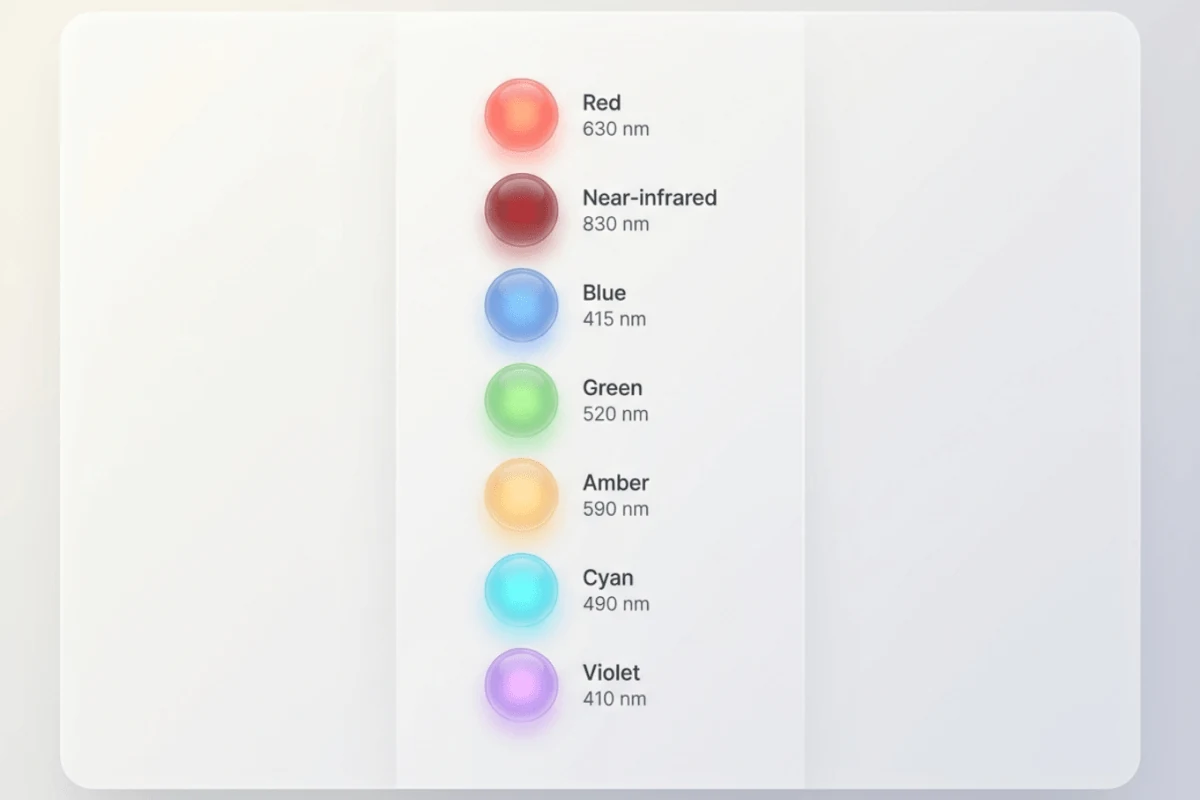
Here is the honest week-by-week picture for facial skin, assuming consistent use of a device with validated red (around 630 to 660 nm) and near-infrared (around 830 to 850 nm) wavelengths.
| Timeframe | Realistic before to after (skin & wrinkles) | What consistency looks like |
|---|---|---|
| Week 1-2 | Little to no visible change; some people say skin feels smoother or looks slightly brighter | 5-10 min sessions, 4-5x/week |
| Week 3-6 | Early softening of fine lines and more even tone for consistent users | Same cadence, bare clean skin |
| Week 8-12 | The window where controlled trials measured real change in wrinkles, roughness, and firmness | Sustained 2-5x/week |
| Week 12+ | Continued gradual improvement, then a plateau that requires ongoing maintenance | Keep a maintenance schedule |
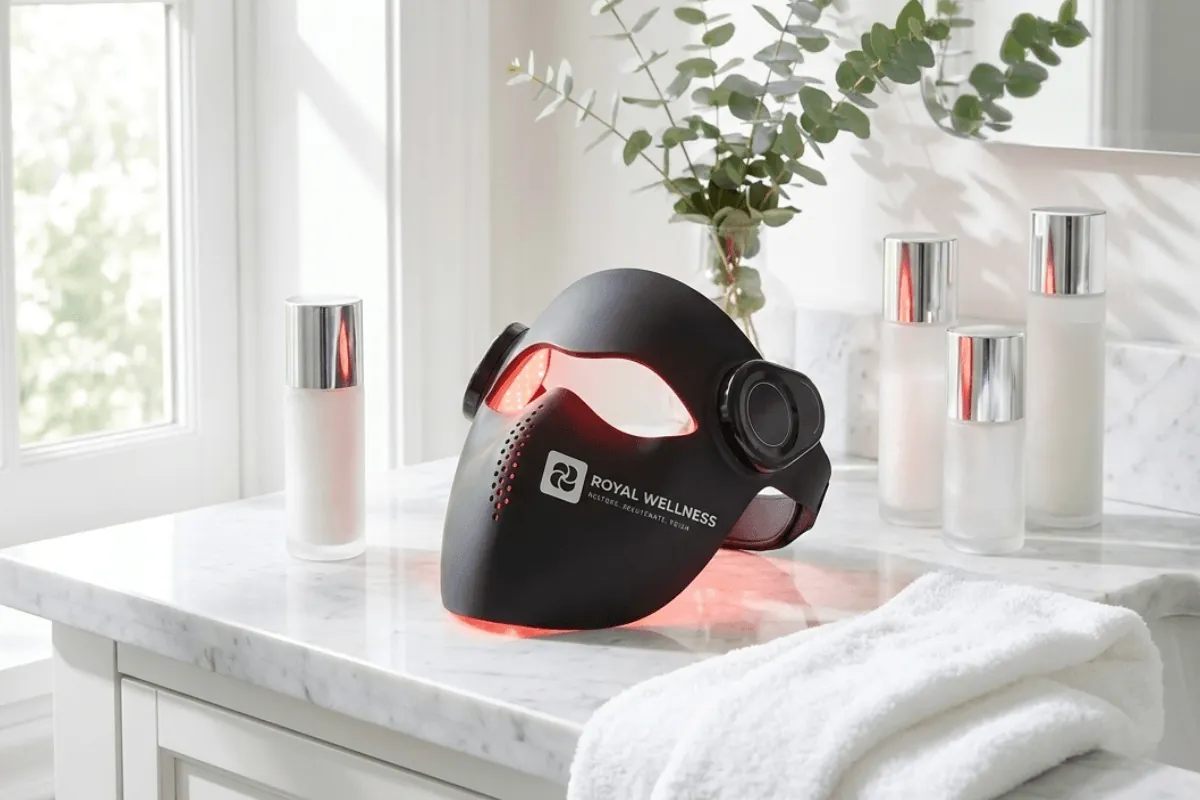
Two honest caveats. First, effect sizes are real but modest; a 30% reduction in a fine wrinkle’s measured volume is meaningful under an instrument, but it is not the near-total smoothing an ad implies. Second, results are maintained, not permanent: because collagen turns over continuously, stopping lets gains fade over months. A red light mask is popular for facial goals because it conforms to the face and makes daily consistency easy; if you are weighing a mask against a panel, our best red light therapy mask guide breaks down what actually matters.
Red light therapy mask before and after, specifically
Mask-format evidence is directly relevant here. A three-month study of a red LED mask used twice weekly reported reduced crow’s-feet wrinkle depth, higher dermal density and elasticity, and lower roughness, with benefits persisting for several weeks after sessions ended (Couturaud et al., 2023). It was a smaller study without a placebo arm, so weigh it accordingly, but it shows the mask before-and-after runs on the same slow, months-long clock as panels. The form factor changes convenience and coverage, not the timeline.
Muscle recovery: the before-and-after timeline
Recovery is the fastest before-and-after of the four goals, often measured over a single 24-to-96-hour window around a workout rather than over weeks. A meta-analysis of phototherapy for exercise found improvements in recovery markers and performance when light was applied around training (Leal-Junior et al., 2015), and a later meta-analysis confirmed reduced muscular fatigue and better performance in healthy people (Vanin et al., 2018). For delayed-onset muscle soreness specifically, a systematic review and meta-analysis found low-level phototherapy reduced soreness compared with placebo (Nampo et al., 2016). The broader muscle-tissue literature attributes these effects to less oxidative stress, lower inflammation, and quicker functional recovery (Ferraresi et al., 2016).
So the “before and after” for recovery is not a photo; it is how you feel the next morning and how quickly you are ready to train again.
| Timeframe | Realistic before to after (recovery & soreness) | What consistency looks like |
|---|---|---|
| Same session (0-2 hrs) | Warm, worked muscles; light applied before or after the session | 5-15 min per major muscle group |
| Next 24-72 hrs | Less delayed-onset soreness and stiffness than an untreated bout | Dose around each hard session |
| Week 1-2 | Noticeably quicker bounce-back between training days | Use on your hardest days |
| Week 3-6+ | A dependable recovery tool baked into your routine | Consistent, session-linked use |
The honest framing: photobiomodulation shaves the edge off soreness and speeds recovery at the margins; it does not turn a brutal session into a pain-free one, and it does not replace sleep, protein, and sensible programming. Near-infrared wavelengths matter most here because they reach deeper toward muscle. Our recovery-window guide covers the timing of pre- versus post-exercise dosing in detail, and athletes building a full routine can see our weekly recovery routine.
Joint pain: the before-and-after timeline
For joint pain, the before-and-after typically unfolds over two to eight weeks of sessions two to three times per week, with relief that can persist for weeks after treatment stops. A systematic review and meta-analysis of randomized, placebo-controlled trials found low-level laser therapy reduced pain and disability in knee osteoarthritis (Stausholm et al., 2019), and a landmark meta-analysis in The Lancet found it reduced neck pain both immediately after treatment and up to several weeks later (Chow et al., 2009). The proposed mechanism is the same anti-inflammatory, pro-circulation cascade described for other tissues (Hamblin, 2017).
A landmark meta-analysis in The Lancet found low-level laser therapy reduced neck pain both immediately after treatment and up to several weeks later.
| Timeframe | Realistic before to after (joint pain & stiffness) | What consistency looks like |
|---|---|---|
| Week 1-2 | Some people notice less morning stiffness; others feel nothing yet | 10-20 min on the joint, 2-3x/week |
| Week 2-4 | The window where several trials measured meaningful pain reduction | Consistent contact dosing |
| Week 4-8 | Often the peak of benefit for responders | Maintain the schedule |
| After stopping | Relief persisted for weeks in some trials, then gradually faded | Periodic maintenance sessions |
Be honest with yourself about what this is: red light therapy is a comfort and function aid that pairs with movement, strengthening, and medical care for arthritis or tendinopathy; it is not a cure and does not reverse joint damage. If joints are your main goal, our joint pain photobiomodulation guide goes deeper on dosing and which conditions have the best evidence, and a contact device like a full-body panel or a wrap keeps the light pressed against the target.
Sleep: the before-and-after timeline
Sleep is the weakest-evidence category, so any before-and-after should be treated as a possible bonus rather than a reliable outcome. The trials genuinely conflict. A randomized, sham-controlled study of a near-infrared device reported improved self-reported sleep, relaxation, and mood among active users but no significant difference in objective sleep measurements (Kennedy et al., 2023). Another double-blind, placebo-controlled trial in people with mild sleep complaints found no significant effect of near-infrared light on sleep quality or circadian rhythm at any dose (Gimenez et al., 2022). In short: some people feel better rested, the instruments often do not confirm it, and at least one solid trial found nothing.
| Timeframe | Realistic before to after (sleep) | Honest note |
|---|---|---|
| Week 1-2 | Possibly a subjective sense of easier wind-down for some users | Not seen in every trial |
| Week 3-4 | A few studies report better self-rated sleep by here | Objective measures often flat |
| Ongoing | Inconsistent; some feel a benefit, others none | Weakest evidence of the four goals |
If sleep is your priority, the better-supported lever is light timing, morning bright light and dim evenings to anchor your circadian rhythm, which our morning and evening light timing guide covers. Red light therapy for sleep is worth trying if you already own a device, but it is not a reason to buy one on its own.
Full body before and after: what actually changes
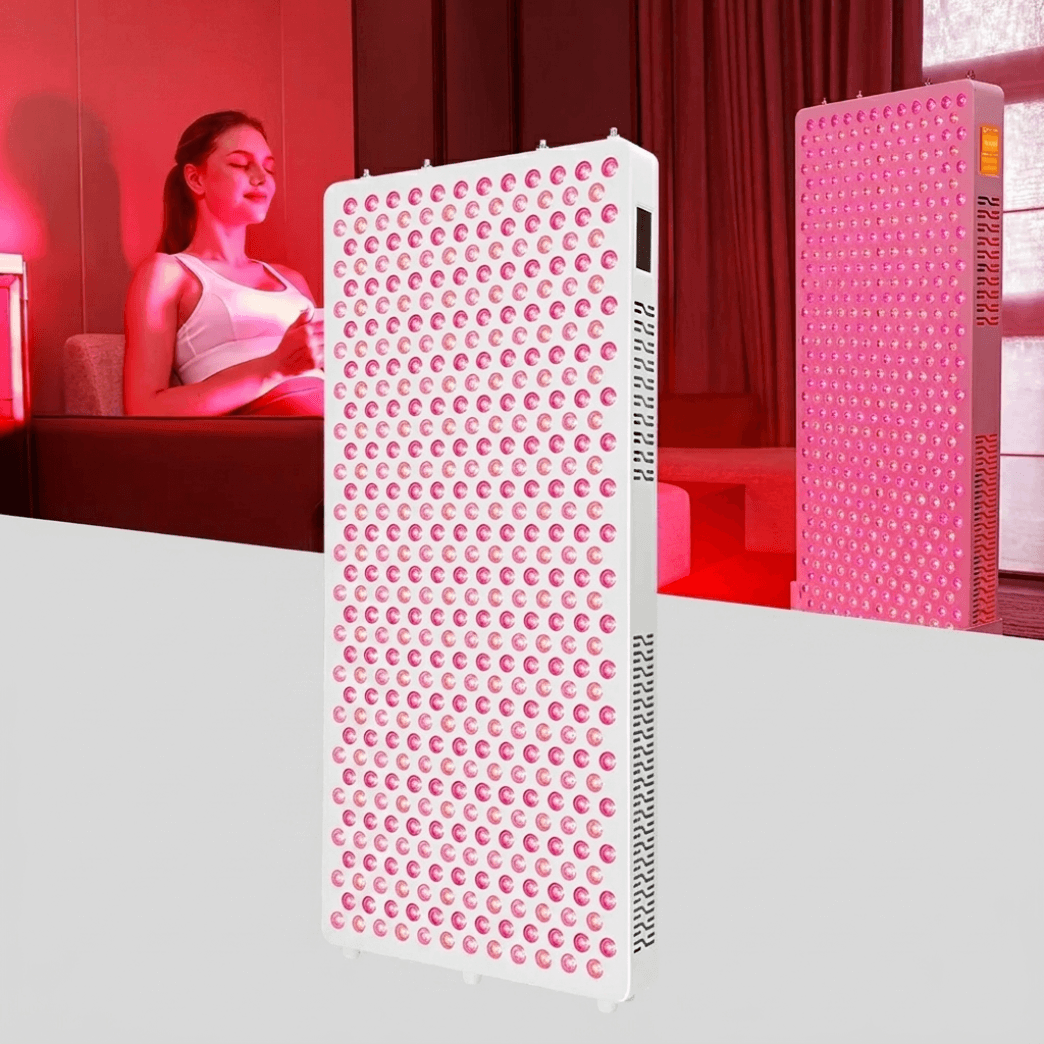
A full-body panel produces a blended before-and-after across several goals at once rather than one dramatic outcome, because it treats large areas of skin, muscle, and joints in the same session. People who buy a panel for “full body” results are usually combining goals: smoother skin over treated areas, less post-workout soreness, and easier movement in stiff joints, each of them the same gradual, modest change described above, just spread across more of the body. What a full-body panel does not do is credibly deliver fat loss or body contouring on its own, so treat any “full body transformation” photo implying that with heavy skepticism.
A full-body panel produces a blended before-and-after across several goals at once rather than one dramatic outcome, because it treats large areas of skin, muscle, and joints in the same session.
The reason panels appeal for this is coverage: they light up whole regions front and back in one sitting, which is why they are the most versatile form factor. If you want to compare a panel against targeted masks and wraps, our panel vs mask vs belt guide lays out the trade-offs, and you can browse the lineup in /shop/panels.
How to take an honest before-and-after (Step 1, 2, 3)
If you want a comparison you can actually trust, control the variables the ads do not:
- Lock the setup. Same room, same time of day, same distance from the same light source, same camera, filters off. Mark where you stand so it is repeatable.
- Standardize your skin and pose. Clean, bare skin (no makeup, no fresh moisturizer for the shot), neutral expression, same angle. Take a few frames each time.
- Space the intervals sensibly. Photograph at baseline, then every 3 to 4 weeks, not daily. Collagen change is slow, and day-to-day differences are mostly noise. Judge the 8-to-12-week comparison, not the week-one one.
This is the same discipline the credible trials used, and it is the only way your own before-and-after means anything.
Safety and who should be cautious
Red and near-infrared light therapy is well tolerated for most healthy adults, but several groups should get medical clearance before starting. Use the eye protection supplied with your device, and never stare into the LEDs, especially with bright panels or facial masks. Talk to your clinician first if any of the following apply:
- Pregnancy. Safety data during pregnancy is limited; ask your provider before use.
- Photosensitizing medications. Some antibiotics (tetracyclines, fluoroquinolones), certain diuretics, some antidepressants and antipsychotics, and oral acne drugs such as isotretinoin can increase light sensitivity. Get clearance if you take a medication labeled for photosensitivity.
- Active cancer or a history of skin cancer. Discuss with your oncologist or dermatologist before treating any area, rather than self-treating.
- Prescription retinoids on the treated skin, or active melasma. Retinoids can sensitize skin, and light and heat can aggravate melasma; check with a dermatologist about timing.
- Photosensitive conditions such as lupus or porphyria, or a history of light-triggered rashes.
Follow the device’s distance and timing instructions rather than improvising longer or closer sessions, because the dose response is biphasic and more is not better (Hamblin, 2017).
The bottom line
A real red light therapy before-and-after is a story of patience and consistency, not overnight drama. Recovery and soreness respond within days; joint pain eases over two to eight weeks; skin and wrinkles need 8 to 12 weeks of regular sessions before controlled trials could measure change; and sleep is a maybe, not a promise. Across all of them, the improvements the best studies found were meaningful but modest, and the dramatic side-by-sides online are usually flattered by lighting, angle, and marketing rather than earned by the light.
Set your expectations to the right clock for your goal, track your own progress with disciplined, standardized photos, and remember that the biggest determinant of your result is showing up several times a week at a sensible dose. The limitation of most people’s routine is not the device, it is consistency, and that is exactly what a versatile, easy-to-use panel is built to solve: cover more of the body in one session, keep the habit simple, and let the weeks do the work. Start with a full-body panel, match a device to your specific goal with the quiz, or read the underlying studies in our research library so you can judge the before-and-after evidence for yourself.
- Real red light therapy before-and-after change is gradual and modest, not the dramatic overnight transformation marketing photos imply. Different goals show up on very different timelines.
- Skin and wrinkle results are the slowest to see: most controlled trials ran 8 to 15 weeks of sessions two to five times per week before measuring meaningful change in collagen density, roughness, and fine lines.
- Recovery and soreness respond fastest, often within the same 24 to 96 hours around a workout, while joint pain typically eases over two to eight weeks of consistent sessions.
- Sleep is the weakest-evidence category: some trials report subjective improvement within a few weeks, others find no measurable change, so treat any sleep benefit as a bonus, not a promise.
- Before-and-after photos online, including Reddit threads, are unreliable because lighting, angle, camera, and marketing incentives can manufacture a 'result' that the skin did not actually gain.
- The single biggest predictor of a visible before-and-after is consistency at a validated dose, not the size or price of the device. A device you use daily beats a better one you skip.
FREQUENTLY ASKED
What does a realistic red light therapy before and after actually look like?
For skin, realistic before-and-after change means smoother texture, slightly firmer skin, and softer fine lines over 8 to 12 weeks of consistent use, not a facelift. For recovery, it looks like less soreness and quicker bounce-back in the 24 to 96 hours after training. For joint pain, it is a gradual drop in stiffness and pain over two to eight weeks. The dramatic side-by-side photos you see in ads are often flattered by lighting, angle, and makeup, so calibrate your expectations to gradual, measurable refinement rather than a transformation.
How long before I see results from red light therapy?
It depends entirely on the goal. Muscle soreness and recovery can improve within a single 24-to-96-hour window around exercise. Joint pain trials typically measured meaningful relief after two to eight weeks of sessions two to three times per week. Skin and wrinkle trials ran 8 to 15 weeks before collagen density and roughness changed measurably. Sleep benefits, where they appear at all, tend to show up within a few weeks but are inconsistent across studies.
Are red light therapy before and after pictures on Reddit trustworthy?
Treat them as anecdotes, not evidence. Reddit before-and-after photos are uncontrolled: there is no standardized lighting, camera, angle, skincare routine, or timeframe, and people naturally post their best-looking result. Small differences in lighting or a fresh coat of moisturizer can look like a dramatic change. They can be useful for realistic-expectation setting and honest complaints, but a single pair of photos, from Reddit or a brand, is a poor guide to what you will personally experience.
Why do before and after wrinkle photos look so dramatic in ads?
Because lighting and presentation do much of the work. Soft, even, frontal lighting hides wrinkles; harsh side lighting exaggerates them, so shooting the 'before' under unflattering light and the 'after' under flattering light manufactures an improvement no treatment delivered. Makeup, camera settings, skin hydration, and time of day add more variables. In the controlled trials that used objective instruments like profilometry and ultrasound, real wrinkle and collagen improvements were meaningful but modest, not the near-total smoothing some ads suggest.
What is a realistic full body before and after with a red light panel?
A full-body panel treats large areas at once, so people use it for a mix of skin, recovery, and comfort goals rather than one dramatic outcome. Realistically, over 8 to 12 weeks of consistent sessions you might notice smoother skin over treated areas, less post-workout soreness, and easier movement in stiff joints, with each of those being a gradual, modest change. There is no credible before-and-after for fat loss or body contouring from a light panel alone, so be skeptical of photos implying it.
How consistent do I have to be to see any change?
Consistency is the whole game. The trials that produced measurable before-and-after results used regular sessions, commonly two to five times per week, sustained over weeks to months. Sporadic use a few times total will not reproduce those outcomes. For skin especially, the collagen-building process is slow and cumulative, and gains fade if you stop, so most people treat red light therapy as an ongoing habit rather than a one-time course.
Do red light therapy mask before and after results differ from panels?
The biology is the same; the difference is coverage and dose. A mask sits directly on the face and conforms to it, which is convenient and consistent for facial anti-aging, and one three-month mask study reported reduced wrinkle depth and higher dermal density that persisted for weeks. Panels are higher-powered and cover more of the body, so they suit people who also want recovery or larger-area skin goals. Either way, validated wavelengths and consistent use drive the before-and-after, not the form factor alone.
REFERENCES
- 1. Wunsch A, Matuschka K. A controlled trial to determine the efficacy of red and near-infrared light treatment in patient satisfaction, reduction of fine lines, wrinkles, skin roughness, and intradermal collagen density increase. Photomed Laser Surg. 2014;32(2):93-100. doi:10.1089/pho.2013.3616 (PMC3926176)
- 2. Lee SY, Park KH, Choi JW, et al. A prospective, randomized, placebo-controlled, double-blinded, and split-face clinical study on LED phototherapy for skin rejuvenation. J Photochem Photobiol B. 2007;88(1):51-67. PMID:17566756
- 3. Couturaud V, Le Fur M, Pelletier M, Granotier F. Reverse skin aging signs by red light photobiomodulation. Skin Res Technol. 2023;29(7):e13391. doi:10.1111/srt.13391 (PMC10311288)
- 4. Mota LR, Duarte IDS, Galache TR, et al. Photobiomodulation reduces periocular wrinkle volume by 30%: a randomized controlled trial. Photobiomodul Photomed Laser Surg. 2023;41(2):48-56. doi:10.1089/photob.2022.0114 (PMID:36780572)
- 5. Ferraresi C, Huang YY, Hamblin MR. Photobiomodulation in human muscle tissue: an advantage in sports performance? J Biophotonics. 2016;9(11-12):1273-1299. doi:10.1002/jbio.201600176 (PMC5167494)
- 6. Leal-Junior EC, Vanin AA, Miranda EF, de Carvalho PT, Dal Corso S, Bjordal JM. Effect of phototherapy (low-level laser therapy and light-emitting diode therapy) on exercise performance and markers of exercise recovery: a systematic review with meta-analysis. Lasers Med Sci. 2015;30(2):925-939. doi:10.1007/s10103-013-1465-4
- 7. Nampo FK, Cavalheri V, Ramos SP, Camargo EA. Effect of low-level phototherapy on delayed onset muscle soreness: a systematic review and meta-analysis. Lasers Med Sci. 2016;31(1):165-177. doi:10.1007/s10103-015-1832-4
- 8. Vanin AA, Verhagen E, Barboza SD, Costa LOP, Leal-Junior ECP. Photobiomodulation therapy for the improvement of muscular performance and reduction of muscular fatigue associated with exercise in healthy people: a systematic review and meta-analysis. Lasers Med Sci. 2018;33(1):181-214. doi:10.1007/s10103-017-2368-6
- 9. Stausholm MB, Naterstad IF, Joensen J, et al. Efficacy of low-level laser therapy on pain and disability in knee osteoarthritis: systematic review and meta-analysis of randomised placebo-controlled trials. BMJ Open. 2019;9(10):e031142. doi:10.1136/bmjopen-2019-031142
- 10. Chow RT, Johnson MI, Lopes-Martins RA, Bjordal JM. Efficacy of low-level laser therapy in the management of neck pain: a systematic review and meta-analysis of randomised placebo or active-treatment controlled trials. Lancet. 2009;374(9705):1897-1908. doi:10.1016/S0140-6736(09)61522-1 (PMID:19913903)
- 11. Kennedy KER, Wills CCA, Holt C, Grandner MA. A randomized, sham-controlled trial of a novel near-infrared phototherapy device on sleep and daytime function. J Clin Sleep Med. 2023;19(9):1669-1675. doi:10.5664/jcsm.10648 (PMC10476031)
- 12. Gimenez MC, Luxwolda M, Van Stipriaan EG, et al. Effects of near-infrared light on well-being and health in human subjects with mild sleep-related complaints: a double-blind, randomized, placebo-controlled study. Biology (Basel). 2022;12(1):60. doi:10.3390/biology12010060 (PMC9855677)
- 13. Hamblin MR. Mechanisms and applications of the anti-inflammatory effects of photobiomodulation. AIMS Biophys. 2017;4(3):337-361. doi:10.3934/biophy.2017.3.337 (PMC5523874)
ABOUT THE AUTHORS
Our team reviews the peer-reviewed literature on red and near-infrared light therapy and translates it into honest, practical guidance — no hype, just what the evidence actually supports.