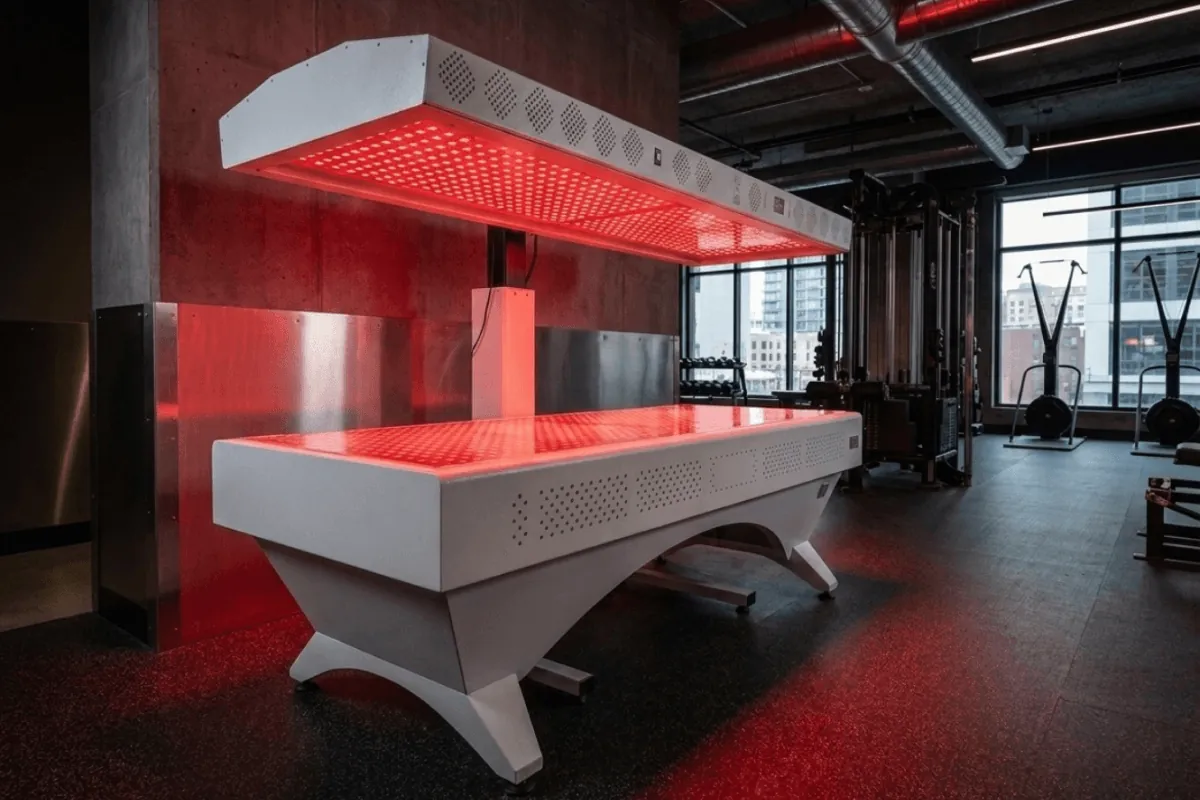
Best Red Light Therapy Bed in 2026: A Criteria-First Buyer's Guide
How to choose the best red light therapy bed in 2026: the six specs that matter, honest ranked picks by use case, and why used beds are a risky buy.
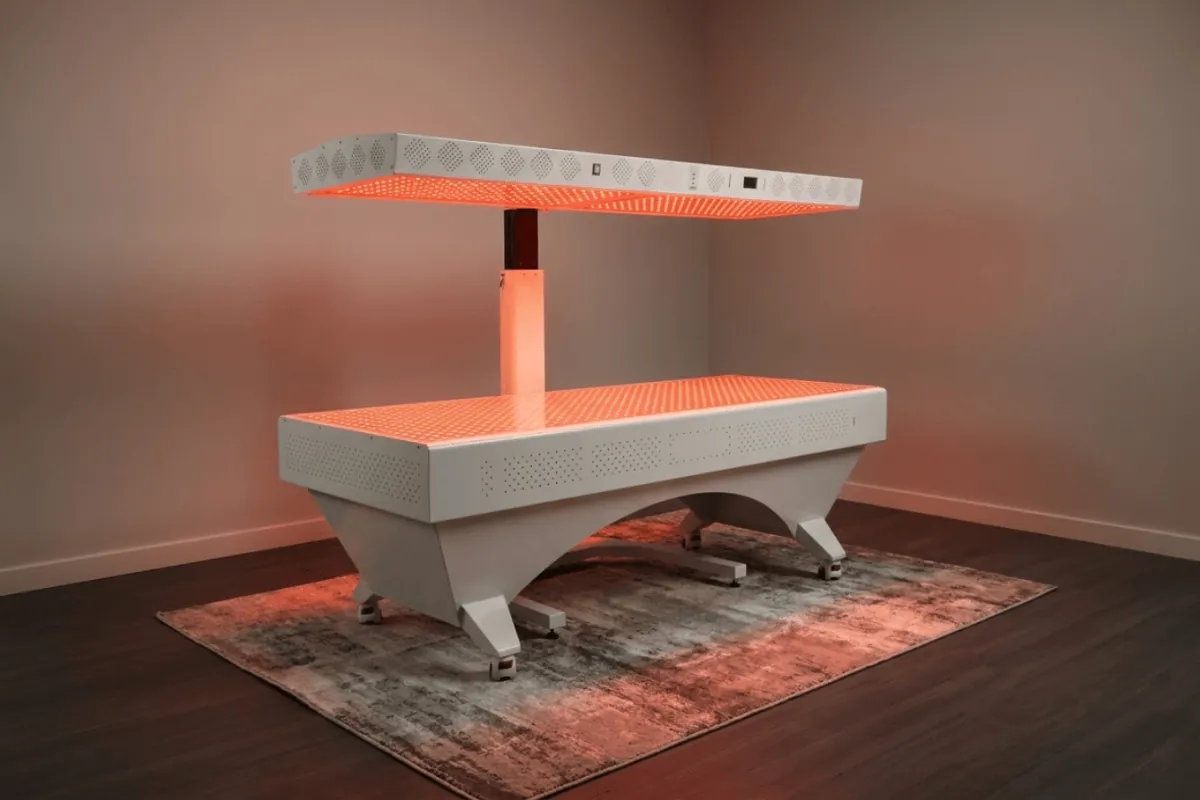
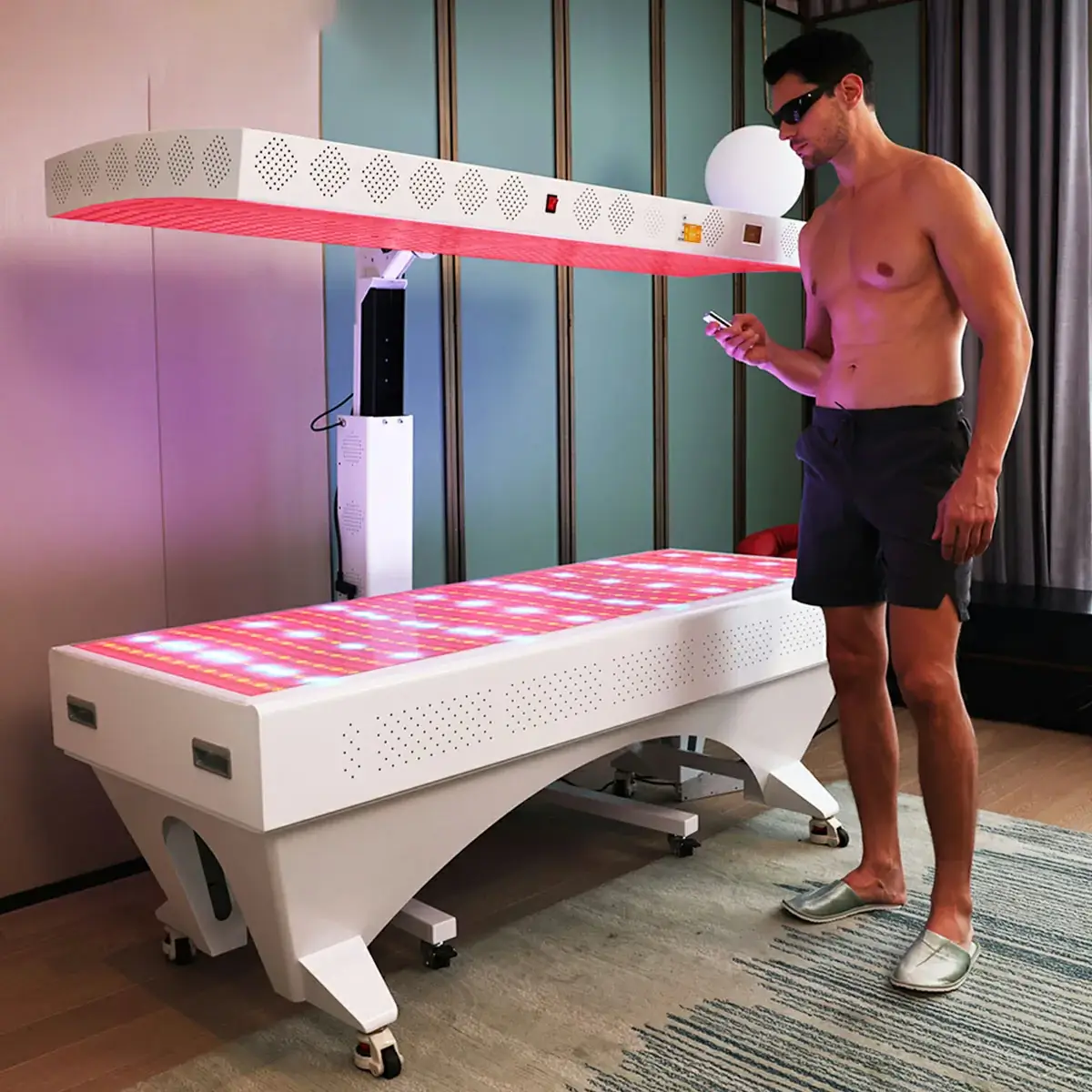
Dropping fifteen to twenty thousand dollars on a piece of wellness equipment is not a casual purchase, and the market for full-body light beds does everything it can to make the comparison harder than it should be. Spec sheets brag about LED counts, irradiance numbers appear without the distance they were measured at, and half the listings are refurbished units of unknown age. If you are trying to find the best red light therapy bed without overpaying for a glowing shell, you need a way to cut through the noise. This guide gives you one.
Instead of handing you a ranked list and asking you to trust it, we start with the criteria that actually separate a serious clinical-grade bed from an expensive tanning-bed lookalike. Then we apply those criteria to real categories of beds, name honest picks by use case, and tell you plainly when a bed is the wrong tool entirely. If you want the broader lay of the land first, our pillar overview on the red light therapy bed covers how these devices work and who they are for; this article is the buyer’s-eye companion focused on choosing one.
What “best” actually means for a full-body bed
The best red light therapy bed is not the one with the most LEDs or the highest price — it is the one that puts validated wavelengths onto your whole body at an adequate, verifiable dose, safely, for as long as you own it. Everything else is packaging. The underlying biology is photobiomodulation: red and near-infrared photons are absorbed by mitochondria, which respond by producing more cellular energy and shifting cells toward better function Hamblin 2017. A bed is simply a form factor that delivers that light to both sides of the body while you lie down comfortably.
Red and near-infrared photons are absorbed by mitochondria, which respond by producing more cellular energy and shifting cells toward better function.
That framing matters because it kills two common buying mistakes at once. The first is treating LED count as a proxy for quality — a bed can have thousands of weak or poorly binned diodes and still deliver a mediocre dose. The second is assuming the most expensive cabin must be the best; some six-figure imported beds are priced for their brand and their clinic-financing model, not for measurably better light. Once you judge beds on delivered dose, certifications, and support, the field narrows fast.
A quick vocabulary refresher, since the rest of this guide leans on these terms:
- Wavelength (nm): the color of the light. Roughly 630 to 660 nm is visible red; 830 to 850 nm is invisible near-infrared.
- Irradiance (mW/cm²): the intensity landing on each square centimeter of skin, measured at a stated distance. Without the distance, the number is marketing.
- Dose (J/cm²): irradiance multiplied by time — the total energy delivered. Biology responds to dose, and the response is biphasic: too little does nothing, far too much can backfire Hamblin 2017.
- Coverage: how much of the body is treated at once. This is a bed’s whole reason to exist.
The six criteria that decide which bed is worth your money
Every claim on a bed’s spec sheet reduces to six questions, and a bed that dodges any one of them should drop off your list. Use the table below as a scorecard, then read the notes underneath for what each row really means.
| Criterion | What to look for | Red flag |
|---|---|---|
| Irradiance and dose | A figure measured with a calibrated spectrometer at the treatment surface, plus a sensible session time | A big mW/cm² number with no distance or no instrument named |
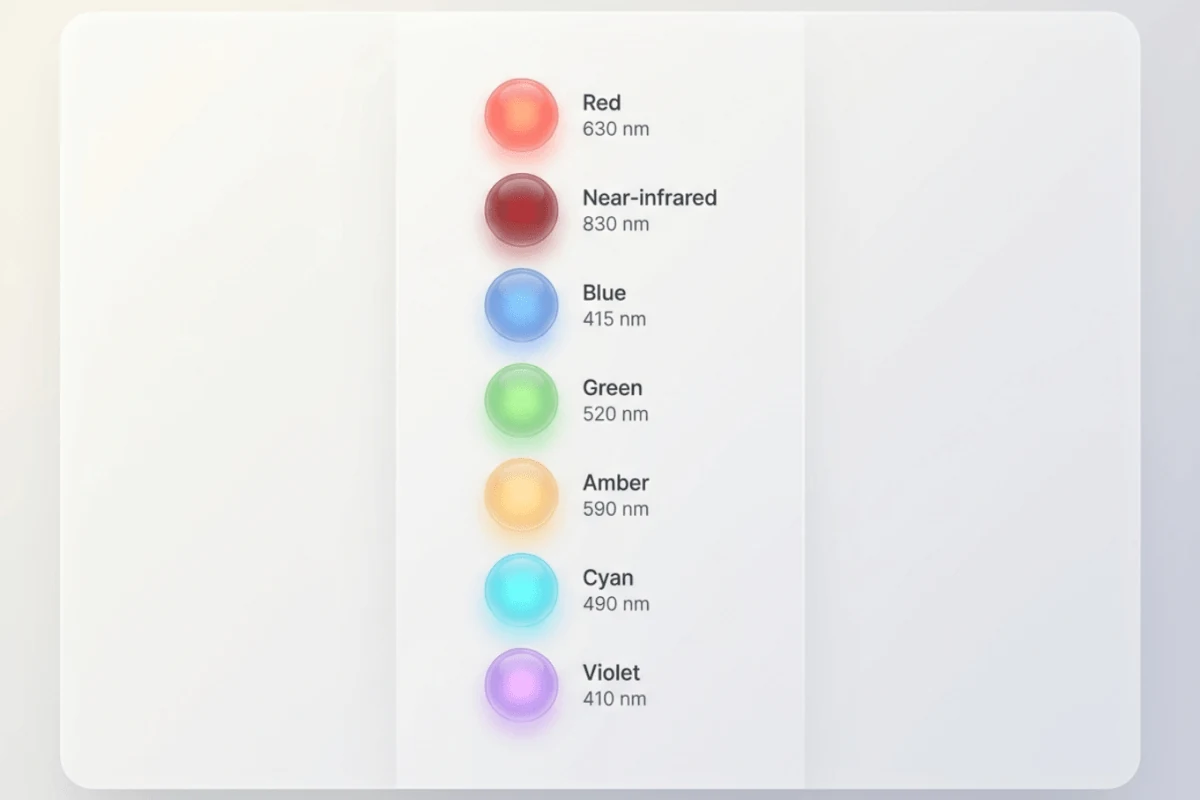
| Wavelengths | Both red (630-660 nm) and near-infrared (830-850 nm); ideally several bands across 480-1060 nm | Red-only, or heavy reliance on the weakly absorbed 700-770 nm trough |
| Coverage and ergonomics | Full-body, both sides, comfortable lie-down design, sensible internal cooling | Gaps in coverage, no cooling, cramped or flimsy build |
| Certifications | FDA 510(k) clearance for a stated use, plus electrical safety marks | Vague “FDA approved” claims or no electrical certification |
| Warranty and support | Multi-year warranty, available parts, responsive service | No warranty, overseas-only support, no parts pipeline |
| Price-per-value | Delivered dose and coverage per dollar, total cost of ownership | Six-figure pricing with no matching spec advantage |
1. Irradiance and honest dose. This is where the industry misbehaves most. Irradiance is quoted constantly, yet the number depends heavily on the measuring instrument. An inexpensive Solar Meter reads noticeably higher than a laboratory-grade spectrometer, so a bed advertised at “200 mW/cm²” can be closer to half that under honest measurement. Ask which instrument produced the figure and at what distance. Then remember you do not actually want the maximum possible intensity — you want an adequate dose within the effective window, because more light past a point stops helping and can hinder Hamblin 2017. Established dosing references frame everything in terms of energy delivered to the target, not watts on the box WALT 2010.
Without the distance, the number is marketing.
2. Wavelengths. The evidence clusters around visible red and near-infrared. Red near 660 nm is absorbed mainly in the skin; near-infrared near 850 nm penetrates deeper toward muscle and joints, and tissue modeling confirms that longer wavelengths reach further Ash 2017. A bed offering both covers the widest range of goals, while a red-only bed confines you to surface effects. Be a little skeptical of devices leaning on the 700 to 770 nm range, which sits in a less-absorbed trough de Freitas 2016.
3. Coverage and ergonomics. A bed’s entire value proposition over a panel is that it treats both sides of the body at once while you lie down. Check that coverage is genuinely full-body with no dark zones, that the unit has real internal cooling (LEDs run hotter and drift in output when they cook), and that the build can survive years of daily commercial use.
4. Certifications. Reputable beds carry an FDA 510(k) clearance, which means the device was found substantially equivalent to a legally marketed one for a stated use. That is cleared, not FDA approved — a meaningful but limited signal, and different from drug approval. Verify the specific clearance and its scope, and treat any “FDA approved” or disease-cure language as a warning sign. Electrical safety certification matters too on a high-wattage device you will run daily.
5. Warranty and support. A bed is a machine with hundreds of components. A multi-year warranty, a real parts pipeline, and support you can reach without a transatlantic phone call are the difference between a ten-year asset and a very heavy paperweight.
6. Price-per-value. Only after the first five checks do you compare price — and you compare delivered dose and coverage per dollar, not sticker to sticker. This is also where you fold in total cost of ownership, which we break down in the companion guide on what a bed really costs.
Wavelengths a serious bed should deliver
A full-body bed should emit both visible red and near-infrared light, because the two bands do different jobs and most real goals need both. Red around 630 to 660 nm is absorbed in the upper dermis, which is why it dominates the skin-rejuvenation literature — the pivotal controlled trial that raised intradermal collagen density and reduced wrinkles used red and near-infrared sources Wunsch 2014. Near-infrared around 830 to 850 nm penetrates deeper toward muscle and joints, which is why recovery-focused work leans on it. If you want the physics of why the longer band reaches further, our explainer on why 850 nm penetrates deeper walks through it.
The best beds go beyond the basic two-band setup. Multi-wavelength systems spanning roughly 480 to 1060 nm let a single device serve skin, recovery, and comfort applications, which is exactly why a commercial operator wants breadth: one bed, many client goals. A comprehensive 2024 review of photobiomodulation on skin reaches the same practical conclusion — red and near-infrared are the workhorse bands for the outcomes people actually seek Hernandez-Bule 2024. The takeaway for a buyer is simple: count the bands, confirm they include real red and real near-infrared, and do not pay a premium for exotic wavelengths a vendor cannot tie to a purpose.
The best red light therapy bed picks for 2026, by use case
There is no universal winner, so the honest way to rank beds is by who is buying and why — a commercial studio, a boutique clinic, and a single home user are not shopping for the same machine. The categories below reflect the real market in 2026. Prices for full-body clinical cabins run from roughly $15,000 to well over $100,000, and the spread is driven as much by branding and financing as by measurable light output, which is why value-per-dollar varies so widely.
| Use case | What to prioritize | Typical spend (2026, verify current pricing) | Our pick |
|---|---|---|---|
| Commercial / studio (best value) | Full-body coverage, multi-wavelength, throughput, support | ~$18,000-$25,000 | RoyalPro2000L-B |
| Boutique clinic / premium brand | Brand cachet, financing programs, marketing support | ~$50,000-$120,000+ | Imported name-brand cabins |
| Serious home / small studio | Same wavelengths, far lower cost and footprint | ~$2,000-$8,000 | Full-body panel, not a bed |
| Budget / used market | Lowest sticker price | Varies | Proceed with caution (see below) |
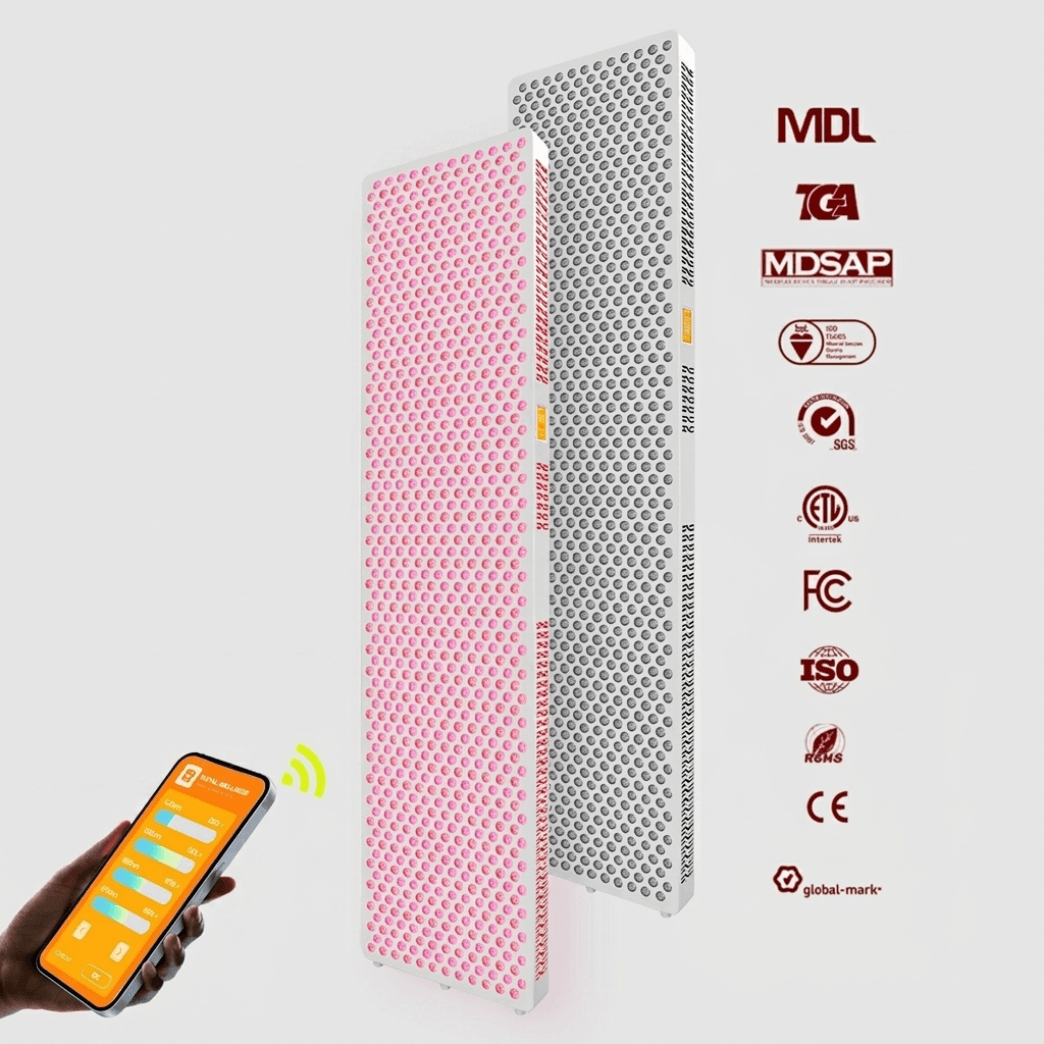
Best price-to-performance: the RoyalPro2000L-B. For an operator who needs a true full-body bed without paying a luxury markup, this is our pick. It pairs 1,152 LEDs with nine wavelengths and a touchscreen control system at roughly $19,999 — clinic-grade coverage at a fraction of the six-figure imported cabins it competes with. The value case is straightforward: you get the ergonomic, high-throughput advantages a bed exists to provide, with a wavelength spread broad enough to serve skin, recovery, and comfort clients, without the brand tax. For gyms, recovery studios, med-spas, and wellness centers, that combination is hard to beat, and it is why it anchors our commercial lineup.
Premium imported cabins. These beds are genuinely well built and come with polished marketing and financing programs, which matters to some clinics. What you are often paying for at the top of the range, though, is the brand and the sales apparatus rather than proportionally more or better light. If a name-brand cabin costs five times as much as a value bed but does not deliver five times the verified dose or coverage, that gap is worth questioning out loud before you sign.
The honest asterisk: most buyers do not need a bed at all. If a single person is the only user, the ergonomic advantages of a bed rarely justify its cost and footprint, and a full-body panel delivers the same wavelengths for far less. That case is important enough to get its own section.
Best red light therapy beds for home use: read this first
For home use, the honest answer is that a full-body panel usually beats any bed on value, and most people shopping “red light therapy beds for home use” are better served by a panel. A bed is engineered for throughput — many bodies per day, minimal staff effort, lie-down comfort at scale. A household of one or two simply cannot use that capacity, so you would be paying a large premium and surrendering a lot of floor space for ergonomics you will use for ten or twenty minutes a day.
Pros
- Treats both sides of the body at once
- Lie-down comfort at scale
- High daily throughput — many bodies per day, minimal staff effort
Cons
- A large price premium
- Surrenders a lot of floor space
- Overkill for a household of one or two
A full-body panel delivers the same validated red and near-infrared wavelengths as a bed. You stand or sit in front of it, treat the front of your body, turn around, and treat the back. It costs a fraction as much, hangs on a wall or a stand, and is easy to move. The meta-analytic evidence for light therapy around exercise — improved performance and reduced fatigue — comes from panel-style and targeted delivery, not exclusively from beds Vanin 2018, so you are not giving up the science by choosing the cheaper form factor.
If you want near-bed capability at home, look at a high-output full-body panel:
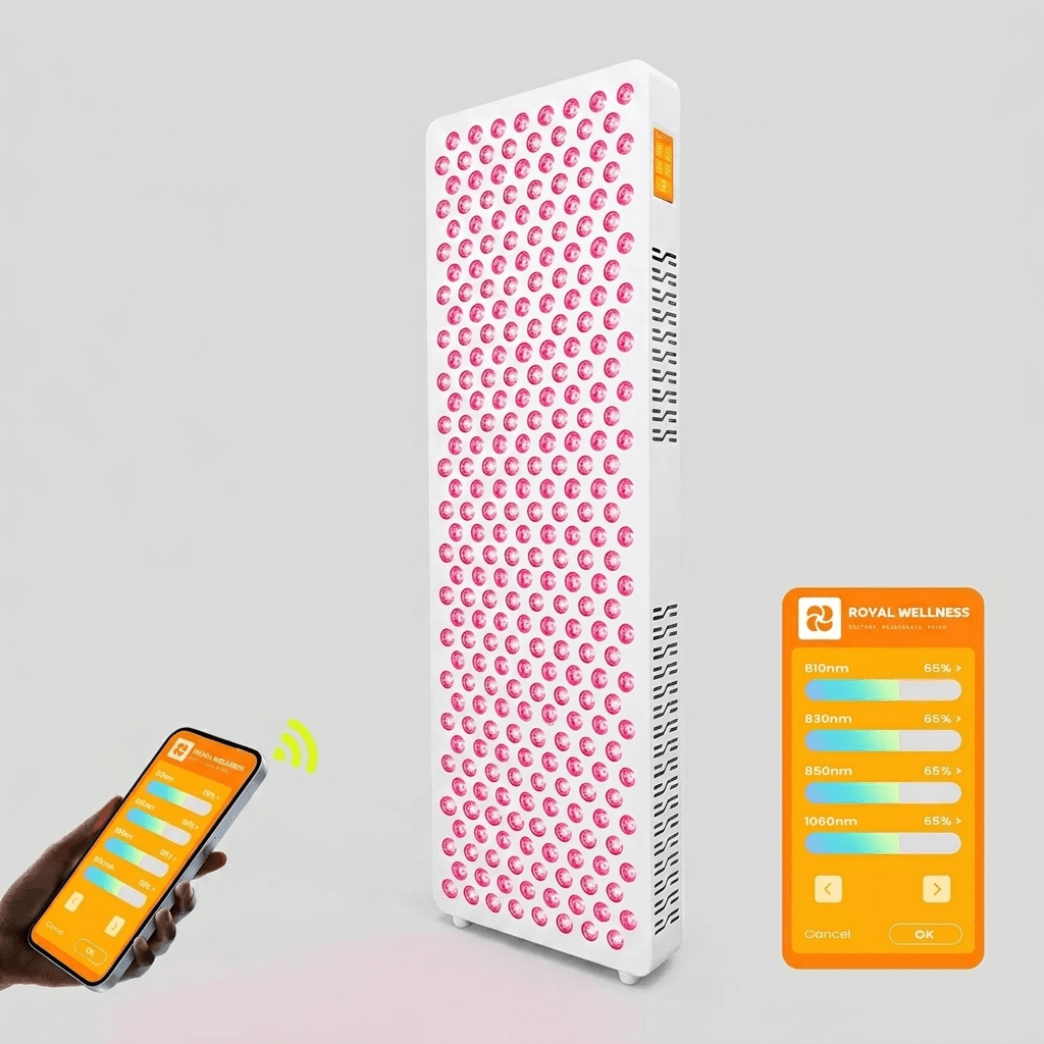
- Step 1 — size the panel to your body. A full-height panel like the RoyalPro Ultimate G4 (1,152 five-watt LEDs, eight wavelengths, 164 mW/cm²) covers a standing adult and is the closest single panel gets to bed-level coverage.
- Step 2 — or scale down to your budget. The RoyalPro 1200 (864 LEDs, nine wavelengths, full-body) delivers broad coverage at a friendlier price.
- Step 3 — confirm the wavelengths and honest irradiance. Both bands present, and a spectrometer-based number, not a Solar Meter figure.
For a fuller walk-through of matching form factor to goal, our guide on choosing a panel, mask, or belt lays out the trade-offs. Not sure where you land? The device finder quiz maps your goals to a recommendation in about two minutes, and you can browse the full panel range anytime.
Why used red light therapy beds for sale are risky
A used red light therapy bed for sale looks like a bargain and usually is not, because the three things that make a bed valuable — verified light output, certification, and support — are exactly the things a used unit tends to lose. Here is what the discount is really hiding.
- Unknown LED hours and irradiance decay. LEDs dim over thousands of hours of use. A used bed almost never comes with recent spectrometer readings, so you have no way to know how much of its rated output survives. You could be buying a bed delivering a fraction of its original dose and have no baseline to prove it.
- No warranty transfer. Most manufacturer warranties are tied to the original purchaser. When something fails — and on a machine with hundreds of diodes, driver boards, and a cooling system, something eventually will — the repair bill is entirely yours.
- Missing certification paperwork. The FDA 510(k) clearance and electrical safety documentation that protect you often do not travel with a private resale. For a commercial operator, running an uncertified high-wattage device can be an insurance and liability problem, not just a technical one.
- Freight and repair economics. These beds weigh 400 pounds or more. Shipping one is a freight event, not a courier drop-off, and a single LED-array or control-board repair can erase whatever you saved on the sticker.
If you still want to explore the used market, protect yourself: demand recent calibrated-spectrometer irradiance readings, proof of certification, full service records, and a transferable warranty in writing before money moves. If a seller cannot provide those, treat the price as fictional. In most cases, a new value bed with a real warranty — or a new panel for a home setting — is the lower-risk buy, and the total-cost-of-ownership math usually confirms it.
If a seller cannot provide those, treat the price as fictional.
How to think about budget and value
The right budget is set by your use case and your total cost of ownership, not by the highest sticker you can stomach. A commercial buyer should think in revenue terms: a value bed like the RoyalPro2000L-B at around $19,999 can serve dozens of paying sessions per week, and against per-session pricing common in recovery studios, the machine can pay for itself far faster than a $100,000 cabin doing the same job. Whole-body photobiomodulation is actively studied for exactly these commercial-adjacent uses — recovery and sleep markers in athletes Full-body PBMT, Sports 2022, pain and quality of life in a triple-blinded fibromyalgia trial Navarro-Ledesma 2023, and LED-based body-contouring protocols Nishioka 2025 — which is why demand for full-body service exists to fill those sessions. Independent evaluation has likewise shown low-level laser at 635 nm can reduce circumference in treated areas McRae 2013, one more service a multi-wavelength bed can support.
For a home buyer, the budget logic inverts: because a single user cannot use a bed’s throughput, the value question becomes “what is the cheapest way to get validated wavelengths onto my whole body,” and the answer is a panel. Either way, do not price a bed on its LED count. Price it on delivered dose, coverage, certification, warranty, and the years of service it will actually give you. We break every line of that math down in the dedicated red light therapy bed cost guide.
Safety
Full-body light therapy is generally well tolerated, but a bed concentrates a lot of light and heat, so use it sensibly and clear it with a clinician if any risk factor applies to you. Trials of red and near-infrared light consistently report few or no adverse effects, and because these are non-UV wavelengths, they do not carry the DNA-damage risk of tanning Avci 2013. Still, observe the basics:
- Eyes. Use the eye protection supplied with the bed and never stare into the LEDs; the intensity across a full-body array is significant.
- Pregnancy. Safety data for red light therapy during pregnancy is limited. Talk to your provider before use.
- Photosensitizing medications. Some drugs — certain antibiotics (tetracyclines, fluoroquinolones), some diuretics, certain antidepressants, and oral acne medication such as isotretinoin — increase skin’s reactivity to light. Get clearance first if you take one.
- Active cancer or undiagnosed lesions. Do not treat over known or suspected malignancy without oncology guidance; discuss any new or changing skin lesion with a clinician.
- Photosensitive conditions. Lupus, porphyria, or a history of light-triggered rashes warrant medical advice before starting.
- Follow the device program. More time is not better because of the biphasic dose response; use the recommended session length rather than improvising longer sessions.
Commercial operators carry an added duty: certified equipment, staff trained on protocols and eye protection, and clear client screening for the contraindications above.
The bottom line
There is no single best red light therapy bed — there is a best bed for your situation, and you find it by scoring candidates on six things: honest irradiance and dose, a real red-plus-near-infrared wavelength mix, genuine full-body coverage, FDA 510(k) and electrical certification, a warranty with support behind it, and value per dollar rather than raw sticker price. Bigger LED counts and six-figure price tags are not the signal; delivered light and durable support are. And for most individual buyers, the honest conclusion is that a full-body panel, not a bed, is the smarter purchase.
Where a bed genuinely earns its place is the commercial floor — a gym, studio, clinic, or recovery business that needs lie-down comfort and high daily throughput across many clients. That is exactly the gap the RoyalPro2000L-B is built to close: 1,152 LEDs, nine wavelengths, and a touchscreen at roughly $19,999, delivering clinic-grade full-body coverage without the imported-brand markup. If that is your use case, explore the commercial range or start the device finder quiz to confirm the fit. If you are shopping for one body at home, save your money and start with a full-body panel instead.
- The best red light therapy bed is the one that delivers validated wavelengths at an adequate, verifiable dose across your whole body — not the one with the biggest LED count or the scariest price tag.
- Judge every bed against six criteria: irradiance and honest dose, wavelength mix, full-body coverage and ergonomics, safety and electrical certifications, warranty and support, and price-per-value. Skip any bed that hides one of them.
- Irradiance numbers are routinely inflated. A Solar Meter reads higher than a calibrated spectrometer, so a '200 mW/cm²' claim can be closer to half that in practice. Ask which instrument produced the number and at what distance.
- For most homes a full-body panel delivers the same wavelengths as a bed for a fraction of the cost and footprint. A bed earns its price in clinics, studios, gyms, and recovery businesses that need lie-down comfort and high daily throughput.
- Used red light therapy beds for sale are risky: no warranty transfer, unknown LED hours and irradiance decay, no certification paperwork, and expensive shipping for a 400-plus-pound unit. The savings rarely survive the first repair.
- For price-per-performance in a commercial full-body bed, the RoyalPro2000L-B pairs 1,152 LEDs and nine wavelengths with a touchscreen at roughly $19,999 — a fraction of six-figure clinical cabins.
FREQUENTLY ASKED
What is the best red light therapy bed in 2026?
There is no single best red light therapy bed for everyone — the best one is the bed that delivers validated red and near-infrared wavelengths at an adequate, verifiable dose across your whole body, backed by real certifications and a warranty, at a price your use case justifies. For a commercial setting that needs full-body coverage and high daily throughput, the RoyalPro2000L-B (1,152 LEDs, nine wavelengths, touchscreen, around $19,999) is our best price-to-performance pick because it delivers clinic-grade coverage well below the cost of six-figure imported cabins. For a single home user, a high-output full-body panel usually beats any bed on value.
How much irradiance does a good red light therapy bed need?
There is no official minimum, and chasing the highest number is a trap because light follows a biphasic dose response — too little does nothing and far too much can be counterproductive. What matters is delivering an adequate dose (irradiance multiplied by time) in the effective window. Be skeptical of raw irradiance claims: a Solar Meter reads meaningfully higher than a calibrated spectrometer, so ask which instrument was used and at what distance. A verified 100 to 200 mW/cm² at the treatment surface is plenty for practical session lengths.
Are red light therapy beds better than panels?
Not inherently — they use the same underlying biology. A bed's advantages are ergonomic and operational: you lie down comfortably, both sides of the body are treated at once, and a clinic can run many clients per day with minimal staff effort. Panels deliver the same wavelengths and are far cheaper and more flexible, which is why for a single home user a full-body panel is usually the better value. A bed earns its premium in commercial, high-throughput settings.
Are used red light therapy beds for sale worth it?
Usually not. LEDs lose output over thousands of hours, and a used bed rarely comes with irradiance test data, so you cannot know how much light it still delivers. Warranties typically do not transfer, certification paperwork is often missing, and freight for a 400-plus-pound unit plus any board or LED-array repair can erase the discount. If you do consider a used bed, demand recent spectrometer readings, proof of certification, service records, and a transferable warranty in writing.
What wavelengths should a full-body red light therapy bed have?
The workhorse wavelengths are visible red near 630 to 660 nm, absorbed mainly in skin, and near-infrared near 830 to 850 nm, which penetrates deeper toward muscle and joints. Better beds add extra bands across roughly the 480 to 1060 nm range so one device can serve skin, recovery, and comfort goals. A bed offering both red and near-infrared covers the widest range of uses; a red-only bed limits you to surface goals.
Can I use a red light therapy bed at home?
You can, but it is rarely the smart buy. A full-body bed needs floor space, a dedicated circuit in some cases, and a four-figure to five-figure budget, and a single person cannot come close to using the throughput a bed is built for. For home use, a full-body panel delivers the same red and near-infrared wavelengths, takes up a wall or a stand, and costs a fraction as much. Beds make sense when several people use them daily.
Is a red light therapy bed FDA approved?
Red and near-infrared light devices are generally FDA cleared, not FDA approved — clearance through the 510(k) pathway means a device is substantially equivalent to a legally marketed one for a stated use, which is different from the approval process for new drugs. Treat 'FDA 510(k) cleared' as a real but limited signal, verify the specific clearance and its stated scope, and be wary of sellers who claim outright FDA approval or promise to cure disease.
REFERENCES
- 1. Hamblin MR. Mechanisms and applications of the anti-inflammatory effects of photobiomodulation. AIMS Biophys. 2017;4(3):337-361. doi:10.3934/biophy.2017.3.337 PMC5523874
- 2. de Freitas LF, Hamblin MR. Proposed mechanisms of photobiomodulation or low-level light therapy. IEEE J Sel Top Quantum Electron. 2016;22(3):7000417. doi:10.1109/JSTQE.2016.2561201 PMC5215870
- 3. Ash C, Dubec M, Donne K, Bashford T. Effect of wavelength and beam width on penetration in light-tissue interaction using computational methods. Lasers Med Sci. 2017;32(8):1909-1918. doi:10.1007/s10103-017-2317-4 PMC5653719
- 4. Wunsch A, Matuschka K. A controlled trial to determine the efficacy of red and near-infrared light treatment in patient satisfaction, reduction of fine lines, wrinkles, skin roughness, and intradermal collagen density increase. Photomed Laser Surg. 2014;32(2):93-100. doi:10.1089/pho.2013.3616 PMC3926176
- 5. Vanin AA, Verhagen E, Barboza SD, Costa LOP, Leal-Junior ECP. Photobiomodulation therapy for the improvement of muscular performance and reduction of muscular fatigue associated with exercise in healthy people: a systematic review and meta-analysis. Lasers Med Sci. 2018;33(1):181-214. doi:10.1007/s10103-017-2368-6 PMID 29090398
- 6. Avci P, Gupta A, Sadasivam M, et al. Low-level laser (light) therapy (LLLT) in skin: stimulating, healing, restoring. Semin Cutan Med Surg. 2013;32(1):41-52. PMC4126803
- 7. Hernandez-Bule ML, Naharro-Rodriguez J, Bacci S, Fernandez-Guarino M. Unlocking the power of light on the skin: a comprehensive review on photobiomodulation. Int J Mol Sci. 2024;25(8):4483. doi:10.3390/ijms25084483 PMC11049838
- 8. Rentz LE, Bryner RW, Ramadan J, Rezai A, Galster SM. Full-body photobiomodulation therapy is associated with reduced sleep durations and augmented cardiorespiratory indicators of recovery. Sports (Basel). 2022;10(8):119. doi:10.3390/sports10080119 PMC9414854
- 9. Navarro-Ledesma S, Gonzalez-Muñoz A, Carroll J, Burton P. Short-term effects of whole-body photobiomodulation on pain, quality of life and psychological factors in a population suffering from fibromyalgia: a triple-blinded randomised clinical trial. Pain Ther. 2023;12(1):225-239. doi:10.1007/s40122-022-00450-5 PMC9845459
- 10. Nishioka MA, et al. Clinical protocol effects with LED photobiomodulation for reducing adipose tissue in the abdomen region. J Cosmet Dermatol. 2025;24(2):e16675. doi:10.1111/jocd.16675 PMC11845923
- 11. McRae E, Boris J. Independent evaluation of low-level laser therapy at 635 nm for non-invasive body contouring of the waist, hips, and thighs. Lasers Surg Med. 2013;45(1):1-7. doi:10.1002/lsm.22113 PMID 23355338
- 12. World Association for Laser Therapy (WALT). Recommended treatment doses for low level laser therapy: dose table 780-860 nm (WALT-2010). WALT 2010
ABOUT THE AUTHORS
Our team reviews the peer-reviewed literature on red and near-infrared light therapy and translates it into honest, practical guidance — no hype, just what the evidence actually supports.