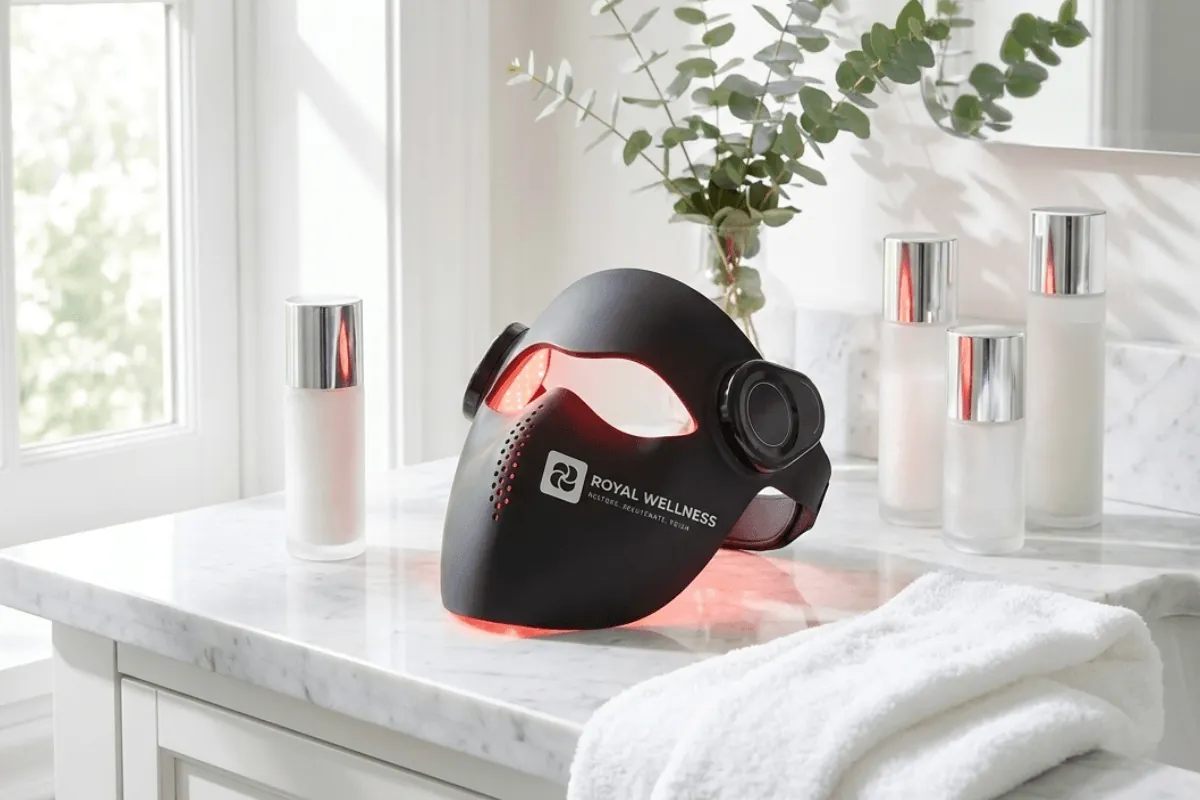
Commercial Red Light Therapy Bed: How to Choose One by Business Type
Choosing a commercial red light therapy bed for a gym, spa, or clinic? Match duty cycle, footprint, throughput, and warranty to your business type.
You have decided red light therapy belongs in your gym, spa, or clinic, and now the quotes are landing: some full-body beds cost as much as a car, others cost as much as a house, and every brochure claims to be the professional-grade choice. Which commercial red light therapy bed is actually right for your business? The honest answer is that it depends less on the flashiest spec sheet and more on how your business runs — how many clients you push through a day, how much floor space you have, whether staff or members operate it, and how you plan to pay for it.
This guide is written for the buyer, not the browser. It walks through what actually makes a bed “commercial,” how to choose by business type (a gym, a med-spa, a boutique recovery studio, and a chiropractic clinic all want different things), the specs that separate a revenue asset from an expensive space heater, honest total-cost-of-ownership math, and where our flagship RoyalPro2000L-B fits against the roughly $35,000-to-$70,000 clinical systems it competes with. If you are still deciding between a full-body bed and a panel setup, start with our pillar overview, red light therapy beds explained, and come back here to narrow by business model.
What makes a red light therapy bed “commercial” rather than home-grade?
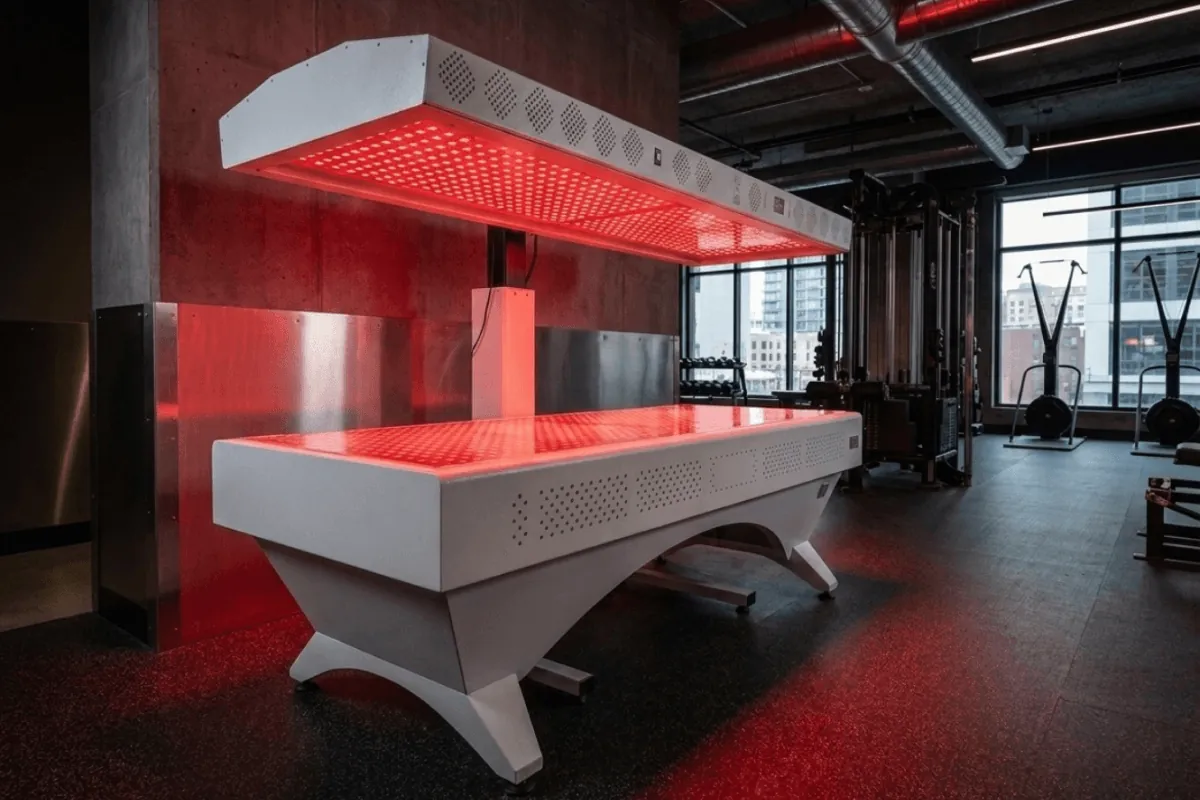
A commercial red light therapy bed is engineered for continuous, multi-client daily use, and that engineering — not the marketing label — is what separates it from a scaled-up home device. A consumer unit is designed for one or two people using it a few times a week. A commercial bed has to survive a very different life: dozens of sessions a day, strangers operating it, and revenue on the line every time it is switched on. Four things change when a device is built for that job.
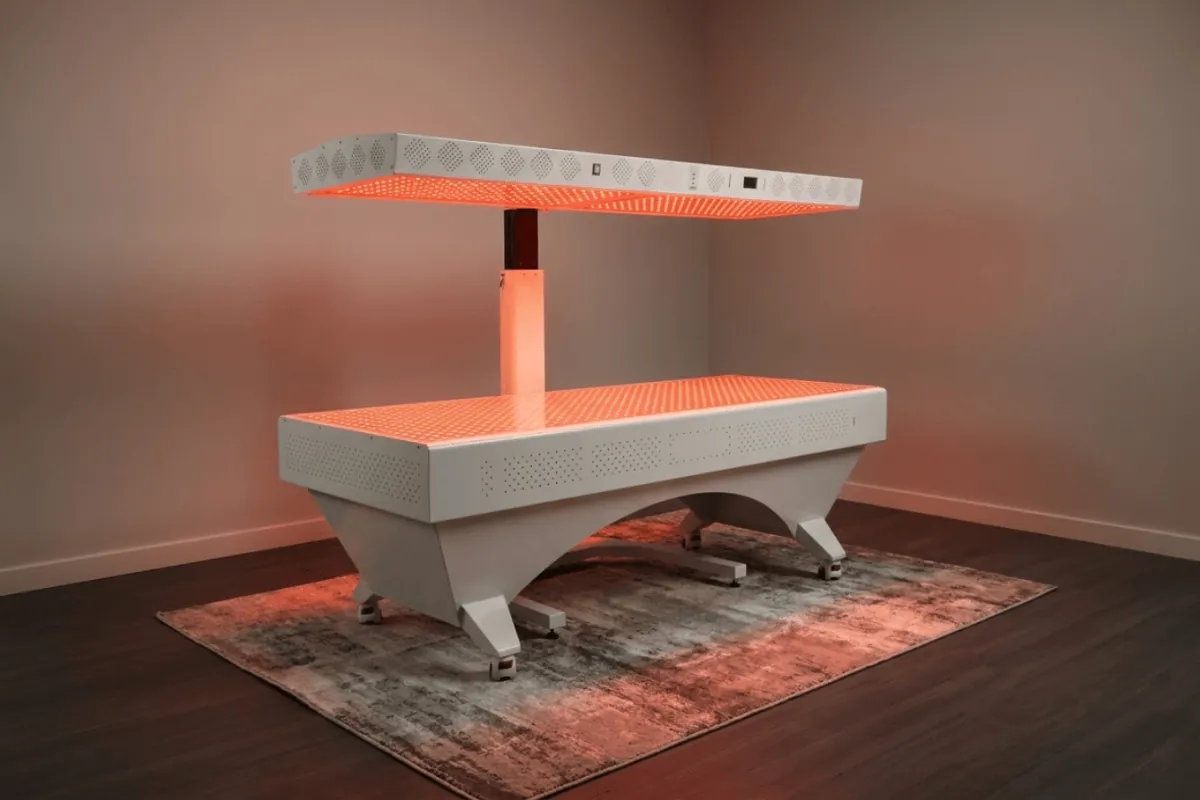
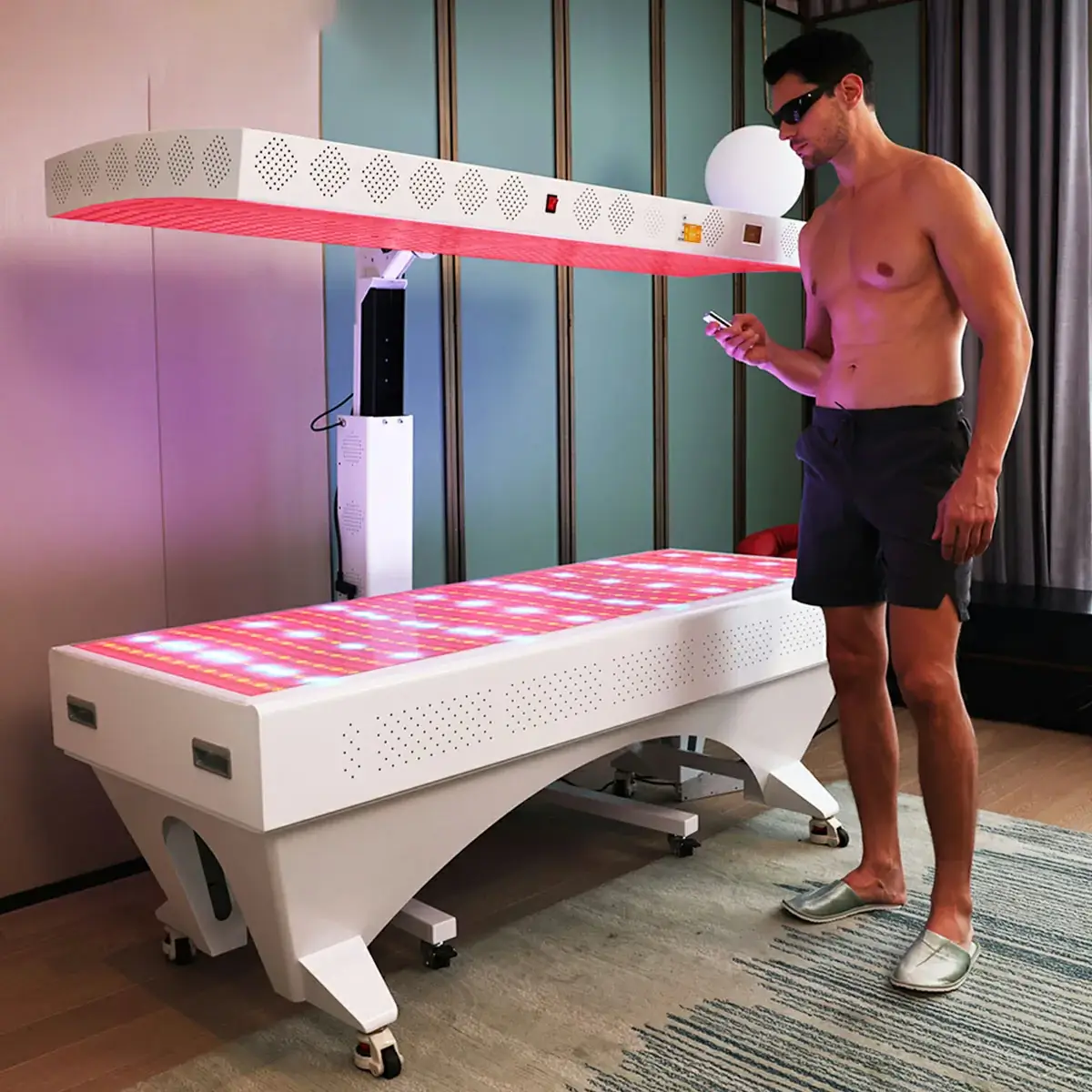
A full-body system engineered for continuous, multi-client daily use — dozens of sessions a day, strangers operating it, and revenue on the line every time it is switched on.
- Duty cycle and thermal design. LEDs lose output and lifespan when they run hot. A commercial bed needs cooling (active fans, heat sinks, thermal management) sized to run session after session without dimming or shutting down. This is the single most overlooked spec by first-time buyers.
- Build and hygiene. Contact surfaces get wiped down between every client, so the acrylic, framing, and finishes have to tolerate frequent sanitizing without clouding or degrading.
- Coverage and experience. Full-body beds put light on the front (or front and back) of the whole body at once, so a client lies down and relaxes instead of shuffling around a panel. That premium, self-contained experience is part of what you are selling.
- Warranty and support. A home warranty assumes light use. A commercial warranty has to account for heavy duty cycles, and it should come with realistic parts availability and service response, because downtime on one bed interrupts booked, paid sessions.
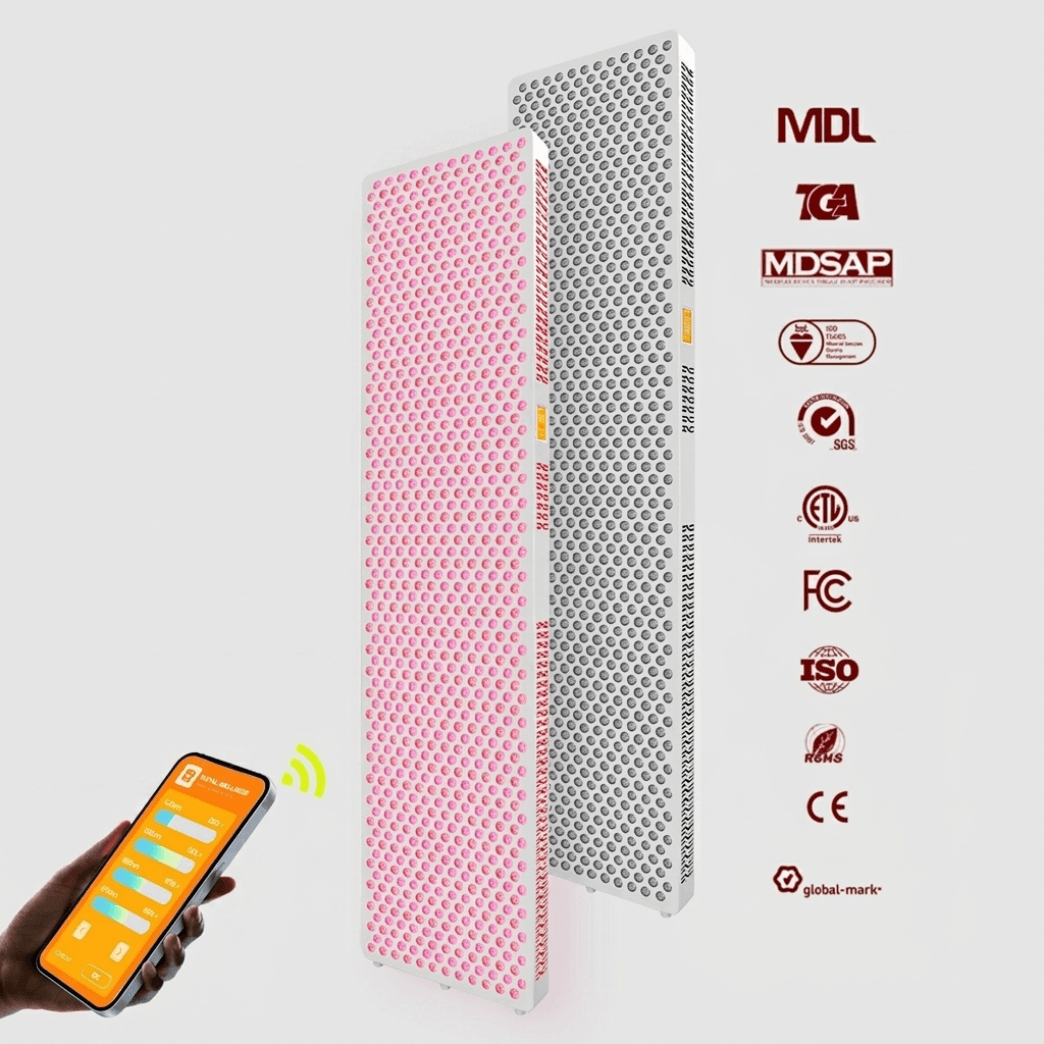
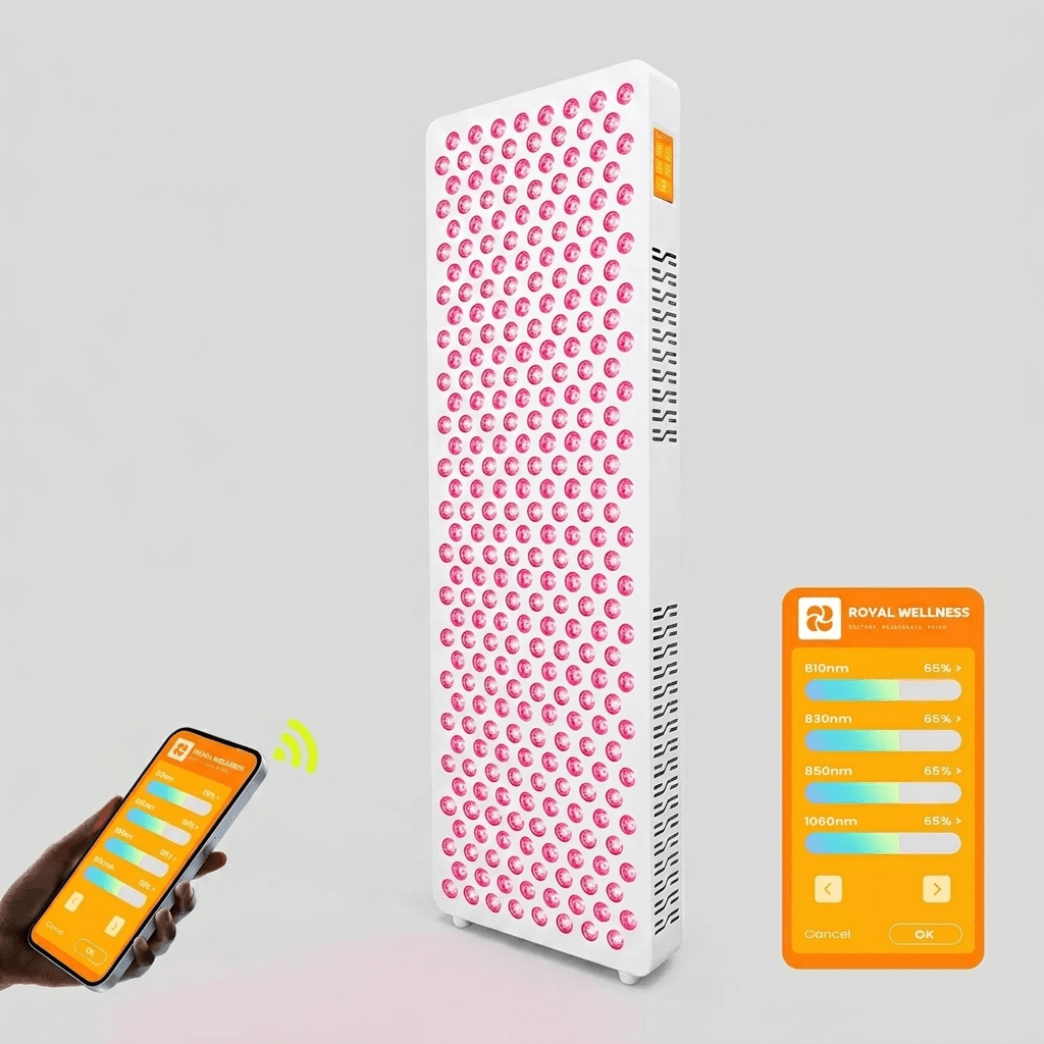
The RoyalPro2000L-B is built around these commercial realities: 1,152 LEDs delivering whole-body coverage across nine wavelengths in the red and near-infrared range, a lie-down bed format, and a client-facing touchscreen with session presets so a member or a front-desk staffer can start a session without training. The underlying biology is the same photobiomodulation that runs a home panel — light absorbed by mitochondria to support normal cell function Hamblin 2017 — but the machine wrapped around it is a different animal.
How to choose a commercial red light therapy bed by business type
The best commercial red light therapy bed for you is the one whose strengths line up with how your specific business makes money, because each business type stresses a different priority. A gym lives and dies on throughput and self-serve simplicity. A med-spa cares about the premium experience and skin-focused wavelengths. A recovery studio wants a magnetic, differentiated centerpiece. A chiropractic or physiotherapy clinic wants near-infrared depth and defensible, documentable use. Buying the wrong emphasis for your model is how businesses end up with a beautiful bed that never pays for itself.
Buying the wrong emphasis for your model is how businesses end up with a beautiful bed that never pays for itself.
Here is the mapping, condensed.
| Business type | What matters most | Realistic session model | Bed emphasis to prioritize |
|---|---|---|---|
| Gym / fitness studio | Throughput, durability, self-serve UX | High volume, members self-book recovery slots | High duty cycle, near-infrared for muscle recovery, simple touchscreen |
| Spa / med-spa | Premium experience, skin wavelengths, ambiance | Add-on to facials and treatments; staff-guided | Full red + NIR wavelength range, quiet operation, clean aesthetics |
| Wellness / recovery studio | Differentiation, client “wow,” membership stickiness | Signature service, packages and memberships | Whole-body coverage, standout client experience, reliability |
| Chiro / physio clinic | NIR depth, documentation, defensible use | Adjunct to manual therapy and rehab plans | Near-infrared wavelengths, clear specs, clinician-friendly protocols |
| Tanning salon converting | Reuse existing room/electrical, familiar format | Cross-sell to an existing membership base | Lie-down bed format, easy retrofit, strong duty cycle |
| Hotel / resort spa | Guest experience, low-staff operation, uptime | Amenity or paid upgrade, intermittent use | Reliability, easy operation, warranty and service coverage |
A few notes on reading that table:
Gyms and fitness studios are the clearest throughput play. Members want a fast, repeatable recovery ritual, so the bed has to recover quickly between uses and be idiot-proof to operate. The recovery use case is also the best-supported: a meta-analysis of 39 controlled studies identified a dose window at which photobiomodulation improved muscular performance and reduced exercise fatigue Vanin 2018, and clinical recommendations describe applying light before and after training for recovery and performance Leal-Junior 2019. If your gym is space- or budget-constrained, a high-output panel like the RoyalPro Ultimate G4 delivers similar recovery coverage at a lower price, with the trade-off that members reposition for front and back. Our weekly recovery routine for athletes is a useful handout to build member protocols around.
Med-spas and spas are selling a feeling as much as an outcome, so ambiance, quiet operation, and the full red-plus-near-infrared wavelength range matter — the same wavelengths that controlled skin trials used to increase intradermal collagen density and reduce wrinkles Wunsch 2014. The bed becomes a natural add-on to facials and body treatments.
Chiropractic and physiotherapy clinics should weight near-infrared depth most heavily, because near-infrared (around 850 nm) penetrates deeper toward muscle and joint tissue than visible red Ash 2017. For the joint-pain use case specifically, a meta-analysis of 22 randomized trials found low-level laser therapy reduced pain and disability in knee osteoarthritis at defined doses Stausholm 2019. If your clinic already runs targeted protocols, our joint pain photobiomodulation guide covers how depth and dose translate to clinical use.
If you are still deciding whether a bed even fits your model, or you are building the business from scratch, our companion piece on how to start a red light therapy business walks through room layout, pricing, and staffing before you commit capital.
The specs that actually decide whether a commercial bed pays off
Ignore the hero numbers on the brochure and interrogate the specs that govern uptime, dose, and cost per session, because those are what turn a bed into a profit center. A big irradiance figure quoted with no distance, or an LED count with no thermal story behind it, tells you almost nothing about how the machine performs on a busy Tuesday. Here are the specs to press on, in rough order of commercial importance.
Duty cycle and cooling
This is the spec that quietly caps your revenue. A bed that thermally throttles or needs a cool-down after a few sessions cannot fill an 8-hour booking sheet, no matter how impressive its peak output. Ask directly: how many consecutive sessions can it run at full output, and what is the cooling design? A commercial bed should sustain continuous back-to-back use.
Wavelengths and irradiance at treatment distance
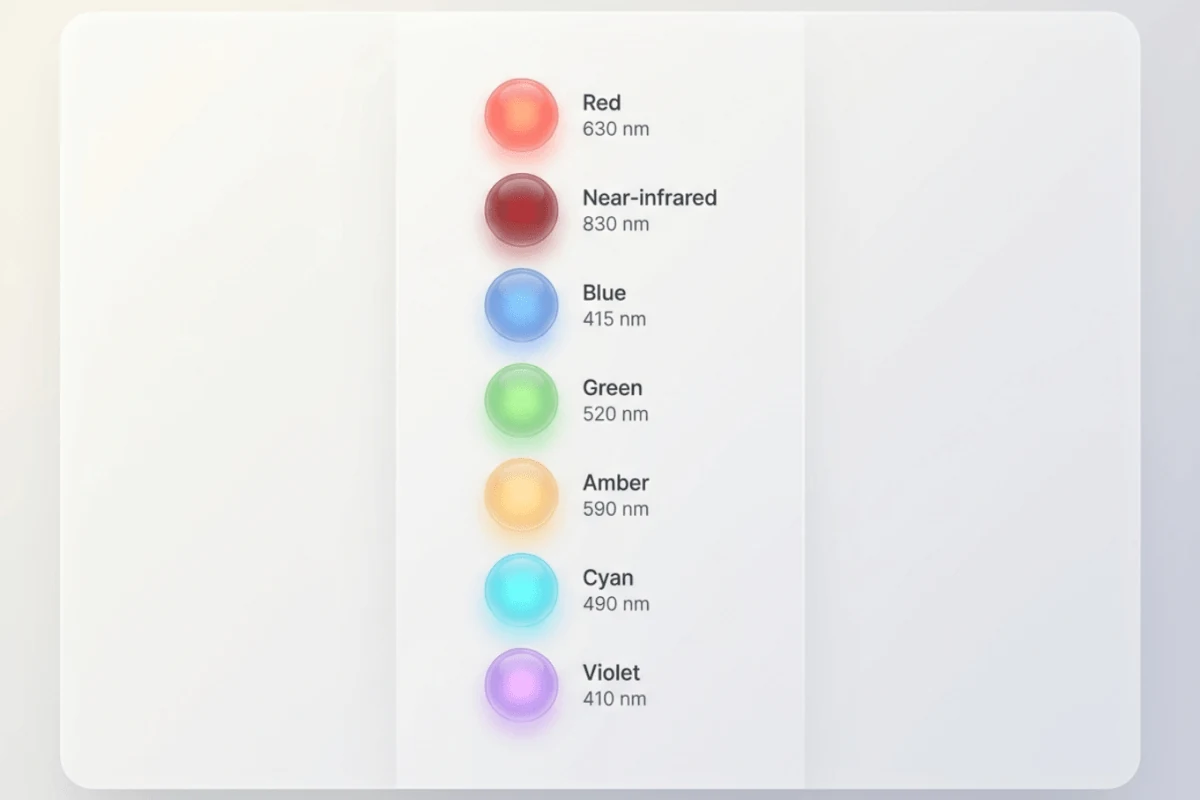
The evidence clusters around visible red (roughly 630-660 nm) for surface and skin goals and near-infrared (roughly 830-850 nm) for deeper muscle and joint targets de Freitas 2016. A multi-wavelength bed like the RoyalPro2000L-B (nine wavelengths) serves the widest range of client goals. On intensity, remember that dose is what biology responds to, and the response is biphasic — too little does nothing, and far too much offers no extra benefit Hamblin 2017. One honest note the industry rarely volunteers: irradiance measured with a low-cost solar meter reads substantially higher than a proper spectrometer reading, so compare numbers skeptically and ask how they were measured. Dose delivered to the target, not “watts on the box,” is what dosing references frame results around WALT 2010.
Footprint, electrical, and install
A full-body bed needs floor area plus clearance to get in and out, and it needs the right electrical supply. Confirm the dimensions, the power requirements, and whether you need an electrician before delivery. A tanning salon converting a room has an advantage here, since the space and wiring often already suit a lie-down format.
Hygiene, noise, and client UX
Contact surfaces get sanitized constantly, so they must tolerate it. Cooling fans create noise, which matters a lot in a spa and little in a gym. And the interface should let a client or staffer start a preset session in seconds — friction at the touchscreen becomes friction in your booking flow.
Warranty, LED lifespan, and serviceability
Ask for the rated LED lifespan, the commercial warranty terms, parts availability, and service response time. On a single-bed operation, a week of downtime is a week of refunded or lost bookings.
Full-body bed vs. panels: run the throughput math first
A full-body bed wins on client experience and throughput, while panels win on price and flexibility, so the right choice comes down to your booking volume and floor plan — not to which sounds more premium. Both deliver the same therapeutic wavelengths; the difference is coverage, operation, and cost.
A bed puts light across the whole body at once, so the client lies down, relaxes, and the session runs itself — ideal when you are moving many clients through and selling a hands-off experience. Panels cost far less and are more flexible to reposition, but a client (or staff) has to face the panel, then turn around for the back, which adds time and touchpoints to every session. For a small studio doing a handful of sessions a day, panels can be the smarter capital decision; for a busy gym or spa filling slots continuously, a bed’s speed and simplicity often justify the premium.
Full-body bed
- Puts light across the whole body at once
- Client lies down, relaxes, and the session runs itself
- Higher throughput with less staff labor
Panels
- Cost far less and are more flexible to reposition
- Client or staff must face the panel, then turn around for the back
- Add time and touchpoints to every session
A simple way to decide:
- Step 1 — Estimate realistic daily sessions. Be honest, not aspirational. How many booked sessions will you actually run per day in month three, not month one?
- Step 2 — Multiply out the time cost of panels. If a panel session needs an extra 5-10 minutes of repositioning and staff involvement versus a bed, multiply that by your daily volume. At high volume, that lost time is real capacity.
- Step 3 — Compare capital against capacity. If a bed lets you serve meaningfully more clients per day with less staff labor, the higher price can pay back faster than a cheaper panel that bottlenecks throughput.
Worth noting for the recovery use case: a 2025 systematic review of whole-body photobiomodulation found it improved post-exercise recovery outcomes, while cautioning that the whole-body evidence base is still small and less mature than the localized-treatment literature Álvarez-Martínez 2025. That is a fair, honest framing to give clients: the modality is supported, and the full-body format is promising but still building its evidence.
What a commercial red light bed really costs
The purchase price is only the first line of the budget; total cost of ownership — financing, energy, cleaning, LED lifespan, and warranty — is what determines your real cost per session. Sticker shock is common because the market spans an enormous range. Premium clinical full-body systems from established brands commonly run from about $35,000 to $70,000 or more (verify current pricing, which shifts frequently). The RoyalPro2000L-B is positioned well below that band at roughly $19,999, and for businesses that want whole-body coverage without a lie-down bed, the RoyalPro Ultimate G4 panel sits near $7,999.
But price is not cost. Fold in the pieces below before you compare quotes.
| Cost factor | What to account for |
|---|---|
| Purchase price | The bed itself; ~$19,999 for RoyalPro2000L-B vs. ~$35k-$70k+ for premium clinical systems (verify current pricing) |
| Delivery + install | Freight, placement, and any assembly for a large unit |
| Electrical | Possible electrician work to meet the bed’s power requirements |
| Energy | Ongoing electricity for a high-LED-count device running all day |
| Consumables | Cleaning and sanitizing supplies used between every client |
| Financing | Interest if you lease or finance rather than buy outright |
| Maintenance / LED life | Eventual servicing; ask for rated LED lifespan and warranty terms |
| Downtime risk | Lost bookings if a bed is out of service — weigh service response time |
For the full revenue-and-payback picture — session pricing, membership models, and how quickly a bed can break even — see our dedicated breakdowns on red light therapy bed cost and how a bed ranks against the field. The short version: a lower purchase price like the RoyalPro2000L-B’s shortens payback meaningfully versus a $50,000 competitor delivering comparable whole-body coverage, but only if the duty cycle actually lets you fill the schedule.
RoyalPro2000L-B vs. the $35k-$70k clinical field
Against premium clinical full-body systems, the RoyalPro2000L-B competes on whole-body coverage and multi-wavelength output at roughly a third to a half of the typical price, which changes the payback math for most independent operators. Here is the honest comparison, with the caveat that competitor pricing and specs change and should be verified on their live pages before you decide.
| Consideration | RoyalPro2000L-B | Typical premium clinical bed |
|---|---|---|
| Format | Full-body lie-down bed | Full-body bed or pod |
| LEDs | 1,152 | Varies by brand |
| Wavelengths | 9 (red + near-infrared range) | Typically fewer bands |
| Interface | Client-facing touchscreen, session presets | Varies; some clinician-only |
| Approx. price | ~$19,999 | ~$35,000-$70,000+ (verify current pricing) |
| Best fit | Gyms, spas, studios, clinics wanting whole-body value | Buyers prioritizing a specific brand ecosystem |
The takeaway is not that a lower price is automatically better — it is that for most gyms, spas, and independent studios, paying $50,000 for whole-body coverage you can get near $20,000 mainly buys a brand name, not proportionally more clinical benefit. Where a premium system earns its price is a specific research ecosystem, a particular clearance scope, or a service relationship your business genuinely needs. Decide which of those you actually require, then compare like for like. You can see how the full-body options fit the broader lineup on the commercial page or browse panels if a bed is more than your model needs.
What the research does and does not support
Peer-reviewed evidence supports red and near-infrared light as a wellness adjunct for recovery, joint discomfort, and skin — but the certainty is low-to-moderate, and no serious source calls it a cure, so your marketing must not either. This matters commercially because overclaiming is both a compliance risk and a reputation risk once clients compare their real results to inflated promises.
Here is the fair summary of the strongest evidence:
- Recovery and performance. A meta-analysis of 39 studies found photobiomodulation improved muscular performance and reduced fatigue within a defined dose window Vanin 2018, and clinical recommendations describe pre- and post-exercise protocols Leal-Junior 2019.
- Joint pain. Twenty-two randomized trials support reduced pain and disability in knee osteoarthritis at specific doses Stausholm 2019.
- Skin. Controlled trials show increased collagen density and reduced wrinkles from red and near-infrared light Wunsch 2014, consistent with the broader skin literature on low-level light therapy Avci 2013.
- The honest caveat. A 2025 umbrella review of 15 meta-analyses (204 randomized trials, over 9,000 participants) found statistically significant effects for several conditions but concluded that no outcome was supported by high-certainty evidence, calling photobiomodulation a promising non-invasive adjunct that still needs larger, standardized trials Son 2025.
A 2025 umbrella review of 15 meta-analyses (204 randomized trials, over 9,000 participants) found statistically significant effects for several conditions but concluded that no outcome was supported by high-certainty evidence.
On regulatory language: most of these devices are marketed as FDA 510(k) cleared for specific indications, which is not the same as FDA approved. Clearance means substantial equivalence to an existing device for a defined use, not endorsement of every claim. Verify a given product’s clearance and cleared indications, and keep your signage, website, and staff scripts consistent with that scope. For deeper mechanism detail to train staff, point them to our science page and research library.
Safety
Red and near-infrared light therapy is generally well tolerated, and trials report few adverse effects, but a commercial setting adds responsibilities a home user does not have. Provide and require eye protection, and instruct clients never to stare into the LEDs. Follow the device’s session-length and distance guidance rather than letting clients run longer sessions, since more light is not more benefit. Screen clients with an intake form and advise them to talk to their clinician first if they are pregnant, have a history of skin cancer or active skin lesions, take photosensitizing medications (certain antibiotics, diuretics, retinoids, and others), or have a photosensitive condition such as lupus or porphyria. Sanitize contact surfaces between every client, keep clear written protocols and signage, and make sure your marketing language avoids any promise to treat or cure disease.
The bottom line
There is no single best commercial red light therapy bed — there is a best bed for how your business actually runs. A gym should weight throughput, duty cycle, and self-serve simplicity; a med-spa should weight the premium experience and the full red-plus-near-infrared wavelength range; a recovery studio should weight differentiation and reliability; and a chiropractic or physiotherapy clinic should weight near-infrared depth and defensible, documentable use. Across all of them, the specs that decide success are the same: a duty cycle that sustains a full booking sheet, the right wavelengths delivered at an adequate dose, a footprint and electrical fit for your room, and a warranty written for commercial life. Set client expectations honestly — the evidence supports recovery, joint, and skin uses as a wellness adjunct, not a cure.
The limitation most operators hit is capital: premium clinical beds priced at roughly $35,000 to $70,000 make the payback math hard for an independent business. That is exactly the gap the RoyalPro2000L-B is built to close — 1,152 LEDs, nine wavelengths, whole-body coverage, and a client-ready touchscreen at roughly $19,999, so the schedule you fill goes to paying down a smaller investment. Compare the full lineup on the commercial page, size up the numbers with our red light therapy bed cost breakdown, and start from the pillar guide if you are still mapping the category.
- Choose the bed by your business model, not by the spec sheet alone. A gym, a med-spa, a recovery studio, and a chiropractic clinic each stress a different priority: throughput, client experience, footprint, or clinical documentation.
- Duty cycle is the spec homeowners can ignore and businesses cannot. A commercial red light bed has to run back-to-back sessions all day without thermal throttling, dimming, or premature LED wear, which is the real line between a consumer device and a revenue asset.
- A full-body bed maximizes throughput and the premium client experience, while panels cost far less but need staff to reposition each client. Run the throughput math against your realistic booking volume before you decide.
- The RoyalPro2000L-B lands near $19,999 against competing clinical full-body systems that commonly run about $35,000 to $70,000 or more (verify current pricing); compare total cost of ownership (financing, energy, LED lifespan, warranty), not just the sticker.
- The research supports red and near-infrared light as an adjunct for recovery, joint discomfort, and skin, with low-to-moderate certainty overall. Sell it as a supported wellness service, never as a cure, and set client expectations honestly.
FREQUENTLY ASKED
What is a commercial red light therapy bed?
A commercial red light therapy bed is a full-body photobiomodulation system built for continuous, multi-client daily use in a business rather than occasional use at home. Compared with a consumer device, it uses a higher LED count for whole-body coverage, a heavier-duty cooling and electrical system so it can run back-to-back sessions without overheating, commercial-grade hygiene surfaces, a client-facing touchscreen and session presets, and a warranty written for business duty cycles. The RoyalPro2000L-B, for example, uses 1,152 LEDs across nine wavelengths in a lie-down bed format designed for gyms, spas, studios, and clinics.
How much does a commercial red light therapy bed cost?
Full-body commercial beds vary widely. Premium clinical systems from established brands commonly run from about $35,000 to $70,000 or more (verify current pricing, which changes often). The RoyalPro2000L-B is positioned well below that band at roughly $19,999, and higher-output full-body panels such as the RoyalPro Ultimate G4 sit near $7,999 for businesses that want whole-body coverage without a lie-down bed. Beyond the purchase price, budget for delivery and install, electrical work, energy, cleaning supplies, and any financing interest when you compare options.
What is the best red light therapy bed for a gym?
For a gym, the priority is throughput and durability: a bed that recovers quickly between clients, tolerates a high daily session count, and gives members a simple, self-serve experience. A full-body bed with a strong duty cycle, near-infrared wavelengths for muscle and joint recovery, and an easy touchscreen fits that use case well. If your floor space or budget is tighter, a high-output full-body panel on a stand can deliver similar recovery benefits at a lower cost, with the trade-off that staff or members must reposition for front and back exposure.
Do commercial red light therapy beds actually work?
The modality has real, peer-reviewed support, though it is not a cure. Meta-analyses report that photobiomodulation can improve muscular performance and reduce fatigue when dosed correctly, and controlled trials support benefits for knee osteoarthritis pain and for skin collagen and wrinkles. A 2025 umbrella review found statistically significant effects across several conditions but rated overall certainty as low to moderate, so position the service as a supported wellness adjunct with honest expectations, not a medical treatment for disease.
How many clients can one red light bed serve per day?
It depends on session length, changeover time, and the bed's duty cycle. Many full-body sessions run about 10 to 20 minutes, and once you add roughly 5 minutes for the client to change and for staff to sanitize the surface, a realistic slot is around 15 to 25 minutes. That is loosely 15 to 25 sessions across an 8-hour day if bookings stay full, but only if the bed's cooling can sustain continuous use. Beds that thermally throttle after a few runs quietly cap your revenue, which is why duty cycle matters so much for a commercial purchase.
Is a red light therapy bed FDA approved?
Most red light and near-infrared devices are marketed as FDA 510(k) cleared for specific indications, not FDA approved, and the two are not the same. Clearance means the device is substantially equivalent to an existing legally marketed device for a defined use; it is not a blanket endorsement of every marketing claim. Always verify a specific product's clearance and its cleared indications, keep your in-business marketing consistent with that scope, and avoid disease-treatment claims.
What maintenance does a commercial red light bed need?
Plan for routine surface sanitizing between every client, periodic cleaning of the acrylic or protective panels per the manufacturer's instructions, dust management around cooling intakes, and eventual LED module servicing over the unit's life. Ask the manufacturer for the rated LED lifespan, the warranty terms for commercial use, parts availability, and expected service response time before you buy, because downtime on a single bed directly interrupts booked revenue.
REFERENCES
- 1. Vanin AA, Verhagen E, Barboza SD, Costa LOP, Leal-Junior ECP. Photobiomodulation therapy for the improvement of muscular performance and reduction of muscular fatigue associated with exercise in healthy people: a systematic review and meta-analysis. Lasers Med Sci. 2018;33(1):181-214. PMID 29090398
- 2. Leal-Junior ECP, Lopes-Martins RÁB, Bjordal JM. Clinical and scientific recommendations for the use of photobiomodulation therapy in exercise performance enhancement and post-exercise recovery: current evidence and future directions. Braz J Phys Ther. 2019;23(1):71-75. doi:10.1016/j.bjpt.2018.12.002 PMID 30591412 (PMC6546960)
- 3. Álvarez-Martínez M, et al. A systematic review on whole-body photobiomodulation for exercise performance and recovery. Lasers Med Sci. 2025;40:55. doi:10.1007/s10103-025-04318-w PMID 39883205
- 4. Son Y, Lee H, Yu S, et al. Effects of photobiomodulation on multiple health outcomes: an umbrella review of randomized clinical trials. Syst Rev. 2025;14:160. doi:10.1186/s13643-025-02902-3 PMID 40770824 (PMC12326686)
- 5. Stausholm MB, Naterstad IF, Joensen J, et al. Efficacy of low-level laser therapy on pain and disability in knee osteoarthritis: systematic review and meta-analysis of randomised placebo-controlled trials. BMJ Open. 2019;9(10):e031142. doi:10.1136/bmjopen-2019-031142 PMID 31662383
- 6. Wunsch A, Matuschka K. A controlled trial to determine the efficacy of red and near-infrared light treatment in patient satisfaction, reduction of fine lines, wrinkles, skin roughness, and intradermal collagen density increase. Photomed Laser Surg. 2014;32(2):93-100. doi:10.1089/pho.2013.3616 PMC3926176
- 7. Hamblin MR. Mechanisms and applications of the anti-inflammatory effects of photobiomodulation. AIMS Biophys. 2017;4(3):337-361. doi:10.3934/biophy.2017.3.337 PMC5523874
- 8. de Freitas LF, Hamblin MR. Proposed mechanisms of photobiomodulation or low-level light therapy. IEEE J Sel Top Quantum Electron. 2016;22(3):7000417. PMC5215870
- 9. Ash C, Dubec M, Donne K, Bashford T. Effect of wavelength and beam width on penetration in light-tissue interaction using computational methods. Lasers Med Sci. 2017;32(8):1909-1918. doi:10.1007/s10103-017-2317-4 PMC5653719
- 10. Avci P, Gupta A, Sadasivam M, et al. Low-level laser (light) therapy (LLLT) in skin: stimulating, healing, restoring. Semin Cutan Med Surg. 2013;32(1):41-52. PMID 24049929 (PMC4126803)
- 11. World Association for Laser Therapy (WALT). Recommended treatment doses for low level laser therapy: dose table 780-860 nm (WALT-2010). WALT 2010
ABOUT THE AUTHORS
Our team reviews the peer-reviewed literature on red and near-infrared light therapy and translates it into honest, practical guidance — no hype, just what the evidence actually supports.