How to Start a Red Light Therapy Business: A Step-by-Step Guide for 2026
Thinking of opening a red light therapy business? A step-by-step guide to models, equipment, pricing, memberships, ROI, and compliant marketing.
You have watched red light therapy go from biohacker curiosity to mainstream wellness fixture, and now you are wondering whether there is a real business in it. There probably is, but the internet is thick with “turnkey” pitches that gloss over the two things that actually decide whether a red light therapy business thrives or quietly bleeds cash: the capital math on your equipment, and the legal line between honest marketing and claims that can get you sued. This guide walks the entire path, step by step, from choosing a business model to pricing memberships to staying on the right side of the FDA and FTC.
Think of it as the plan a careful operator would build before spending a dollar. We will cover the market reality, the five build steps, the franchise-versus-independent question, a simple ROI model you can copy, and the safety and compliance guardrails that keep you out of trouble. Where equipment decisions come up, we will link to deeper guides so this stays a strategy document rather than a spec sheet.
Is a red light therapy business worth starting in 2026?
Demand for red light therapy is real and growing, but your margins depend entirely on utilization, not on the size of the trend. Market analysts put the U.S. red light therapy market in the hundreds of millions of dollars and project high-single-digit to low-double-digit annual growth through the early 2030s, with North America holding the largest regional share and the cosmetic segment leading applications (Grand View Research, 2025). That tailwind is genuine, and it is why gyms, spas, and standalone studios keep adding red light rooms.
But a growing category is not the same as an easy business. Two honest caveats matter before you commit:
- Low barriers to entry cut both ways. Because a studio can open with a single device and a rented room, competition arrives fast in popular metros. Your defensibility comes from location, service, and retention, not from owning a “secret” technology.
- This is a utilization game. A red light bed sitting empty earns nothing while your rent and financing payment keep running. The operators who win are the ones who keep their rooms booked, especially during slow midday and late-evening hours, which is exactly what memberships are for.
The underlying modality is well supported for the wellness outcomes people actually buy: photobiomodulation drives cellular energy and modulates inflammation (Hamblin, 2017), meta-analytic evidence backs light therapy around exercise for performance and recovery (Vanin et al., 2018), and controlled trials support red and near-infrared light for skin (Wunsch & Matuschka, 2014). That evidence is your marketing foundation, provided you describe it honestly. It is not a license to promise cures, a distinction we return to in Step 5.
Drives cellular energy and modulates inflammation.
Step 1: Choose your business model
The single most important early decision is whether red light therapy is your entire business or a high-margin add-on to one you already run. That choice ripples into your rent, staffing, break-even point, and how fast you reach profitability. There are four workable models, and they are not equally easy.
- Standalone studio. A dedicated red light therapy studio, sometimes bundled with complementary modalities like a sauna or compression. Highest brand clarity and pricing power, but you carry all the rent, marketing, and traffic-generation burden yourself.
- Add-on to an existing business. Bolting one or more devices onto a gym, CrossFit box, med-spa, chiropractic office, physical therapy clinic, or day spa. This is often the fastest route to profit because you borrow existing rent, staff, and foot traffic, and you sell to a warm audience already paying you.
- Red light therapy salon or tanning-salon conversion. Tanning salons already have the private-room layout, booking systems, membership habits, and clientele comfortable with light-based sessions, which makes red light a natural expansion or pivot. The buildout is smaller because the bones already exist.
- Mobile or event-based. Portable panels rented for sports teams, corporate wellness days, or recovery pop-ups. Low fixed cost, but income is lumpy and harder to scale into recurring revenue.
Here is how the models compare on the factors that decide your first year:
| Model | Upfront cost | Time to profit | Best for |
|---|---|---|---|
| Standalone studio | Highest | Slowest (months to ramp) | Operators who want a stand-alone brand and pricing control |
| Add-on (gym / spa / clinic) | Lowest to moderate | Fastest | Existing business owners with traffic and space to reuse |
| Salon / tanning conversion | Moderate | Moderate | Salons with rooms, memberships, and a light-comfortable base |
| Mobile / events | Low | Variable | Testing demand or serving teams and corporate clients |
If you are new to owning a business entirely, an add-on or a franchise (covered below) lowers your risk considerably. If you already run a gym, clinic, or salon, an independent add-on is usually the highest-return move you can make.
Step 2: Choose your equipment, because the bed is your core capital decision
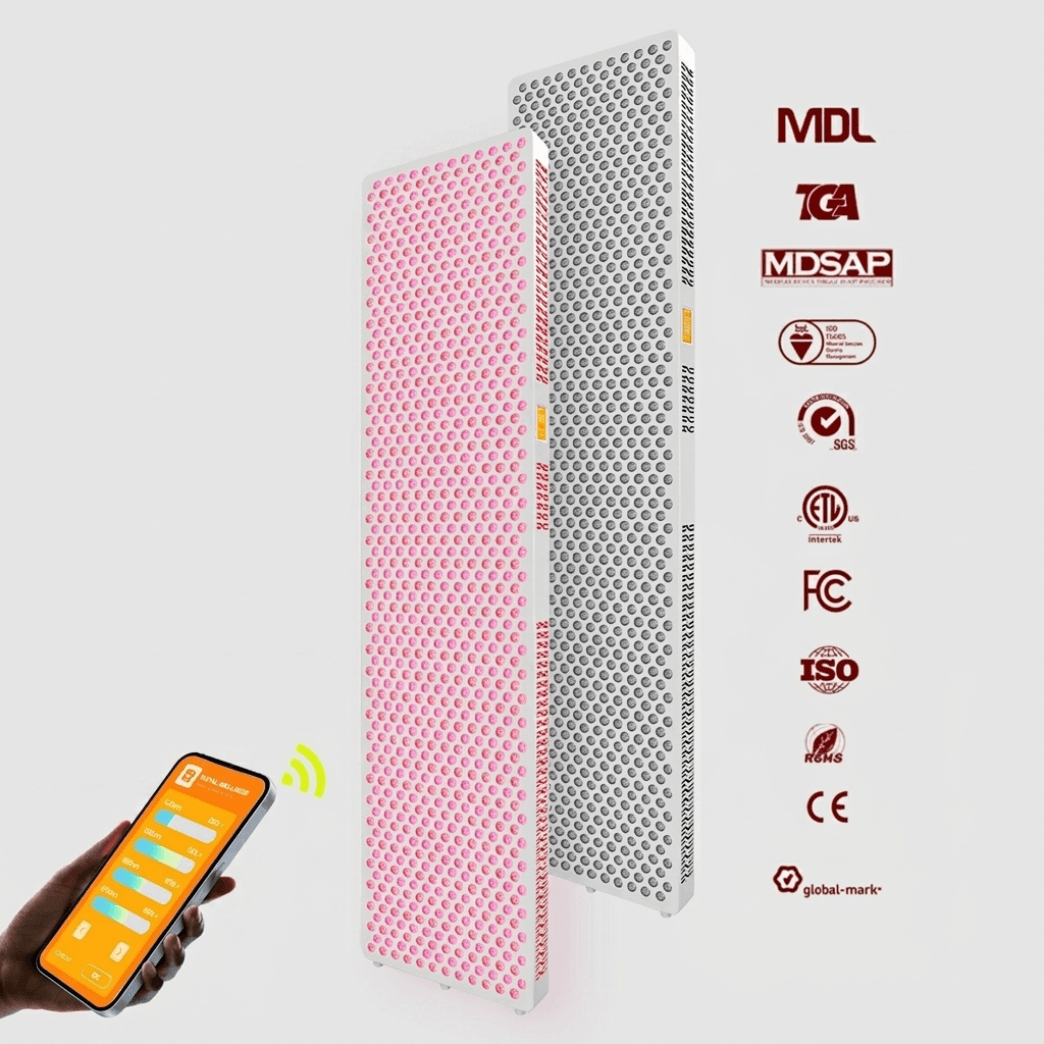
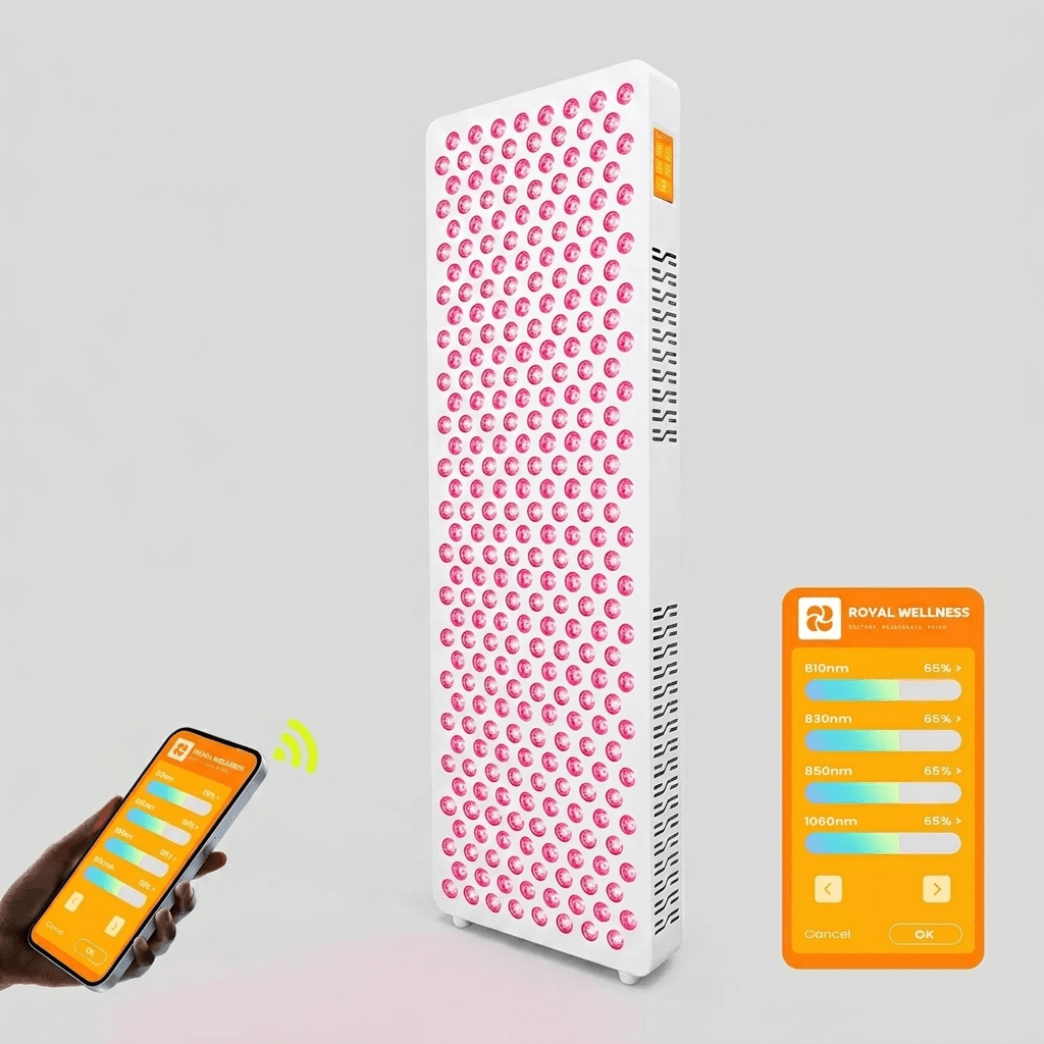
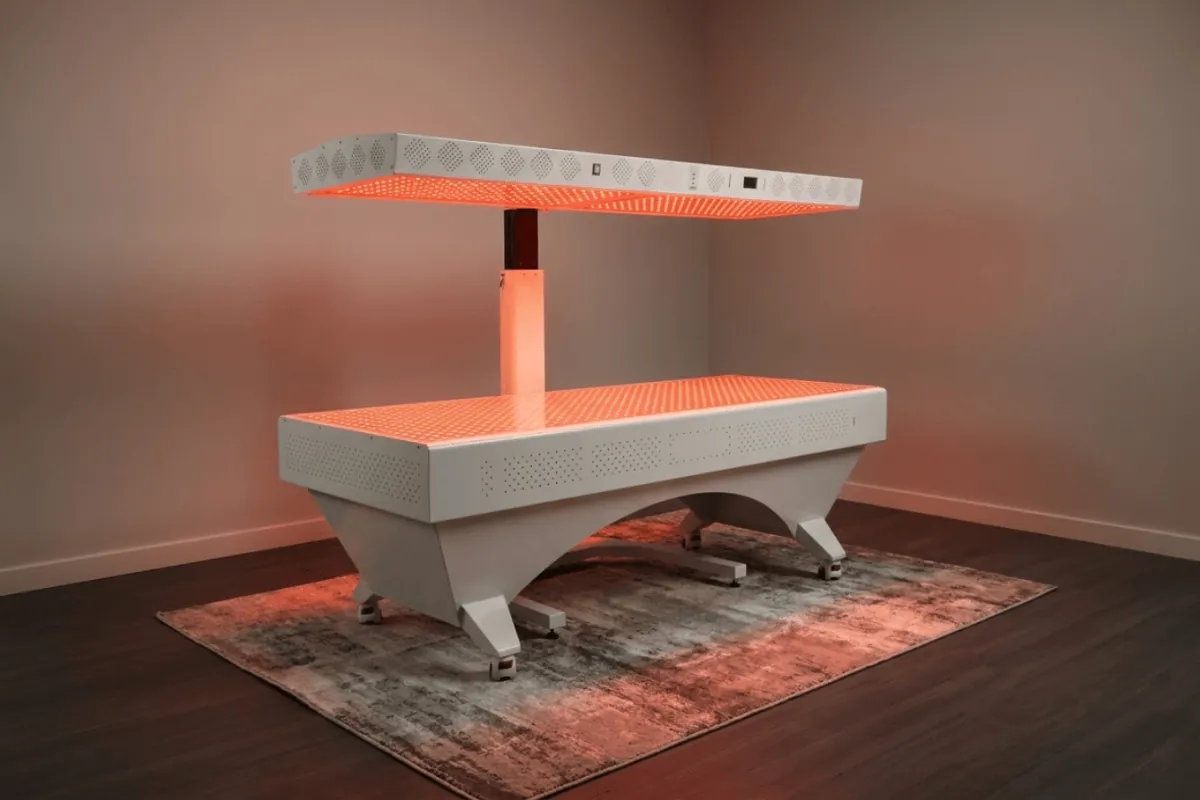
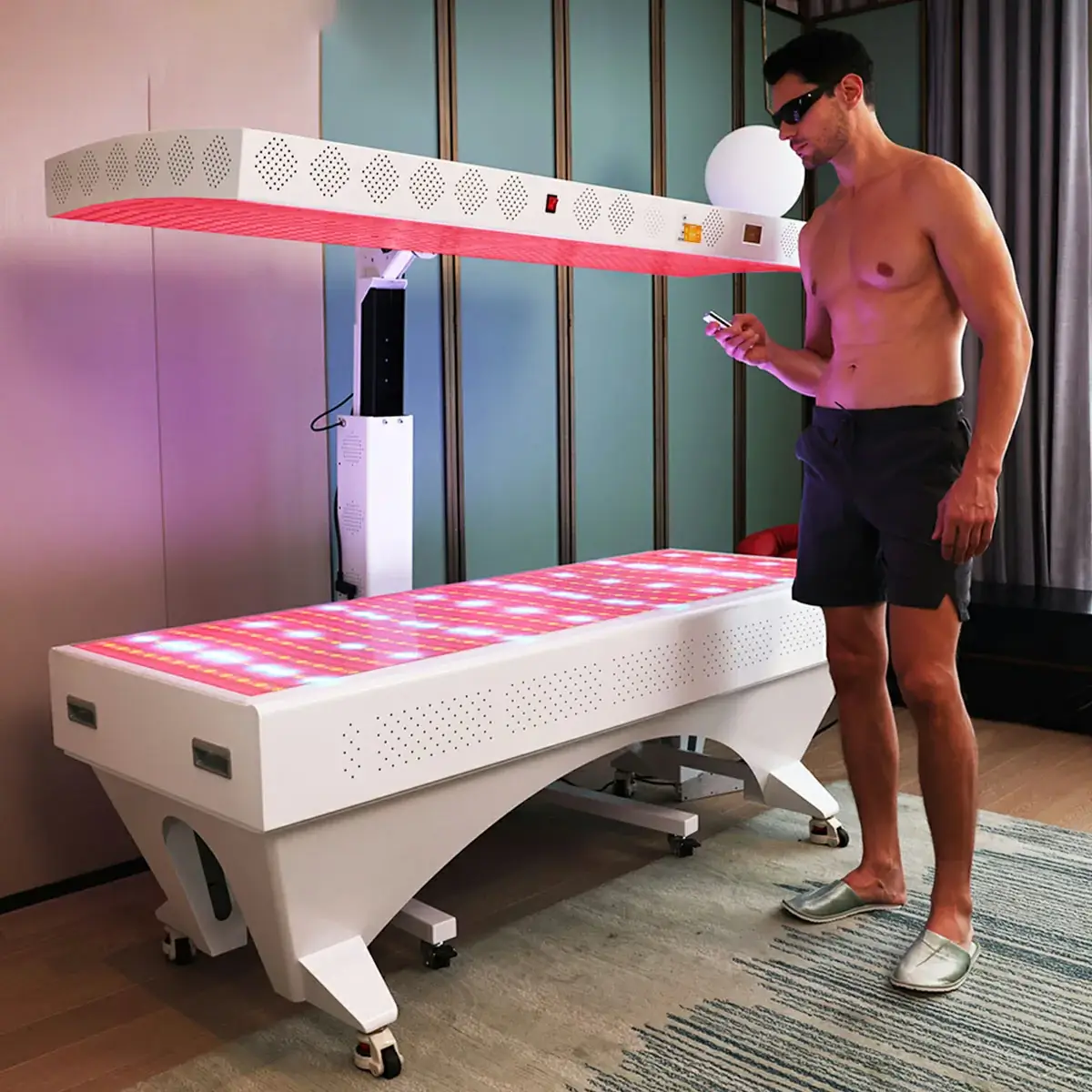
Your full-body device is the largest, least-reversible line item in the whole plan, so choose it before you sign a lease. Everything else, from your room size to your electrical needs to your pricing, follows from what you buy here. For a client-facing business, the practical choice is a full-body red light therapy bed or a large standing panel, because throughput matters: a device that treats the whole body in one 10-to-15-minute session serves far more clients per hour than a handheld or small panel ever could.
A commercial-grade full-body bed like the RoyalPro2000L-B sits around $20,000 and is built for the duty cycle of back-to-back sessions, with a large diode count and multiple wavelengths spanning red and near-infrared. That price is not an accident of branding; it reflects the LED count, driver quality, cooling, and warranty a device needs to survive commercial use. Before you flinch, remember this is a revenue-producing asset, and we will model exactly how fast it can pay itself back in the ROI section.
When you evaluate equipment, judge it on the specs that actually drive results and durability, not the marketing superlatives:
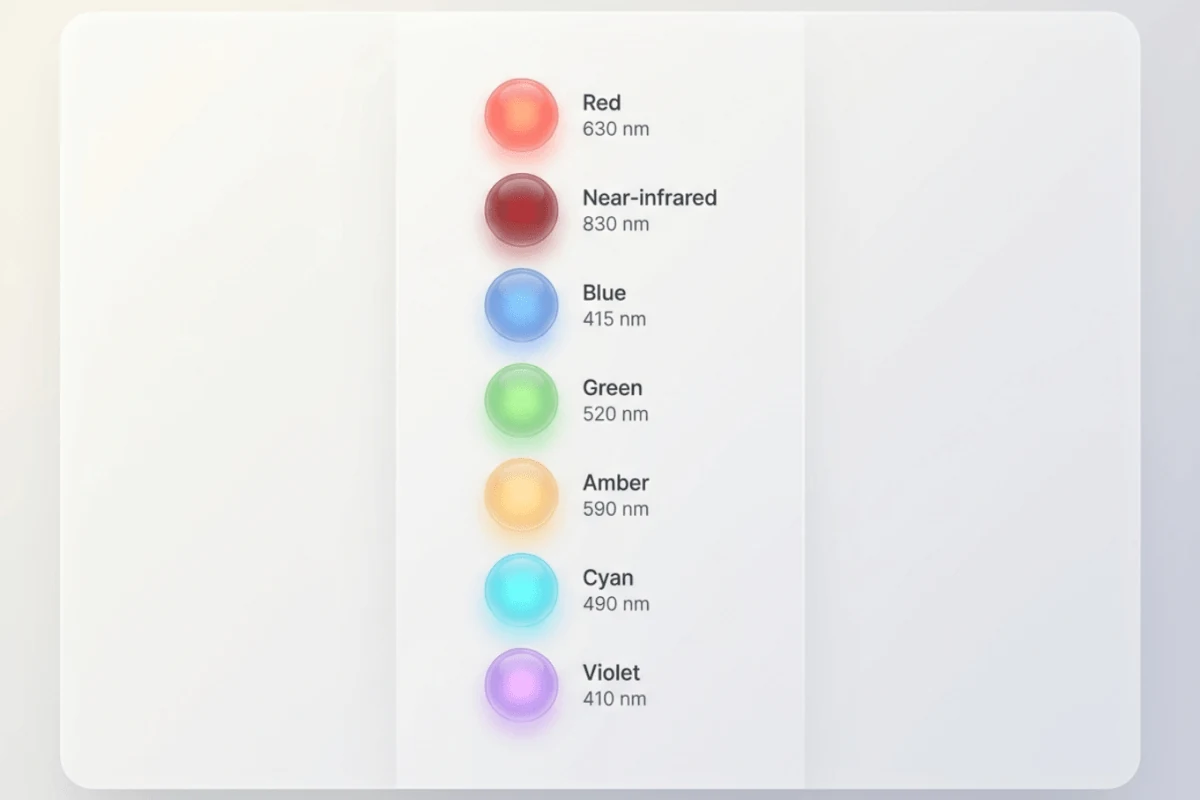
- Wavelengths. Look for validated red (around 630 to 660 nm) and near-infrared (around 830 to 850 nm). Red is absorbed mainly in skin; near-infrared penetrates deeper toward muscle and joints (Ash et al., 2017). A device covering both serves the widest range of client goals (de Freitas & Hamblin, 2016).
- Irradiance honesty. Intensity numbers are only meaningful at a stated distance and measurement method. Solar-meter readings routinely overstate output versus a spectrometer, so ask any vendor how their figure was measured before you compare two devices.
- Duty cycle and warranty. A home unit run a few minutes a day is a different machine from a commercial bed run 8 hours a day. Confirm the device is rated for commercial use and that the warranty says so.
To go deeper on choosing and budgeting a commercial unit, see our dedicated guides on the total cost of a red light therapy bed and how to pick a commercial red light therapy bed by business type. If capital is tight, equipment is exactly the kind of purchase an SBA 7(a) loan is designed to finance, with repayment terms that can be matched to the life of the equipment (U.S. Small Business Administration).
Step 3: Nail the space, power, and buildout
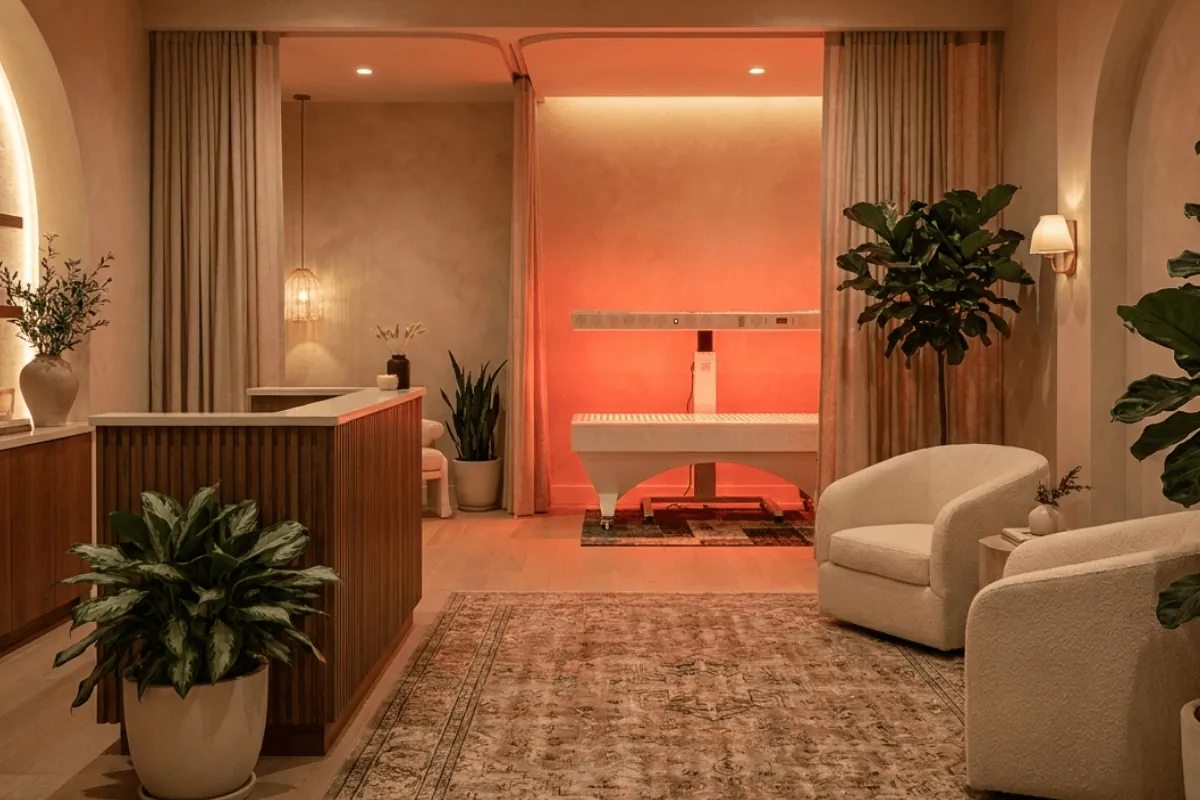
A red light room needs less square footage than most first-timers expect but more electrical planning than they budget for. A single full-body bed or panel station typically fits comfortably in a private room of roughly 80 to 120 square feet, enough for the device, a chair or bench, hooks, and room to change. That is a fraction of what a fitness studio needs, which is part of why red light pairs so well as an add-on.
The details that trip people up are less about space and more about infrastructure:
- Electrical. High-output full-body units draw meaningful current. Some run on a standard 110 to 120V household circuit, while larger or multi-panel setups may need a dedicated 20-amp circuit. Pull the manufacturer’s spec sheet, confirm the amperage draw, and verify your space can supply it before you sign a lease, because rewiring a leased suite is a costly surprise.
- Cooling and ventilation. Big LED arrays produce heat, and a warm client in a warm room is an unhappy client. Make sure the room has adequate airflow or air conditioning.
- Cleanability and privacy. Nonporous flooring, wipeable surfaces, a door or curtain for privacy, and a sanitation station are non-negotiable for a device clients lie on.
- Access and signage. Check ADA accessibility requirements, local zoning for your use, and whether tanning-facility or cosmetology rules apply in your jurisdiction. These vary widely by state and city.
Keep the client experience in mind alongside the plumbing. A clean, calm, well-lit room with easy booking and fast turnover does more for retention than any single spec on the device.
Step 4: Price sessions and build recurring revenue with memberships
Single sessions get people in the door, but memberships are what make a red light therapy business financially viable. A studio living on one-off drop-ins is at the mercy of walk-in traffic; a studio with a membership base has predictable revenue that keeps beds booked during the slow hours that would otherwise earn nothing. Build your pricing around converting first-timers into members.
The ranges below reflect what is commonly seen across U.S. studios and add-ons in 2026. Treat them as planning anchors and verify against your own local market, because pricing power varies enormously between a dense metro and a small town.
| Offer | Typical U.S. range (verify locally) | Purpose |
|---|---|---|
| Single full-body session | ~$25 to $60 | Trial and walk-in revenue |
| Intro offer (first session) | Free to ~$20 | Get first-timers in the door |
| Multi-session pack (10) | ~$200 to $450 | Commitment without a subscription |
| Monthly membership (limited) | ~$60 to $120 | Predictable recurring revenue |
| Unlimited monthly membership | ~$100 to $200 | Your highest-value, stickiest tier |
| Add-on for existing gym members | ~$15 to $40 / month | Low-friction upsell to a warm base |
A few pricing principles worth internalizing:
- Anchor on the membership, discount the trial. A cheap or free first session is a customer-acquisition cost, not a loss, if a healthy share convert to monthly plans.
- Sell outcomes people actually value, described honestly. Recovery, skin, and general wellness are the durable reasons people keep paying, and they are also the best-supported (Vanin et al., 2018; Hernandez-Bule et al., 2024).
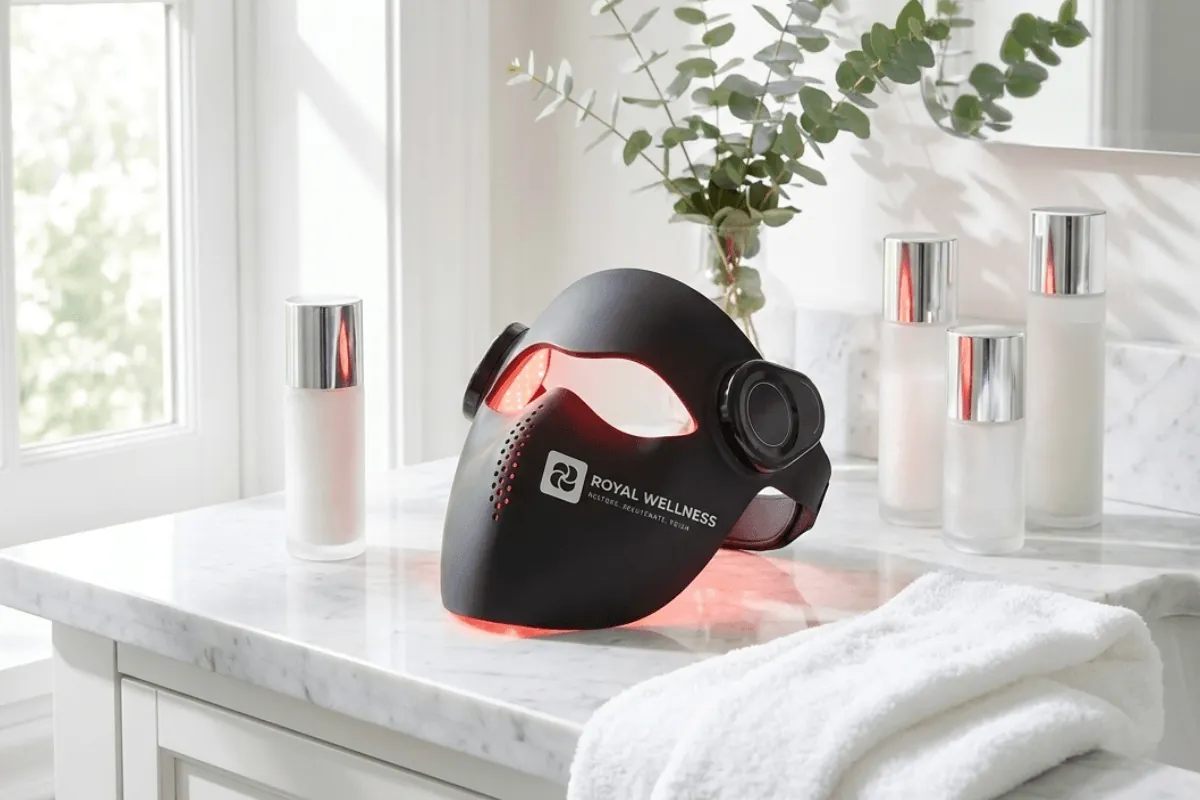
- Add retail margin. A small shelf of at-home devices, such as a mask or wearable belt, lets loyal clients continue between visits and adds high-margin revenue without more room time. Browse the full lineup in the shop to see what fits your clientele.
Meta-analytic evidence backs light therapy around exercise for performance and recovery.
Step 5: Protect yourself with insurance, liability, and compliant marketing
The single fastest way to sink a red light therapy business is to promise medical outcomes you cannot substantiate. This is the step first-timers underestimate, and it carries real legal risk, so read it twice. Two federal agencies shape what you can say and sell.
On the device side, the FDA clears light therapy devices; it does not “approve” them the way it approves drugs. Many devices reach the market either through the 510(k) premarket notification pathway, where a maker shows the device is substantially equivalent to a legally marketed one (FDA PBM Devices guidance), or under the FDA’s general wellness policy, which applies enforcement discretion to low-risk products that make only general-wellness claims and avoid disease claims (FDA General Wellness guidance). Say “FDA 510(k) cleared” only if your specific device actually is, and never say “FDA approved.”
On the marketing side, the FTC treats health equipment exactly like supplements: any health claim needs “competent and reliable scientific evidence,” which the agency generally defines as randomized, controlled human trials, and it warns that in vitro or animal studies and customer testimonials cannot, on their own, substantiate a claim (FTC Health Products Compliance Guidance, 2022; FTC Health Claims). In practice, that means:
- Use hedged, honest language. “May support recovery,” “research suggests,” and “many clients use it for skin and relaxation” are defensible. “Cures arthritis,” “eliminates wrinkles,” or “treats depression” are not, and disease claims can also reclassify your device into a stricter regulatory bucket.
- Keep a claim file. For every benefit you advertise, keep the citation you are relying on. If you cannot point to solid human-trial evidence, soften or drop the claim.
- Be careful with testimonials. A client saying red light “healed” their condition is a claim you are now responsible for. Screen reviews and avoid implying medical outcomes.
Beyond claims, cover the operational basics: general liability and professional liability insurance, a signed client waiver and intake form, clear operating and sanitation protocols, and the right business structure (an LLC or corporation) so personal assets are shielded. A short conversation with a local attorney and an insurance broker who knows the wellness space is cheap relative to the risk it removes. Our commercial page outlines how we support business buyers on the equipment and documentation side.
Franchise vs. independent: which path fits you?
A franchise buys you a brand and a proven playbook in exchange for fees and control; going independent keeps your margin and freedom but puts the whole build on you. Neither is universally better, and the right answer depends mostly on your experience and your appetite for building systems from scratch.
| Factor | Red light therapy franchise | Independent |
|---|---|---|
| Upfront cost | Higher (franchise fee + buildout to spec) | Lower and flexible |
| Ongoing cost | Royalties and marketing fees | You keep the margin |
| Brand and trust | Instant recognition | You build it |
| Playbook and support | Provided (buildout, marketing, suppliers) | You create it |
| Freedom | Constrained by franchisor rules | Full control of pricing, devices, brand |
| Best for | First-time owners wanting a proven system | Existing operators and hands-on builders |
If you have never run a business and want guardrails, a franchise can shorten your learning curve dramatically. If you already own a gym, spa, or clinic, or you are the kind of operator who would rather own your brand and pocket the royalty, the independent route almost always produces better long-run economics, especially when you are simply adding a device or two to an existing space.
Run the numbers: a simple ROI model
A red light therapy business lives or dies on utilization, so model your break-even in sessions per day, not in vague monthly revenue. The table below is a deliberately simple, illustrative model for a single-bed operation. It is not a promise of results; it exists to show you how the levers interact so you can rebuild it with your own real numbers.
Assumptions for the illustration: one full-body bed purchased for about $20,000; average revenue of $40 per session (blended across drop-ins and members); fixed monthly costs of roughly $2,500 for rent, insurance, software, and utilities; roughly 26 operating days per month; and negligible variable cost per session. Financing interest, taxes, marketing, and ramp-up time are excluded to keep the mechanics clear.
| Sessions / day | Sessions / month | Revenue at $40 | Less fixed (~$2,500) | Monthly profit | Months to recoup ~$20k bed* |
|---|---|---|---|---|---|
| 4 | ~104 | ~$4,160 | -$2,500 | ~$1,660 | ~12 |
| 8 | ~208 | ~$8,320 | -$2,500 | ~$5,820 | ~4 |
| 12 | ~312 | ~$12,480 | -$2,500 | ~$9,980 | ~2 |
*Illustrative only. It ignores financing interest, taxes, ramp-up months, marketing spend, and slow early utilization. Verify every number against your market before you commit.
The lesson is not the specific figures; it is the shape of the curve. Going from 4 to 8 sessions a day more than triples monthly profit because your fixed costs are already covered, so almost every incremental session is nearly pure margin. That is precisely why memberships matter so much: they are the mechanism that lifts you from the painful low-utilization row into the comfortable ones. Model your own version, then ask honestly how you will fill those midday and evening slots.
Going from 4 to 8 sessions a day more than triples monthly profit because your fixed costs are already covered, so almost every incremental session is nearly pure margin.
Safety and client screening
Every client-facing red light business needs a written screening and safety protocol, because you are responsible for who you put under the light. Red and near-infrared light therapy is generally well tolerated, but a few situations call for caution or a referral to a clinician, and your intake form should catch them before a session begins.
- Pregnancy. Safety data during pregnancy is limited; ask clients to get clearance from their provider first.
- Photosensitizing medications. Certain antibiotics, diuretics, some antidepressants and antipsychotics, and oral acne drugs like isotretinoin increase light sensitivity. Screen for them and refer to a clinician when in doubt.
- Active cancer or undiagnosed lesions. Do not position your service as a treatment, and refer anyone with active disease or unexplained skin changes to their doctor.
- Eye protection. Provide and require the eye protection recommended for your device, and instruct clients never to stare into the LEDs.
- Photosensitive conditions. Lupus, porphyria, or a history of light-triggered rashes warrant medical advice before starting.
Crucially, stay in your lane on scope of practice. Unless you are a licensed medical provider operating within your license, you are running a general-wellness service, not delivering medical care. Do not diagnose, do not prescribe protocols for diseases, and route medical questions to medical professionals. A simple written waiver, a health questionnaire, and a “talk to your clinician” policy protect both your clients and your business.
The bottom line
A red light therapy business can be a genuinely good venture in 2026: the category is growing, the science behind the wellness outcomes people buy is real, and the room footprint is small enough to bolt onto a gym, spa, or clinic you already run. But the money is made in the unglamorous details, choosing the right model, keeping your rooms full with memberships, and marketing honestly so the FDA and FTC never become your problem. Set realistic expectations: most operators grow into profitability over months as utilization climbs, not overnight, and the ones who last are disciplined about both their numbers and their claims.
The decision that anchors everything else is your equipment, because it is your biggest cost and your revenue engine at once. A commercial-grade full-body bed built for back-to-back sessions closes that decision cleanly: the RoyalPro2000L-B is designed for exactly this use case, with the diode count, wavelengths, and durability a paying-client environment demands. Explore it and the rest of our business lineup on the commercial page, and if you are still weighing a bed against panels, start with our guide to the total cost of a red light therapy bed before you sign anything.
- The two decisions that make or break a red light therapy business are the capital math on your equipment and the legal line on your marketing claims. Get those right and the rest is executable.
- Decide your model first: a standalone studio, a high-margin add-on to an existing gym, spa, med-spa, or chiropractic practice, or a franchise. Add-ons often reach profitability fastest because they borrow existing foot traffic and rent.
- A commercial full-body bed is your largest, least-reversible line item, often around $20,000, so choose your equipment before you sign a lease and confirm the electrical draw on the spec sheet.
- Memberships, not single sessions, are what make the numbers work. Model your break-even in sessions per day and treat utilization as the metric that decides profit.
- Market honestly. The FDA clears these devices, it does not "approve" them, and the FTC requires competent, reliable scientific evidence for health claims. Use "may support" language and never promise to treat or cure disease.
- A franchise buys you a brand and a playbook for higher upfront and ongoing fees; going independent keeps margin and control, but you build the systems yourself.
FREQUENTLY ASKED
How much does it cost to start a red light therapy business?
Plan for three buckets: equipment, buildout, and working capital. A single commercial full-body bed is often around $20,000, and a small studio's total startup commonly lands anywhere from roughly $30,000 to well over $100,000 depending on whether you buy one device or several, your lease and buildout, and local licensing. Adding red light to an existing gym, spa, or clinic can cost far less because you reuse rent, staff, and traffic. Treat any "turnkey" figure you see online as a starting point and build your own budget from real quotes.
Do I need a license or medical credential to open a red light therapy studio?
In most U.S. states, offering general-wellness red light sessions does not require a medical license, but requirements vary by state and city. A general business license, sales tax registration, zoning approval, and sometimes cosmetology or tanning-facility rules can apply. Because you are operating as wellness rather than medicine, you must avoid diagnosing or treating disease. Confirm the specific rules with your state, your city, and a local attorney before you open.
Is a red light therapy franchise better than going independent?
It depends on how much you value speed and a proven playbook versus margin and control. A red light therapy franchise gives you brand recognition, buildout templates, marketing systems, and supplier relationships in exchange for franchise fees, ongoing royalties, and less freedom. Going independent keeps every dollar of margin and lets you choose your own equipment and pricing, but you build the systems, brand, and buyer trust yourself. Many first-time operators without an existing business lean franchise; operators bolting red light onto a gym or spa they already run usually go independent.
How do I market a red light therapy business without breaking the law?
Stick to honest, hedged language and keep documentation for every claim. The FTC expects "competent and reliable scientific evidence," generally meaning randomized controlled human trials, behind health claims, and it treats health equipment the same as supplements. Say devices are "FDA 510(k) cleared" only if yours actually are, and never say "FDA approved" for a wellness device. Use phrasing like "may support recovery" or "research suggests," avoid disease claims entirely, and skip testimonials that imply a cure. When in doubt, describe the process, not a promised outcome.
How long until a red light therapy business becomes profitable?
Profitability is driven by utilization, so it depends far more on how full your rooms are than on the calendar. An add-on inside an existing gym or spa can be cash-flow positive within the first few months because it borrows rent and traffic, while a standalone studio usually needs several months to a year to ramp memberships to the point where revenue clears fixed costs plus equipment. The single biggest lever is recurring memberships that keep beds booked during off-peak hours.
What equipment does a red light therapy studio need?
The core capital decision is your full-body device, most often a red light therapy bed or a large panel, and everything else is supporting kit. Beyond the bed you will want booking and payment software, sanitation supplies and protocols, eye protection for clients, comfortable changing space, and usually a small retail shelf of at-home devices such as masks or belts that add margin. Start with one reliable full-body unit sized to your expected demand, then add capacity as utilization proves out.
REFERENCES
- 1. Grand View Research. Red Light Therapy Market Size, Share & Trends Analysis Report By Application, By End-use, By Region, And Segment Forecasts. 2025. Grand View Research 2025
- 2. U.S. Food & Drug Administration. General Wellness: Policy for Low Risk Devices. Guidance for Industry and Food and Drug Administration Staff. FDA General Wellness
- 3. U.S. Food & Drug Administration. Photobiomodulation (PBM) Devices - Premarket Notification [510(k)] Submissions. Guidance for Industry and FDA Staff. FDA PBM 510(k)
- 4. U.S. Federal Trade Commission. Health Products Compliance Guidance. December 2022. FTC 2022
- 5. U.S. Federal Trade Commission. Health Claims (Business Guidance: Advertising and Marketing). FTC Health Claims
- 6. U.S. Small Business Administration. 7(a) loans (Funding Programs). SBA 7(a)
- 7. Hamblin MR. Mechanisms and applications of the anti-inflammatory effects of photobiomodulation. AIMS Biophys. 2017;4(3):337-361. doi:10.3934/biophy.2017.3.337 PMC5523874
- 8. Vanin AA, Verhagen E, Barboza SD, Costa LOP, Leal-Junior ECP. Photobiomodulation therapy for the improvement of muscular performance and reduction of muscular fatigue associated with exercise in healthy people: a systematic review and meta-analysis. Lasers Med Sci. 2018;33(1):181-214. doi:10.1007/s10103-017-2368-6 PMID 29090398
- 9. Wunsch A, Matuschka K. A controlled trial to determine the efficacy of red and near-infrared light treatment in patient satisfaction, reduction of fine lines, wrinkles, skin roughness, and intradermal collagen density increase. Photomed Laser Surg. 2014;32(2):93-100. doi:10.1089/pho.2013.3616 PMC3926176
- 10. Ash C, Dubec M, Donne K, Bashford T. Effect of wavelength and beam width on penetration in light-tissue interaction using computational methods. Lasers Med Sci. 2017;32(8):1909-1918. doi:10.1007/s10103-017-2317-4 PMC5653719
- 11. de Freitas LF, Hamblin MR. Proposed mechanisms of photobiomodulation or low-level light therapy. IEEE J Sel Top Quantum Electron. 2016;22(3):7000417. doi:10.1109/JSTQE.2016.2561201 PMC5215870
- 12. Hernandez-Bule ML, Naharro-Rodriguez J, Bacci S, Fernandez-Guarino M. Unlocking the Power of Light on the Skin: A Comprehensive Review on Photobiomodulation. Int J Mol Sci. 2024;25(8):4483. doi:10.3390/ijms25084483 PMC11049838
ABOUT THE AUTHORS
Our team reviews the peer-reviewed literature on red and near-infrared light therapy and translates it into honest, practical guidance — no hype, just what the evidence actually supports.