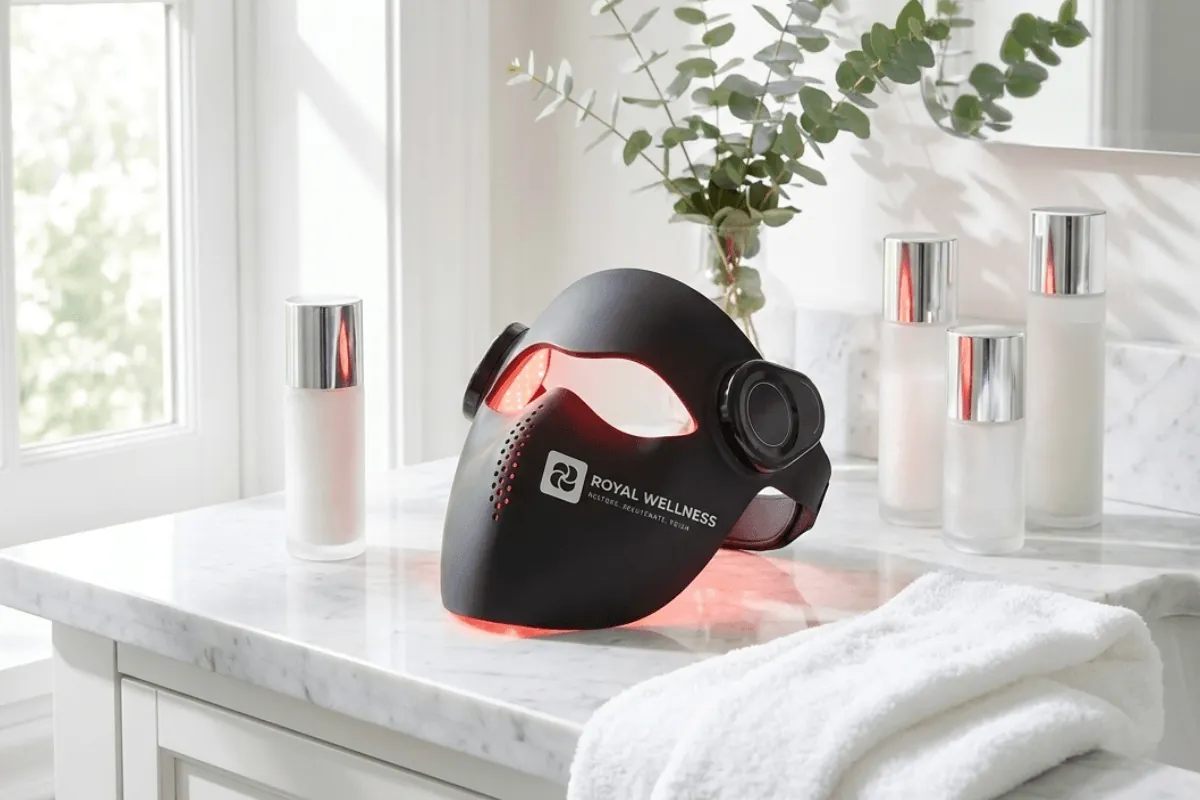
Red Light Therapy Bed Cost in 2026: A Real Price Breakdown
What does a red light therapy bed cost in 2026? Real brand prices, total cost of ownership, per-session math, and business ROI, laid out honestly.
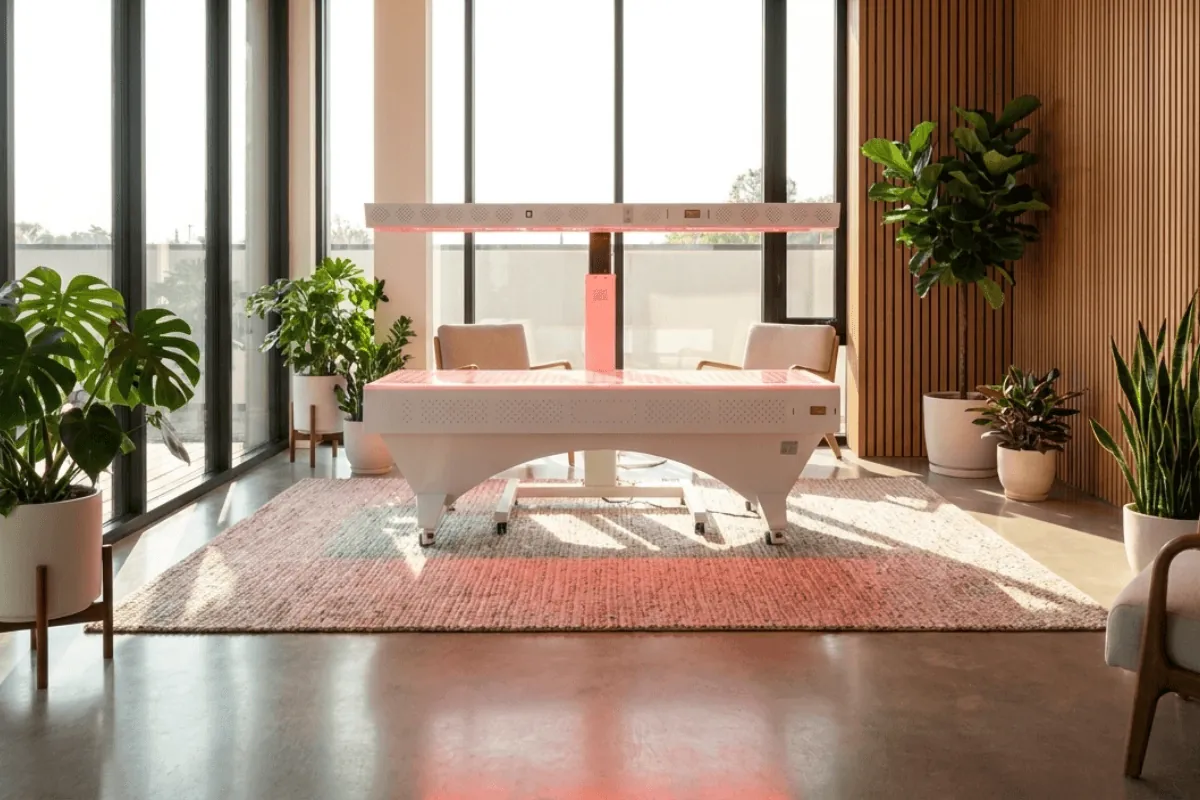
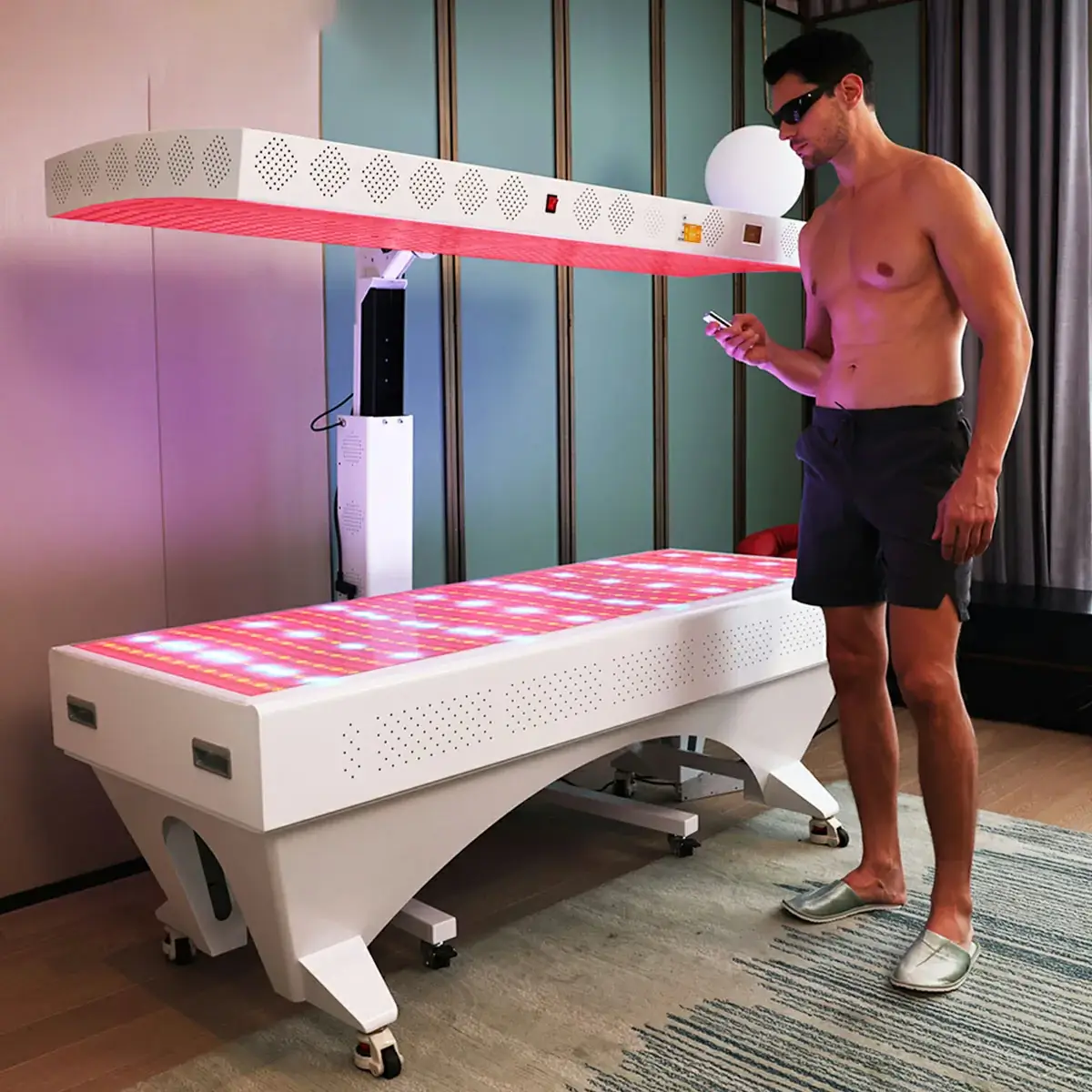
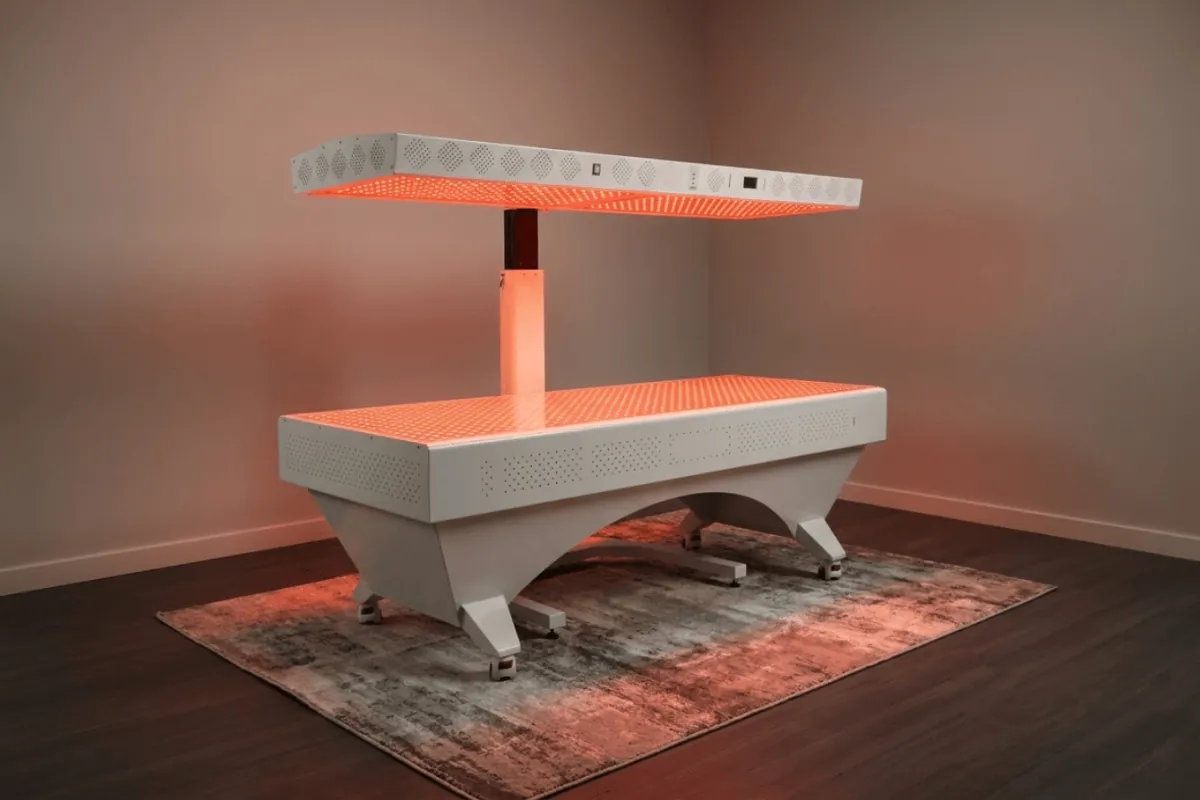
Search “red light therapy bed cost” and you will get answers ranging from $2,000 to $130,000, which tells you almost nothing. The problem is that “bed” gets used loosely: some sellers mean a genuine full-body, lie-down clamshell packed with over a thousand LEDs, and others mean a large panel you stand near. Those are not the same purchase, and they are not the same price. This guide fixes that by breaking down what a real full-body red light therapy bed costs in 2026 — brand by brand — then the total cost of ownership most sellers gloss over, the per-session math for a home buyer, and the payback math if you are buying one to run a business.
A quick orientation before the numbers. A full-body red light therapy bed delivers photobiomodulation (PBM): red and near-infrared light absorbed by your cells’ mitochondria to support normal function, the same underlying biology used in smaller panels and masks Hamblin 2017. What a bed adds is coverage and convenience — head-to-toe exposure in one 10-to-20-minute session, hands-free, lying down. That convenience is most of what you are paying for, and it is why beds sit at the top of the red light therapy bed category on price. If you want the model-by-model rankings, our guide to the best red light therapy bed covers that separately; this article is strictly about money.
Red and near-infrared light absorbed by your cells' mitochondria to support normal function — the same underlying biology used in smaller panels and masks.
What does a red light therapy bed cost in 2026?
A full-body red light therapy bed cost in 2026 spans roughly $20,000 to $130,000, and the single biggest driver of where a specific bed lands is the brand and its sales model, not the physics. Newer manufacturers selling factory-direct can put a well-specced bed near $20,000, while established medical brands that sell through dealer networks routinely charge three to six times more for a device doing the same fundamental job. The table below collects publicly listed and reseller-referenced prices as of 2026. Treat these as directional — beds are frequently sold by quote, prices move, and shipping is often separate — so always verify current pricing directly with the manufacturer.
| Bed (brand / model) | Approx. 2026 price (USD) | Notes |
|---|---|---|
| Solbasium Nova | ~$19,990 | Newer full-body entrant; sold direct. Verify current pricing |
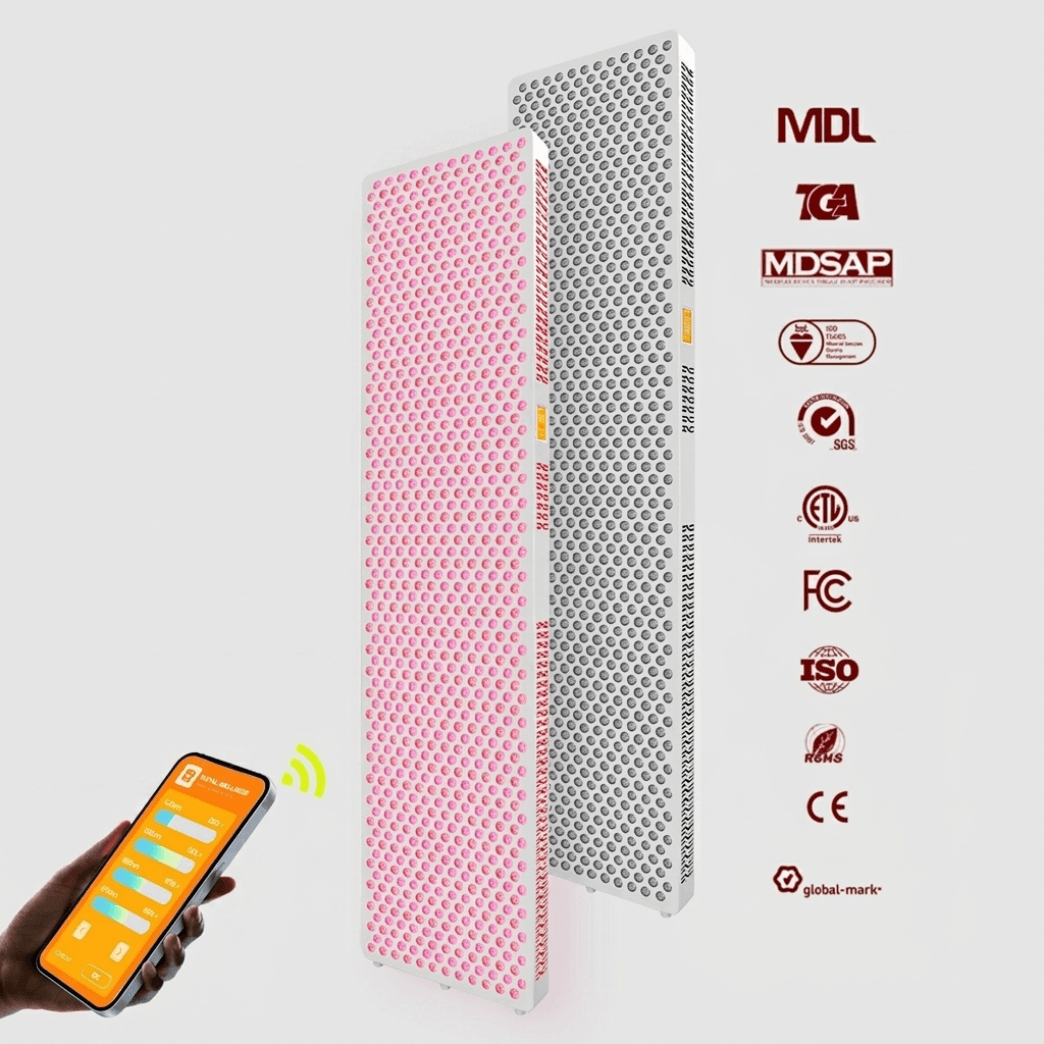
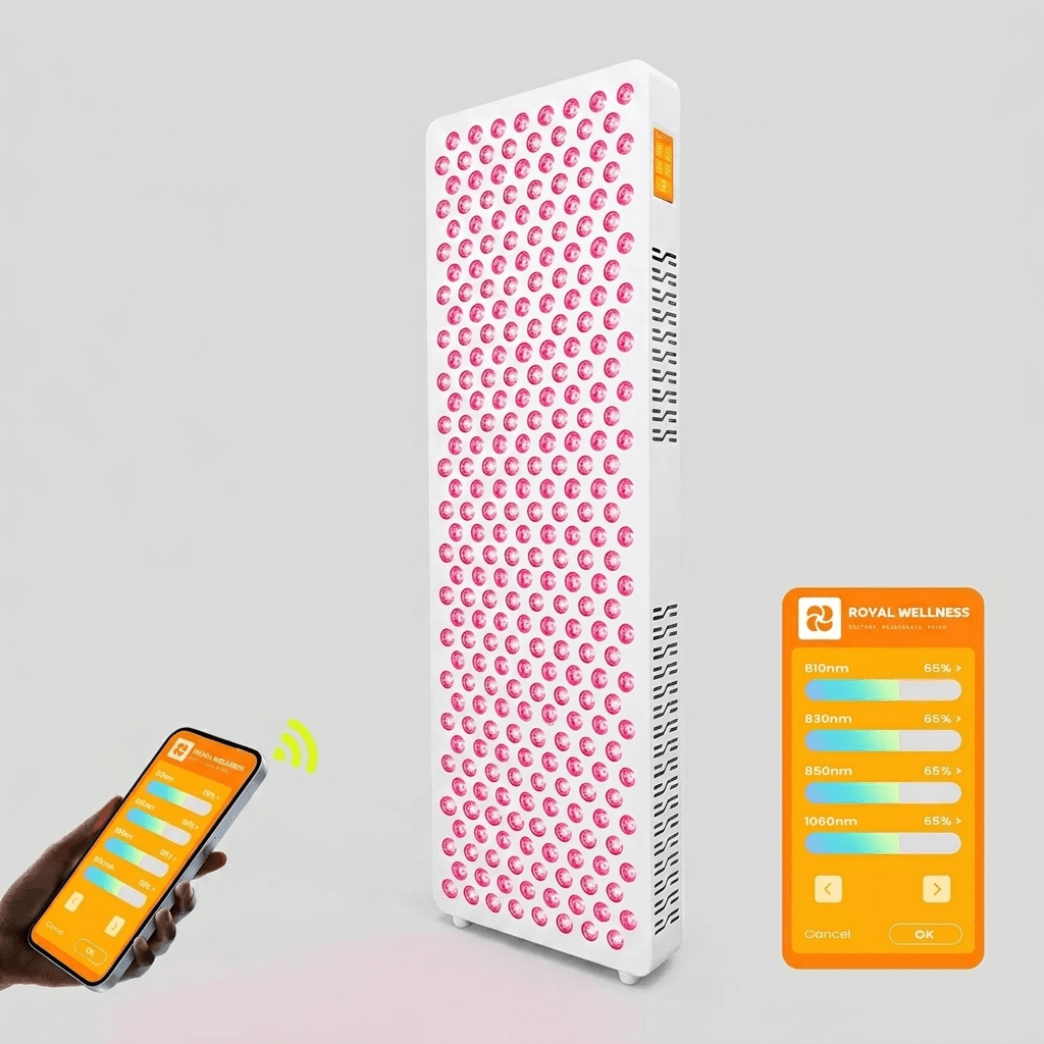
| RoyalPro2000L-B | $19,999 | 1,152 LEDs, 9 wavelengths, touchscreen; our flagship bed |
| LIT Method Lumé | Quote-based (mid five figures) | No public list price; request a quote |
| TheraLight 360 | ~$78,750–$85,000 (+ ~$3,795 shipping) | Medical-grade; often financed. Verify |
| NovoTHOR (Standard–XL) | ~$60,000–$130,000 | Laser + LED pod; sold via dealers. Verify by model |
Two things jump out. First, the spread is enormous for what is, at heart, the same modality — a signal that “expensive” and “effective” are not automatically the same thing. Second, the market has split. There is now a value tier around $20,000 (Solbasium, RoyalPro2000L-B) and a legacy premium tier north of $60,000 (TheraLight, NovoTHOR), with LIT and various mid-market beds filling the $35,000-to-$70,000 middle. The rest of this guide is about figuring out which tier your use case actually justifies.
Why prices swing from $20,000 to $130,000
The reason one red light therapy bed costs $20,000 and another costs $130,000 comes down to a stack of cost drivers — LED count, wavelengths, verified irradiance, build quality, warranty, automation, and medical registration — layered on top of brand markup and how the company sells. None of these is the biology of light; the physics of a 660 nm photon is identical whether it comes from a $20,000 bed or a $120,000 one. Here is what you are actually paying for as you move up the ladder:
- LED count and density. More diodes mean more total output and more even coverage. A full-body bed like the RoyalPro2000L-B carries 1,152 LEDs; higher-density beds carry more, which raises the bill of materials.
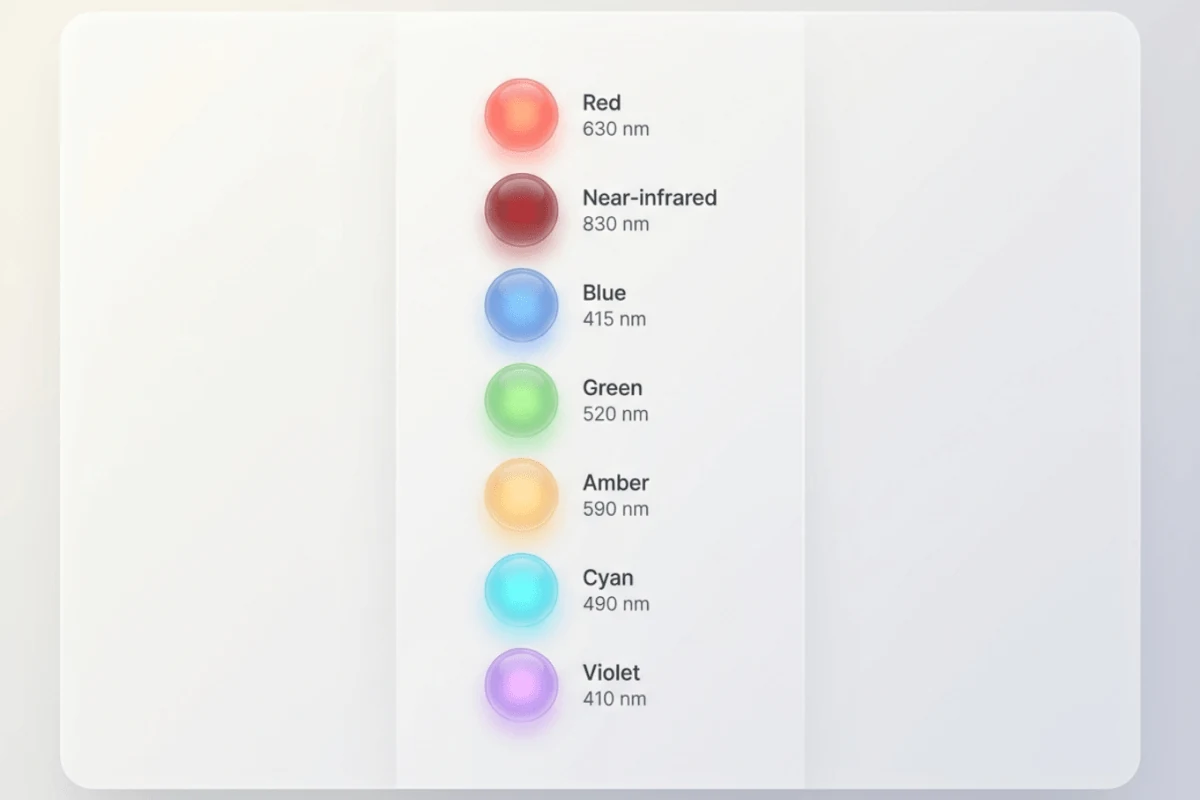
- Number of wavelengths. Basic beds run two bands (660 nm red and 850 nm near-infrared). Premium beds add more. Red near 660 nm is absorbed mostly in skin; near-infrared near 850 nm penetrates deeper toward muscle and joints Ash 2017, so a wider set can serve more goals — but past a point, extra wavelengths are more marketing than medicine de Freitas 2016.
- Verified irradiance and cooling. Delivering real power head-to-toe without cooking the LEDs requires engineering. Sustained, accurately measured output costs more than a high number on a spec sheet.
- Automation and controls. Touchscreens, presets, session timers, and app integration add cost and are genuinely useful for a busy studio.
- Warranty and support. A 3-to-5-year commercial warranty and responsive parts support is priced in — and worth it on a machine you run all day.
- Medical device clearance and brand. FDA 510(k) clearance paperwork, dealer margins, and a well-known name all add dollars that never touch a single LED.
The honest takeaway: some of the premium buys real engineering and support, and some of it buys a logo. Your job is to separate the two, which is exactly why verified specs beat headline prices — a theme we return to below.
Total cost of ownership: beyond the sticker price
The purchase price is the first line of the bill, not the whole bill — the total cost of ownership (TCO) of a red light therapy bed also includes shipping, electricity, floor space, maintenance, and, for a business, staff time. The good news is that the scary-sounding recurring costs are mostly small. The table below frames what to budget for a commercial-grade bed over its life.
| Cost category | Typical range | What drives it |
|---|---|---|
| Purchase price | $20,000–$130,000 | Brand, LED count, wavelengths, 510(k) clearance |
| Shipping & installation | $500–$4,000 | Weight, freight class, professional setup |
| Electricity | ~$0.05–$0.15 per session | Power draw x session length x local rate |
| Floor space | Varies | Roughly 15–35 sq ft footprint plus entry room |
| Maintenance & warranty | $0–$1,500 / year | Warranty length; out-of-warranty LED/driver swaps |
| Cleaning & consumables | Low | Sanitizing wipes, eye protection, linens |
| Staff time (business only) | Varies | Turnaround, cleaning, and scheduling per client |
Electricity is the line people fear and shouldn’t. A full-body LED bed typically draws on the order of 1 to 3 kW while running (verify against your specific bed’s spec sheet). Take a 15-minute session at 2 kW: that is 0.5 kWh, and at the U.S. average of roughly $0.17/kWh, about $0.085 of electricity per session. Even a busy day of 12 sessions is under $1.10 of power. Over a full year of heavy commercial use, you are looking at low hundreds of dollars — a rounding error next to rent or financing. So when a competitor waves around “efficiency,” remember the meter was never the expensive part.
Space and staff time are the real recurring costs. A bed needs a private, ventilated room with space to enter and exit, which in a commercial setting is square footage you could rent to something else. And someone has to greet the client, explain the protocol, sanitize the bed, and reset it between sessions. Those minutes, multiplied across a day, are the operating cost that actually matters — and the reason automation and fast turnaround earn their keep.
Red light therapy bed cost per session: owning vs paying
If you own the bed, your red light therapy bed cost per session is simply the purchase price divided by how many sessions you run over its life, plus a few cents of electricity — which is why heavy, consistent use is the entire financial case for buying. Compare that with paying a spa: full-body sessions typically run about $25 to $100 each, and a NovoTHOR session at a wellness center is commonly $50 to $55 for 15 to 20 minutes. Here is how ownership economics scale on a $19,999 bed:
| Total sessions over its life | Device cost per session | Realistic scenario |
|---|---|---|
| 200 | ~$100 | Light home use, ~1x/week for ~4 years |
| 500 | ~$40 | Solo user 3x/week for ~3.2 years |
| 780 | ~$26 | Solo 3x/week for 5 years, or a couple in ~2.5 years |
| 1,500+ | ~$13 or less | Household of 3–4, or a small studio |
Add electricity of well under $0.15 per session and the picture barely moves. The break-even logic is clean: at $40 per paid spa visit, it takes about 500 sessions for a $19,999 bed to equal what you would have spent going out. A single person training three times a week gets there in a little over three years; a two-person household roughly halves that; a family reaches it faster still. Below that usage threshold, paying per session is genuinely cheaper, and honesty demands saying so — a bed that sits idle is the most expensive light in the house. If your usage is lighter or space is tight, a full-body panel such as the RoyalPro Ultimate G4 or a unit from /shop/panels reaches most of the same coverage for a fraction of a bed’s price.
Why do people cross that threshold anyway? Because the appeal of a bed is not only cost — it is doing whole-body sessions consistently and comfortably. And consistency is where the evidence lives: trials that showed benefit used regular sessions over weeks, whether for muscular performance and recovery Vanin 2018 or for pain and quality of life, where a triple-blinded randomized trial found whole-body PBM reduced pain and improved quality of life over four weeks with benefits tracked to six months Navarro-Ledesma 2024. A bed you will actually lie in every other day beats a cheaper device you avoid.
A triple-blinded randomized trial found whole-body PBM reduced pain and improved quality of life over four weeks, with benefits tracked to six months.
The business math: sessions per day and payback
For a business, the equation flips: a red light therapy bed is not a cost to recover through personal use, it is an asset that other people pay to use, so the driver is sessions per day multiplied by price, set against your operating costs. Start with the gross. At $40 per session on a $19,999 RoyalPro2000L-B, here is how monthly revenue and simple payback scale with volume (26 open days a month):
| Sessions / day | Monthly gross ($40/session) | Months to gross back the $19,999 device |
|---|---|---|
| 4 | $4,160 | ~4.8 |
| 8 | $8,320 | ~2.4 |
| 12 | $12,480 | ~1.6 |
On paper, even a modest 8 sessions a day recoups the device in under three months. But that is gross, and it is where honest planning separates from spreadsheet fantasy. Those numbers ignore rent, staff wages, card processing fees, insurance, cleaning supplies, scheduling software, and — the big one — the marketing spend and ramp-up time it takes to get from zero clients to 8 a day. A brand-new studio does not open at 12 sessions a day. Realistically, most operators should model a net payback of 9 to 18 months, factor in a slow first quarter, and treat the table above as the ceiling, not the forecast.
A few levers move the business case in your favor:
- Price by value, not by the meter. Full-body sessions support $25 to $100; medical-grade positioning and a premium room justify the upper end. Memberships and packages smooth cash flow and raise lifetime value.
- Buy the value tier if the specs hold up. A $20,000 bed that performs reaches payback far faster than a $90,000 bed charging the same $40 a session — the client cannot see the price you paid, only the experience.
- Stack it with existing traffic. Gyms, med spas, and recovery studios add a bed to a room they already staff, so the marginal operating cost per session is tiny.
If you are building the business from scratch — licensing, room build-out, insurance, and marketing — our step-by-step guide on how to start a red light therapy business walks the full setup, and you can see the commercial lineup on the /commercial page. The bed itself, the RoyalPro2000L-B, is priced specifically to make this math work at the value tier.
There is also a demand-side reason beds sell in wellness settings: the range of outcomes people seek them for. Beyond recovery, a retrospective study reported reductions in abdominal, arm, and thigh circumference after four to six PBM sessions with body mass index unchanged, pointing to a localized effect rather than weight loss Eskandari 2024, and the skin-rejuvenation literature for red and near-infrared light is among the strongest in the field Wunsch 2014, Hernandez-Bule 2024. A single bed can serve recovery, skin, and general-wellness clients from the same room — which is what makes the per-session revenue add up.
A retrospective study reported reductions in abdominal, arm, and thigh circumference after four to six PBM sessions, with body mass index unchanged.
Financing, taxes, and the hidden line items
Most commercial beds are bought on financing rather than cash, and for U.S. businesses the tax treatment can materially lower the effective cost — but only a tax professional can tell you what actually applies to you. TheraLight and NovoTHOR both advertise financing (TheraLight has referenced payments in the ~$1,794/month range with deferred first payments for qualified buyers), and equipment loans or leases are standard across the category. Financing spreads the cost but adds interest, so compare the all-in figure, not the monthly headline.
On taxes, business owners frequently ask about Section 179 expensing and bonus depreciation for equipment like this. These provisions can allow a qualifying business to deduct a large share of equipment cost in the year of purchase, but eligibility, limits, and the rules change year to year — this is not tax advice, and you should confirm specifics with your accountant before counting on any deduction. Manufacturers sometimes mention “tax credits,” which is a claim worth verifying rather than assuming.
Finally, the hidden line items that surprise first-time buyers:
- Shipping and installation on a heavy unit can run from a few hundred to several thousand dollars, and it is often quoted separately from the bed.
- Consumables — sanitizing wipes, protective eyewear, and linens — are cheap but ongoing.
- Out-of-warranty repairs matter most on premium beds you plan to keep a decade; confirm parts availability and LED/driver replacement cost before you buy.
Is a cheaper bed a false economy?
Not necessarily — but only if you verify the specs, because the most common trick in this category is overstating irradiance, and a low price attached to inflated numbers is the real false economy. Irradiance (mW/cm², the light intensity hitting your skin) is frequently measured with an inexpensive Solar Meter, which reads high, rather than a laboratory spectrometer, which reads the true value. Two beds can both claim an impressive number while delivering very different doses. Since biology responds to dose (intensity x time) within a limited effective window — too little does nothing and too much can be counterproductive, the well-documented biphasic response Huang 2011 — a bed that overstates output just means longer sessions to reach the same result, or no result at all.
So compare like an engineer, not a shopper chasing the lowest or highest number:
- LED count and wavelengths, stated plainly (for example, 1,152 LEDs across red and near-infrared).
- Irradiance with the measurement method disclosed — ask whether it is a Solar Meter or spectrometer reading, and at what distance.
- Warranty length and parts support, which protect the investment.
- Delivered dose guidance, since established dosing references frame results by energy at the target, not watts on the box WALT 2010.
A well-specced value-tier bed can be a genuine bargain. A cheap bed with fantasy numbers is money lit on fire. Price is a starting point; verified performance is the decision.
A cheap bed with fantasy numbers is money lit on fire.
Safety
Red and near-infrared light therapy is generally well tolerated, and clinical trials report few or no adverse effects Avci 2013. It is non-UV, so it does not carry the DNA-damage risk of tanning. Still, use a full-body bed sensibly: wear the eye protection supplied with the device and never stare into the LEDs, and follow the bed’s session-length and frequency instructions rather than improvising longer sessions, since more is not better Huang 2011. Talk to a qualified clinician before starting if you are pregnant, have cancer or a history of it, take photosensitizing medication (including some antibiotics, diuretics, and acne drugs), have a photosensitive condition such as lupus, or have an eye condition. If you are buying a bed for a business, your clients should be screened for the same considerations as part of your intake process.
The bottom line
A full-body red light therapy bed costs roughly $20,000 to $130,000 in 2026, but the honest version of the story is that the sticker price is only the opening figure. The total cost of ownership adds shipping, a few cents of electricity per session, floor space, maintenance, and — for a business — the staff time and marketing that actually determine whether the numbers work. For a home buyer, ownership beats paying per session only with consistent, ideally shared, use over years; below about 400 to 500 sessions, the spa is cheaper. For a business, a value-tier bed reaching a handful of paid sessions a day recoups its cost far faster than a premium machine charging the same rate — provided you plan for a realistic net payback of a year or more, not the on-paper couple of months.
That split is exactly why the value tier exists. The RoyalPro2000L-B delivers a genuine full-body bed — 1,152 LEDs, 9 wavelengths, touchscreen control — at $19,999, so the per-session math (whether you are recovering your own body or charging clients for theirs) works without the $60,000-to-$130,000 legacy premium. See it and the rest of the professional lineup on the /commercial page, compare models in our best red light therapy bed guide, or start with the red light therapy bed overview to decide whether a bed — or a lower-cost panel — is the right buy for you.
- A full-body red light therapy bed costs anywhere from about $20,000 to $130,000 in 2026, and the sticker price is only the first line of the bill; total cost of ownership adds electricity, space, shipping, and maintenance.
- Newer full-body beds like the Solbasium Nova and the RoyalPro2000L-B land near $20,000, while legacy medical-grade systems such as TheraLight and NovoTHOR run roughly $60,000 to $130,000 — a 5x to 6x spread for the same basic modality.
- Electricity is a trivial line item: a full-body LED bed typically adds well under $0.15 of power per session, so ongoing running cost is dominated by space, staff time, and financing, not the meter.
- For a home or enthusiast buyer, a bed pays for itself against paid spa sessions after roughly 400 to 500 visits at $40 each; multiple household users reach break-even far faster.
- For a business, the math is driven by sessions per day: at $40 a session and 8 sessions a day, a ~$20,000 bed can gross back its purchase price in a few months — but that gross ignores rent, staff, and marketing, so plan for a realistic net payback of a year or more.
- Cheaper is not automatically a bargain: irradiance is often overstated (Solar Meter vs spectrometer readings), so compare LED count, wavelengths, and verified output, not just price. Talk to a clinician before use if any health conditions apply.
FREQUENTLY ASKED
How much does a red light therapy bed cost?
In 2026, a full-body red light therapy bed cost ranges from roughly $20,000 to $130,000. Newer entrants like the Solbasium Nova and our RoyalPro2000L-B sit near $20,000, mid-tier commercial beds run $35,000 to $70,000, and legacy medical-grade systems such as TheraLight 360 (about $79,000 to $85,000) and NovoTHOR (about $60,000 to $130,000 depending on model) anchor the top. Prices change, so always verify current pricing with the manufacturer before budgeting.
What is the NovoTHOR red light therapy bed price?
Based on reseller listings and reviews in 2026, the NovoTHOR whole-body pod is commonly quoted from around $60,000 for the standard model up to roughly $130,000 for the NovoTHOR XL, and it uses a laser and LED system rather than LED alone. Those are publicly referenced figures, not an official quote, and NovoTHOR sells through dealers, so confirm the exact configuration and current pricing directly. For context, a comparable full-body LED bed like the RoyalPro2000L-B is priced at $19,999.
What is the red light therapy bed cost per session if you own one?
If you buy a $19,999 bed and use it three times a week for five years (about 780 sessions), the device works out to roughly $26 per session, before electricity of well under $0.15 a session. Spread across two or three household users, the per-session cost drops well below the $25 to $100 you would pay at a spa. Ownership only makes financial sense if you actually use it consistently over years.
How many sessions per day does a red light therapy bed need to be profitable?
At a common price of $40 per session, a roughly $20,000 bed grosses back its purchase price in about 500 paid sessions. Spread over a month, 8 sessions a day across 26 open days is around $8,300 in gross revenue — enough to cover a $20,000 device in under three months on paper. In practice, rent, staff, card fees, and marketing mean most operators plan for a realistic net payback closer to 9 to 18 months, and demand ramps up gradually.
Why are some red light therapy beds so much cheaper than others?
Price is driven by LED count and quality, the number of wavelengths, verified irradiance, build and cooling, warranty length, automation and touchscreen controls, medical device clearance, and brand markup. A newer manufacturer selling direct can price a well-specced bed near $20,000, while an established medical brand selling through dealers may charge three to six times more. The catch is that quoted irradiance is often measured with a Solar Meter, which overstates output versus a laboratory spectrometer, so compare verified specs, not just the price tag.
Is it cheaper to buy a red light therapy bed or pay per session?
It depends on how often you go. Paid full-body sessions run about $25 to $100 each, so at $40 a visit you would spend $6,240 over three years going twice a week. That is well under the cost of most beds, so for occasional use, paying per session is cheaper. Buying only wins if you use it heavily, share it across a household, or are running a business that charges other people for sessions.
Are there hidden costs beyond the purchase price?
Yes. Budget for shipping and installation (often $500 to $4,000 for a heavy unit), electricity (small), floor space (roughly 15 to 35 square feet), cleaning consumables and eye protection, and any out-of-warranty LED or driver replacement. For a business, add staff time per session, scheduling software, insurance, and marketing. These recurring items, not the LEDs, are what quietly shape your true cost of ownership.
REFERENCES
- 1. Navarro-Ledesma S, Carroll JD, González-Muñoz A, Burton P. Outcomes of whole-body photobiomodulation on pain, quality of life, leisure physical activity, pain catastrophizing, kinesiophobia, and self-efficacy: a prospective randomized triple-blinded clinical trial with 6 months of follow-up. Front Neurosci. 2024;18:1264821. doi:10.3389/fnins.2024.1264821 (PMID:38356644)
- 2. Eskandari SE, Samadi A, Kardeh S, Dowlati Y, Ahmadian Yazdi H, Firooz A. Photobiomodulation Therapy for Improvement of Body Contour: A Retrospective Study on Middle Eastern Participants. Iran J Public Health. 2024;53(8):1858-1863. doi:10.18502/ijph.v53i8.16291 (PMID:39415875)
- 3. Vanin AA, Verhagen E, Barboza SD, Costa LOP, Leal-Junior ECP. Photobiomodulation therapy for the improvement of muscular performance and reduction of muscular fatigue associated with exercise in healthy people: a systematic review and meta-analysis. Lasers Med Sci. 2018;33(1):181-214. PMID:29090398
- 4. Wunsch A, Matuschka K. A controlled trial to determine the efficacy of red and near-infrared light treatment in patient satisfaction, reduction of fine lines, wrinkles, skin roughness, and intradermal collagen density increase. Photomed Laser Surg. 2014;32(2):93-100. doi:10.1089/pho.2013.3616 (PMC3926176)
- 5. Hamblin MR. Mechanisms and applications of the anti-inflammatory effects of photobiomodulation. AIMS Biophys. 2017;4(3):337-361. doi:10.3934/biophy.2017.3.337 (PMC5523874)
- 6. de Freitas LF, Hamblin MR. Proposed mechanisms of photobiomodulation or low-level light therapy. IEEE J Sel Top Quantum Electron. 2016;22(3):7000417. PMC5215870
- 7. Huang YY, Sharma SK, Carroll J, Hamblin MR. Biphasic dose response in low level light therapy - an update. Dose Response. 2011;9(4):602-618. doi:10.2203/dose-response.11-009.Hamblin (PMID:22461763)
- 8. Ash C, Dubec M, Donne K, Bashford T. Effect of wavelength and beam width on penetration in light-tissue interaction using computational methods. Lasers Med Sci. 2017;32(8):1909-1918. doi:10.1007/s10103-017-2317-4 (PMC5653719)
- 9. Avci P, Gupta A, Sadasivam M, et al. Low-level laser (light) therapy (LLLT) in skin: stimulating, healing, restoring. Semin Cutan Med Surg. 2013;32(1):41-52. PMID:24049929 (PMC4126803)
- 10. Hernandez-Bule ML, Naharro-Rodriguez J, Bacci S, Fernandez-Guarino M. Unlocking the Power of Light on the Skin: A Comprehensive Review on Photobiomodulation. Int J Mol Sci. 2024;25(8):4483. doi:10.3390/ijms25084483 (PMC11049838)
- 11. World Association for Laser Therapy (WALT). Recommended treatment doses for low level laser therapy: dose table 780-860 nm (WALT-2010). WALT 2010
ABOUT THE AUTHORS
Our team reviews the peer-reviewed literature on red and near-infrared light therapy and translates it into honest, practical guidance — no hype, just what the evidence actually supports.