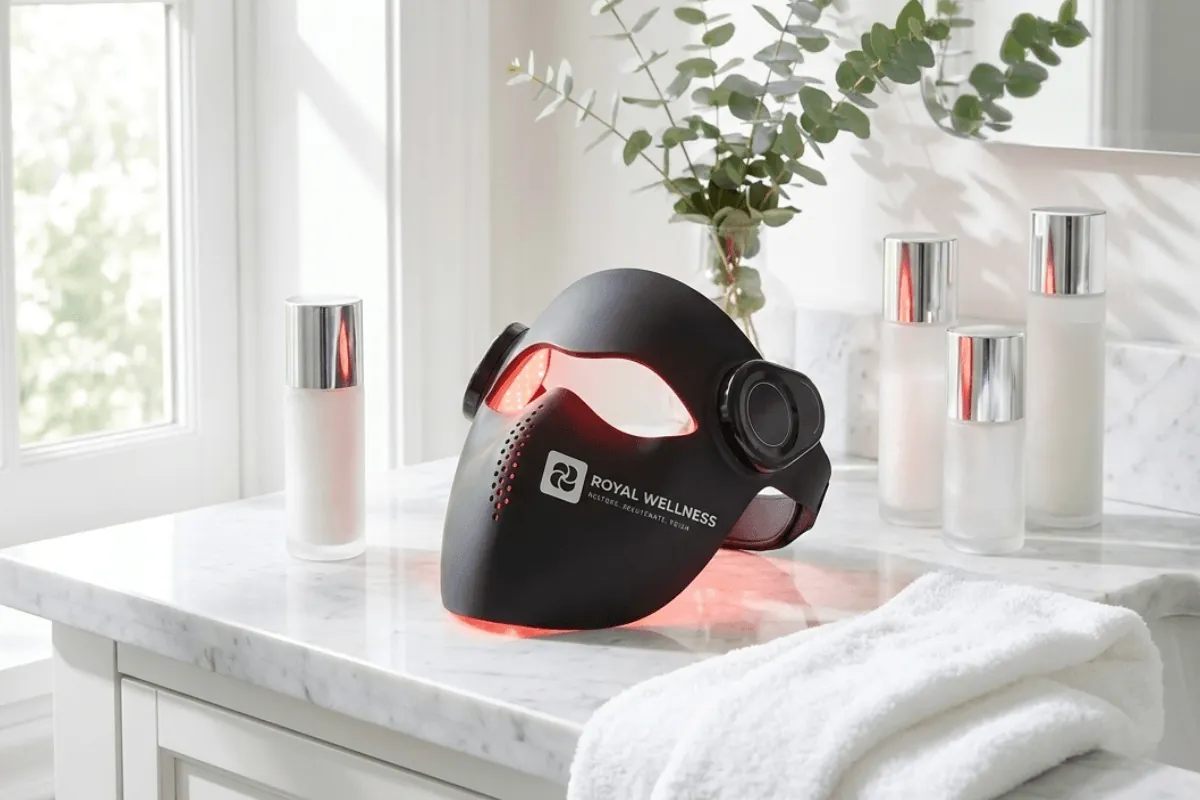
Red Light Therapy Bed: The Complete Buyer's Guide (2026)
A full buyer's guide to the red light therapy bed: how it works, home vs commercial, the specs that matter, and real 2026 prices from $19,999.
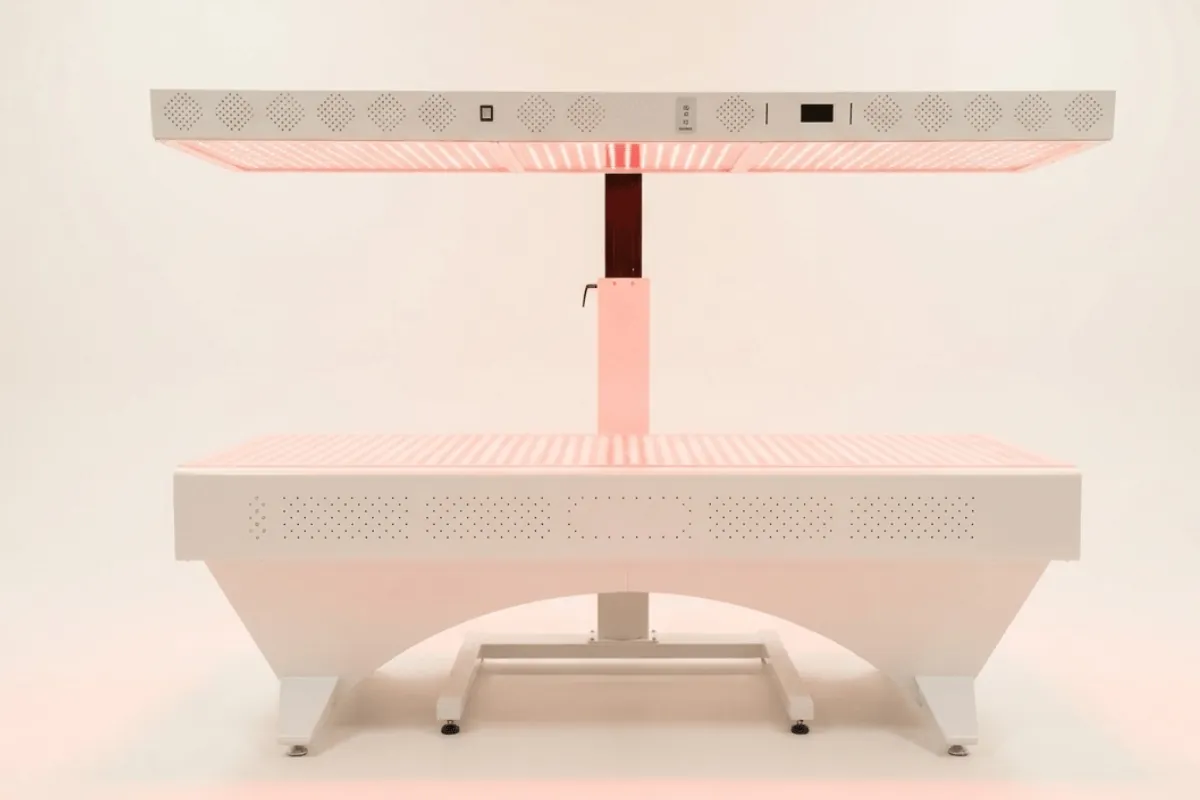
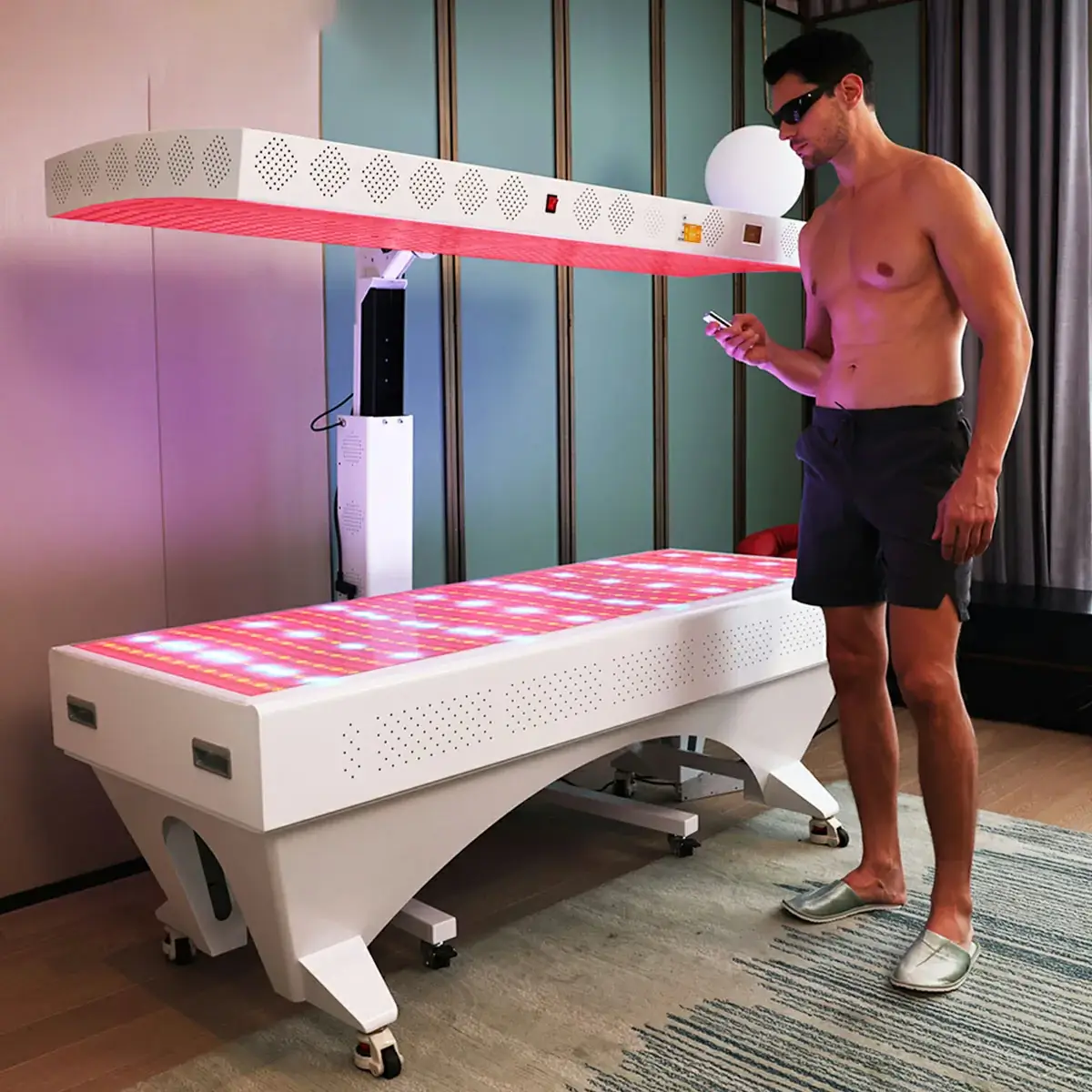
You have decided a red light therapy bed belongs in your home, gym, or clinic - and then the pricing hit you like a wall. One brand lists a full-body pod at $9,995; another wants $100,000 for what looks like the same glowing coffin. How do you tell a clinic-grade red light therapy bed apart from an overpriced one, and what should you actually pay in 2026?
This is the pillar guide that answers that. We will define exactly what a bed is and how it works, sort out home versus commercial use, break down the four specs that genuinely decide value (and the one spec you should ignore), and lay out a real comparison table of the 2026 market - NovoTHOR, TheraLight, Prism, Solbasium, LIT Method, Red Light Wellness - with approximate current pricing (verify before buying) next to our own RoyalPro2000L-B at $19,999. The through-line: you can get clinic-grade power without the $50,000-plus price tag, but only if you know which numbers to trust. If you want the money math instead of the hardware, jump to our companion guide on red light therapy bed cost; if you want the ranked shortlist, see the best red light therapy beds.
What a red light therapy bed is and how it works
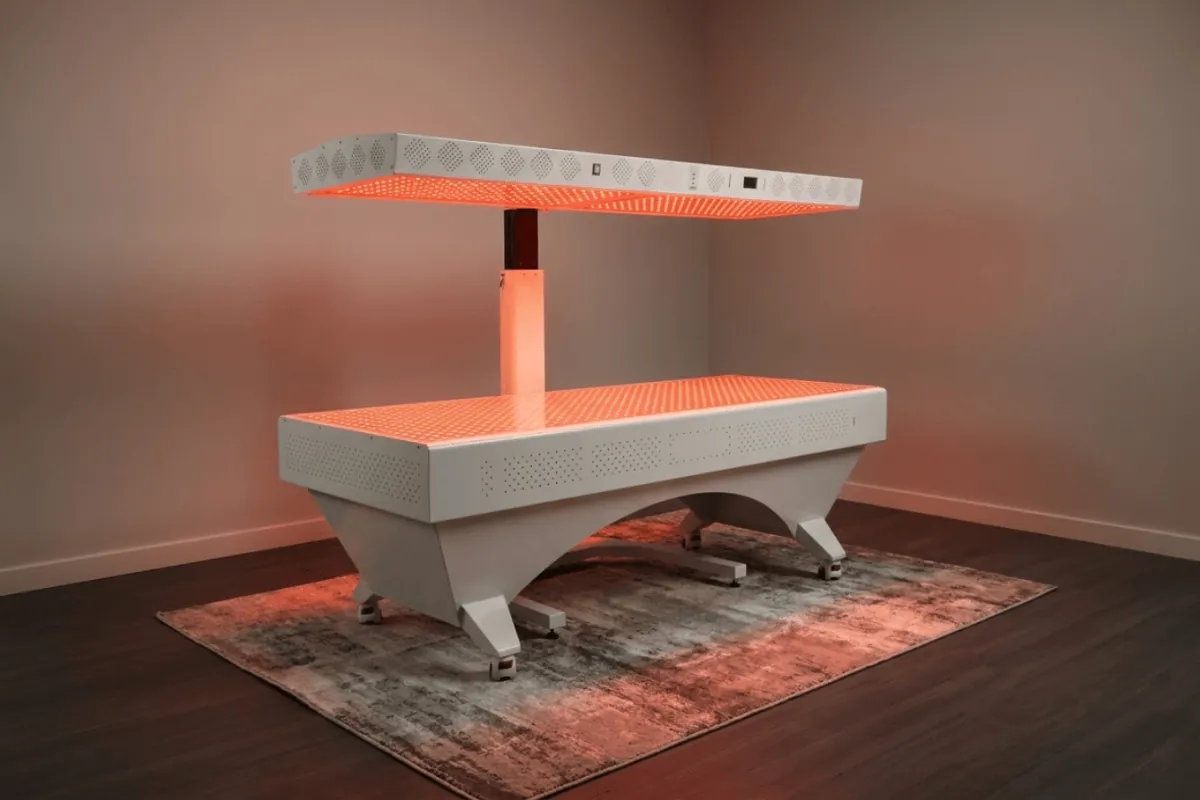
A red light therapy bed is a full-body enclosure - shaped like a tanning bed, clamshell pod, or open canopy - lined with hundreds to thousands of LEDs that bathe your entire body in red and near-infrared light in a single session. Critically, it is not a tanning bed: it emits no ultraviolet light, so it does not tan, burn, or carry UV’s DNA-damage risk. The wavelengths it uses (visible red around 660 nm and invisible near-infrared around 850 nm) sit in the tissue “optical window” where melanin and water absorb the least, letting more light reach living cells.
The biology is called photobiomodulation (PBM). Red and near-infrared photons are absorbed by an enzyme in your mitochondria called cytochrome c oxidase; the leading mechanism reviews describe this as boosting the cell’s energy output (ATP), releasing nitric oxide, and triggering a brief signaling burst that nudges cells toward better function Hamblin 2017. Red light is absorbed mainly in the skin, while near-infrared penetrates deeper toward muscle and joints de Freitas 2016. That is the same mechanism a panel or mask uses; the bed’s entire reason to exist is coverage and speed.
Red and near-infrared photons are absorbed by an enzyme in your mitochondria called cytochrome c oxidase; the leading mechanism reviews describe this as boosting the cell's energy output (ATP), releasing nitric oxide, and triggering a brief signaling burst that nudges cells toward better function.
The practical difference is time. A panel treats only the surface you face, so a full-body routine means turning around and repositioning several times. A bed surrounds you, front and back, and finishes the whole body in one 10-to-15-minute session. For the deeper science of how depth and wavelength interact, our science page walks through the mechanism, and our research library collects the studies cited here.
What the evidence does and does not show
Whole-body PBM has a real but still-maturing evidence base, which is exactly why honest expectations matter more than marketing. The strongest, most consistent data for red and near-infrared light comes from localized studies: a meta-analysis found light therapy delivered before or after exercise improved muscular performance and reduced fatigue in healthy people Vanin 2018, and controlled skin trials showed increased collagen density and reduced wrinkles Wunsch 2014.
Whole-body beds specifically are a newer research target, and the results are genuinely mixed - which you should know before spending five figures. A randomized crossover study in trained males found whole-body PBM did not significantly reduce creatine kinase or salivary IL-6 during recovery from high-intensity resistance training WB-PBM 2020. On the other side, a triple-blinded RCT reported meaningful improvements in pain and quality of life in a chronic-pain population WB-PBM RCT 2024, and other work associated full-body sessions with cardiorespiratory recovery markers WB-PBM Recovery 2022. A 2025 systematic review concluded whole-body PBM shows promise for recovery but that the literature is small and heterogeneous Alvarez-Martinez 2025.
A triple-blinded RCT reported meaningful improvements in pain and quality of life in a chronic-pain population.
The honest read: the modality is well supported and the bed format is promising but not yet proven to outperform panels dose-for-dose. Treat any brand promising specific cures or guaranteed outcomes as a red flag. Red light therapy is a wellness tool with encouraging science, not a medical cure.
Home vs. commercial: which red light therapy bed fits you
The single biggest fork in this decision is whether you are buying for a household or a business, because it changes the wattage, the electrical requirements, the warranty you need, and the price bracket by an order of magnitude. Get this right before you compare a single spec sheet.
Home-oriented beds and pods are built for one or two daily users. They often run on a standard 110V household outlet, cost roughly $10,000 to $25,000, and prioritize convenience and footprint over raw throughput. If you are treating yourself and a partner three to five times a week, this tier is usually plenty - and honestly, many home users are better served by a high-output panel like the RoyalPro Ultimate G4 or RoyalPro 1200 at a fraction of a bed’s cost.
Commercial beds are built to run dozens of sessions a day for years. They demand more: higher total optical output, industrial cooling, a heavy-duty chassis, and frequently a dedicated 220V/30A circuit hardwired by a licensed electrician (several commercial-tier beds specify a requirement like this - confirm the exact electrical spec with the manufacturer before you buy). They also cost more - $20,000 to $90,000-plus - and they need a warranty that reflects commercial duty cycles. If you are opening a studio or adding recovery to a gym, this is your tier; our commercial beds hub is built for exactly this buyer, and if you are starting from scratch, read how to start a red light therapy business first.
Here is the trap: some brands sell a lightly upgraded home unit as “commercial,” and some sell an overbuilt commercial bed to a home buyer who will never use its capacity. Match the machine to the actual duty cycle, not to the label on the box.
The specs that actually decide value
Four specifications separate a bed that delivers a real dose from a glowing box that just looks impressive - and none of them is the diode count plastered across the marketing. Here is what to weigh, in order of importance.
1. Wavelengths (660 nm and 850 nm, ideally full-spectrum)
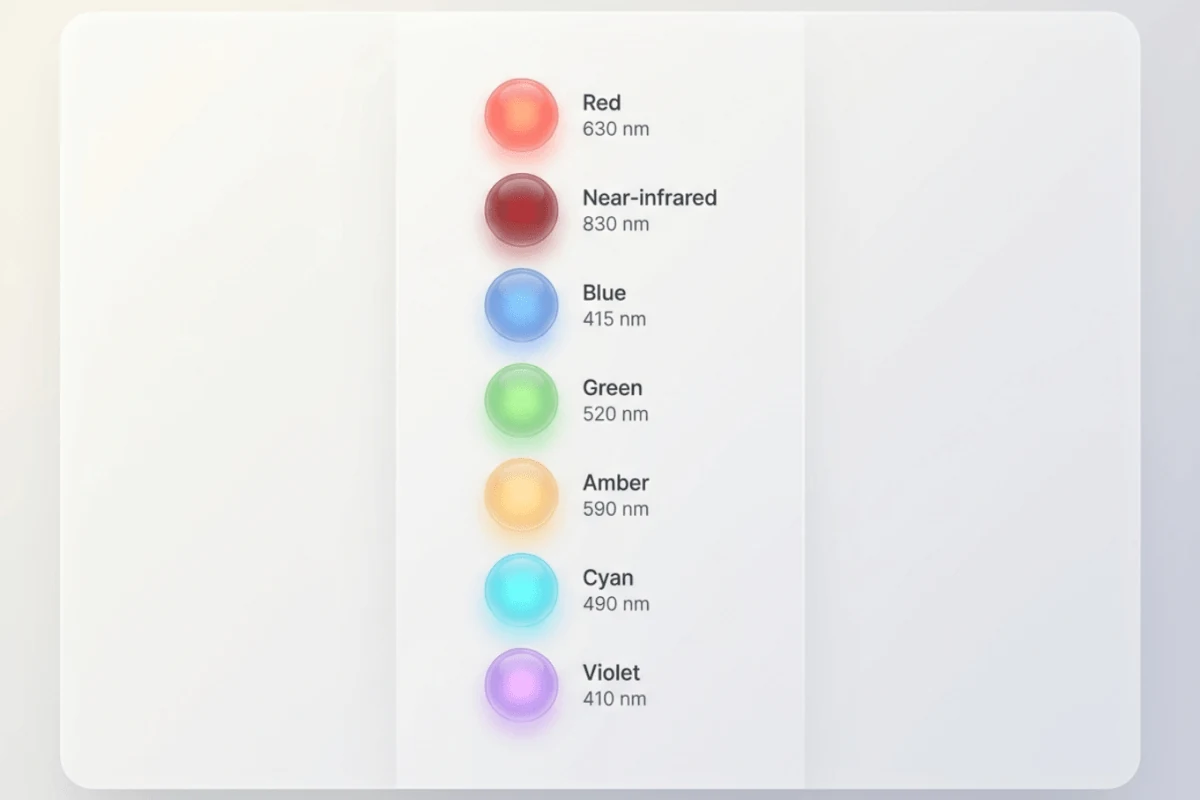
This is the most important spec. At an absolute minimum, a bed should deliver red around 660 nm (surface, skin, complexion) and near-infrared around 850 nm (deeper, muscle and joint targets) Ash 2017. Better beds add a full spectrum - additional bands such as 630, 810, 830, and 940-1060 nm - to hit more tissue depths in one session. The RoyalPro2000L-B runs 9 wavelengths from 480 to 1060 nm. Be a little skeptical of anything leaning on the 700-770 nm range, which sits in a less-absorbed trough de Freitas 2016.
2. Irradiance - stated at a real distance and measurement method
Irradiance (mW/cm²) is how much light power lands on your skin, and it is the most-abused number in this industry. A figure is meaningless without two disclosures: the distance it was measured at and the instrument used. Many brands quote readings taken at the LED surface with an inexpensive solar meter, which reads far higher than a calibrated spectrometer would at actual body distance. That is why one bed advertises “504 mW/cm²” and another “100 mW/cm²” - they may be measuring completely differently. What matters biologically is delivering an adequate dose (irradiance times time) within the effective window, because PBM is biphasic: too little does nothing and too much can blunt the effect Zein 2018. Ask any vendor for irradiance at treatment distance, measured by spectrometer. If they dodge, that tells you something.
3. Coverage and interior size
A bed only helps the parts of you it actually reaches. Check the treated body length and the interior width - can a six-foot user’s feet and shoulders both sit in the light field? Open-canopy and 360-degree pod designs wrap light around the sides of the body; flat-bed designs light one plane at a time. Larger illuminated areas also drive light slightly deeper than a small spot of the same wavelength Ash 2017, so full-surround coverage is a genuine advantage, not just comfort.
4. Warranty and build
A bed is a five-figure appliance you expect to run for years, so the warranty is a value spec, not fine print. Look for multi-year coverage that explicitly includes the LEDs and driver electronics - the parts that actually fail - and confirm whether commercial use voids a “home” warranty. LED arrays dim over thousands of hours, so a bed with a long, LED-inclusive warranty is quietly telling you the maker trusts its own diodes.
Red flag: why LED count is the most misleading number
Do not choose a bed by how many LEDs it has - this is the single most common way buyers get fooled. You will see beds advertise “42,000 LEDs” or “21,000 LEDs” as if more dots automatically means more medicine. They do not. A single high-output 5W LED can deliver more usable light than dozens of tiny low-power diodes, so a bed with 1,152 powerful LEDs can out-deliver one bragging about 42,000 weak ones. Diode count is theater; total optical power and wavelength coverage are the reality.
More dots means more medicine - a bed advertising 42,000 LEDs must out-treat one with 1,152.
A single high-output 5W LED can deliver more usable light than dozens of tiny low-power diodes, so a bed with 1,152 powerful LEDs can out-deliver one bragging about 42,000 weak ones.
The same skepticism applies to any spec quoted without context. “9 wavelengths” is meaningful; “thousands of LEDs” is not. When you see a giant diode number doing the heavy lifting in an ad, treat it as a prompt to ask the questions that matter: what is the irradiance at treatment distance, measured how, across which wavelengths, under what warranty? For a deeper look at why 850 nm specifically reaches tissue a panel of tiny diodes cannot, see why 850 nm penetrates deeper.
Red light therapy bed comparison: the 2026 market
Full-body beds in 2026 span roughly a 10x price range for broadly similar core technology, which is precisely why the buyer who understands specs wins. The table below lists approximate reference pricing gathered from product pages and dealer listings as of mid-2026. Prices change often and configurations vary, so treat these as reference points and verify current pricing before you buy.
| Bed / pod | Type | Wavelengths | LEDs (as advertised) | Price (2026, verify) |
|---|---|---|---|---|
| RoyalPro2000L-B | Full-body clinical bed | 9 wavelengths (480-1060 nm) | 1,152 high-output | $19,999 |
| NovoTHOR | Clinic laser/LED pod | Red + NIR (660/850) | - | ~$65,000-$120,000 (historical; verify) |
| TheraLight 360 | Clinic full-body pod | Multi-wavelength | - | ~$60,000-$75,000 (financing available; verify) |
| Red Light Wellness (Miracle series) | Commercial beds | Dual-wavelength | 2,553+ | $34,995-$69,995 |
| Prism Light Pod | Home to commercial pod | 630 / 660 / 850 nm | 17,000+ | $9,995 (home) to ~$90,000 (commercial) |
| Solbasium Helios | Commercial bed | 5 wavelengths (633/660/810/830/940) | 42,000 | ~$24,990 |
| LIT Method Lume | Commercial bed | 5 wavelengths | 21,000 | ~$21,999 (reg. $24,999) |
A few honest readings of this table:
- The top of the market is not 5x better than the middle. NovoTHOR and TheraLight are respected clinical machines, but a large share of their price reflects brand, laser-diode components, and clinic positioning - not five times the delivered dose. If you need proven clinic pedigree for a medical practice, they earn consideration; if you need clinic-grade full-body output for a studio or serious home, you are overpaying for the badge.
- Diode counts do not track price or quality. The $24,990 Helios advertises 42,000 LEDs; the $19,999 RoyalPro2000L-B advertises 1,152. As covered above, that comparison tells you almost nothing about delivered light - it tells you the two brands count and rate LEDs differently.
- Wavelength breadth is where the RoyalPro2000L-B genuinely leads its price bracket. Nine wavelengths from 480 to 1060 nm covers more tissue depths in one session than the dual- or five-wavelength beds near its price, and it does so at or below the cost of beds with far narrower spectra.
The takeaway: our angle is not “cheapest.” It is clinic-grade power and full-spectrum coverage without the $50,000-to-$100,000 clinic markup. Explore the full spec sheet on the RoyalPro2000L-B, and for the pure dollars-and-cents breakdown including operating cost and payback, read red light therapy bed cost.
Is a red light therapy bed FDA approved?
No red light therapy bed is “FDA-approved,” and any brand that says so is misusing the term - an immediate credibility red flag. The correct language is FDA 510(k) cleared. Clearance and approval are different regulatory paths: approval (used for high-risk devices and drugs) requires proving safety and effectiveness from scratch, while 510(k) clearance means the maker demonstrated the device is substantially equivalent to an existing legally marketed device for a specific indication.
For red light beds, those cleared indications are narrow and specific - typically the temporary relief of minor muscle and joint pain and stiffness, minor arthritis pain, muscle spasm, or increasing local blood circulation. A cleared device may not legally claim to cure, treat, or prevent any disease. Reputable full-body beds are cleared as Class II medical devices, and a serious manufacturer will state its device’s 510(k) clearance and FDA Class II registration plainly enough for you to verify.
So when you evaluate a bed, the honest questions are: is it 510(k) cleared as a Class II device, and does the brand describe its benefits in “may help / research suggests” language rather than disease-cure promises? A brand that respects the distinction between cleared and approved is a brand that respects you. Anyone promising a cure is telling you to walk away.
A brand that respects the distinction between cleared and approved is a brand that respects you.
Buyer red flags: how to avoid overpaying
Most of the money wasted on red light beds is lost to a handful of predictable traps - here is the checklist that protects you.
- Diode-count theater. As covered above, a headline “40,000 LEDs” number is designed to impress, not inform. Ask for irradiance at treatment distance instead.
- Irradiance with no distance or instrument. A big mW/cm² figure quoted “at the surface” with a solar meter is close to meaningless in practice Zein 2018. Demand the distance and measurement method.
- “FDA approved” claims. Beds are cleared, not approved. This wording alone signals a brand that is loose with the truth.
- Cure-all disease claims. Photobiomodulation is a wellness modality with real but bounded evidence Alvarez-Martinez 2025. “Cures arthritis,” “reverses aging,” or guaranteed outcomes are legal and scientific red flags.
- Warranties that exclude the LEDs. If the multi-year warranty quietly excludes the diodes and drivers - the parts that fail - it is not really coverage.
- A “commercial” bed with a home-grade duty cycle. Confirm the bed is rated for the number of daily sessions you actually plan to run.
- No stated wavelengths. If a brand will not publish its exact wavelengths, assume the spectrum is narrow or padded with less-useful bands.
- Missing dose guidance. A serious maker tells you session length and frequency, because delivered energy at the target - not watts on the box - is what the science measures WALT 2010.
Run any bed you are considering, ours included, through this list. A trustworthy vendor answers every one of these without flinching.
Safety
Red light therapy is generally well tolerated, but a full-body bed still calls for sensible precautions and, for some people, a clinician’s sign-off first. Use the eye protection supplied with the bed and never stare into the LEDs. Follow the bed’s distance and timing program rather than extending sessions, since more light is not better past the effective dose window Hamblin 2017.
Talk to a qualified clinician before starting if any of the following apply to you:
- Pregnancy - safety data for full-body light exposure during pregnancy is limited.
- Active or a history of cancer - discuss any light therapy with your oncologist before use.
- Photosensitizing medications - certain antibiotics (tetracyclines, fluoroquinolones), some diuretics, isotretinoin, and certain antidepressants and antipsychotics can increase light sensitivity.
- Photosensitive conditions such as lupus or porphyria, or a history of light-triggered rashes.
- Eye conditions or recent eye procedures.
This article is educational and not medical advice. If a bed’s marketing promises to treat a specific disease, that is not a green light - it is a reason to be skeptical of the brand.
The bottom line
A red light therapy bed is the fastest, most complete way to deliver red and near-infrared light to the whole body - front and back, in one 10-to-15-minute session - which is why studios, gyms, and serious home users buy them instead of repositioning in front of a panel. The evidence for the modality is encouraging, the evidence for the bed format specifically is promising but still maturing, and the honest expectation is a gradual wellness benefit over weeks of consistent use, never a cure.
When you shop, ignore the diode count, insist on real wavelengths and honestly measured irradiance, buy the duty cycle you will actually use, and demand an LED-inclusive warranty. Do that and the 2026 market’s biggest surprise becomes clear: the $65,000-to-$120,000 clinic pods are not five times better than a well-built bed at a fraction of the price. The limitation of most beds in that middle bracket is narrow spectra and inflated specs; the RoyalPro2000L-B closes that gap with 1,152 high-output LEDs and 9 wavelengths from 480 to 1060 nm at $19,999 - clinic-grade, full-spectrum coverage without the clinic markup.
From here, dig into the money math in red light therapy bed cost, compare the top models head-to-head in the best red light therapy beds, or - if a full bed is more than you need - decide between formats with panel vs. mask vs. belt. Ready to see the flagship? Explore the RoyalPro2000L-B or browse the full commercial lineup.
- A red light therapy bed is a full-body enclosure lined with red (around 660 nm) and near-infrared (around 850 nm) LEDs that treats your entire body in one 10-15 minute session instead of one region at a time.
- The 2026 market splits into home-leaning pods around $10,000-$25,000 and clinic-grade beds that run from roughly $20,000 to well over $90,000 - and a higher price does not guarantee more usable light on your skin.
- Four specs decide real value: wavelengths (660 nm plus 850 nm, ideally full-spectrum), honest irradiance stated at a real treatment distance, coverage and interior size, and a genuine multi-year LED warranty. LED count is mostly marketing.
- Ignore raw diode counts. A bed with 1,152 high-output LEDs can out-deliver one advertising 42,000 tiny diodes; total optical power and wavelength coverage matter, not how many dots you can count.
- A clinic-grade bed like the RoyalPro2000L-B delivers 1,152 LEDs and 9 wavelengths at $19,999 - roughly a third to a fifth of what NovoTHOR, TheraLight, or the top Red Light Wellness beds command.
- Red light beds are FDA 510(k) cleared as Class II devices for specific indications, which means cleared - not FDA-approved - and never a promise to cure disease. Check with your clinician if you are pregnant, have cancer, or take photosensitizing medication.
FREQUENTLY ASKED
What is a red light therapy bed and how does it work?
A red light therapy bed is a full-body enclosure - shaped like a tanning bed or clamshell pod - lined with hundreds or thousands of LEDs that emit red light (around 660 nm) and near-infrared light (around 850 nm). Unlike a tanning bed, it emits no UV. You lie inside for roughly 10 to 15 minutes while the light is absorbed by an enzyme in your cells' mitochondria called cytochrome c oxidase, which the leading mechanism reviews describe as boosting ATP energy production and cell signaling. The practical advantage over a panel is coverage: a bed treats your whole body at once instead of one region at a time.
How much does a red light therapy bed cost in 2026?
Prices span a wide range. Home-leaning full-body pods start around $9,995 (entry Prism configurations) and cluster around $20,000-$25,000 for beds like the LIT Method Lume ($21,999) and Solbasium Helios ($24,990). Clinic-grade beds climb from about $34,995 (Red Light Wellness Miracle 5040) to $69,995 for their top model, with TheraLight and NovoTHOR pods historically ranging from roughly $60,000 to over $100,000. The RoyalPro2000L-B sits at $19,999 for clinic-grade output. Always verify current pricing directly, as manufacturers change it often.
Is a red light therapy bed FDA approved?
No red light therapy bed is FDA-approved, and any brand claiming that is misusing the term. Reputable full-body beds are FDA 510(k) cleared as Class II medical devices, which is a different and lower bar than approval: clearance means the maker showed the device is substantially equivalent to an existing legally marketed device for a specific indication, such as temporary relief of minor muscle and joint pain or increasing local blood circulation. Cleared devices may not legally claim to cure or treat disease.
Is a red light therapy bed worth it versus a panel?
It depends on your goal and budget. A bed's advantage is speed and coverage - the entire body, front and back, in a single 10 to 15 minute session, which is why studios and clinics buy them. A high-quality full-body panel delivers the same wavelengths at a fraction of the cost but only covers the area you face, so a full-body treatment takes several repositionings. If you are treating a whole household, running a business, or simply value one-and-done sessions, a bed earns its price. For one person with focused goals, a panel is usually the smarter buy.
How often should you use a red light therapy bed?
Most protocols and clinical studies use sessions three to five times per week, running 10 to 20 minutes each, with benefits building over 8 to 12 weeks of consistent use. More is not automatically better: photobiomodulation follows a biphasic dose response, meaning too little light does nothing and too much can blunt the effect. Follow the specific bed's recommended session length rather than lingering longer, and give tissue a rest day or two per week.
What wavelengths should a full-body red light bed have?
At minimum, look for red light around 660 nm and near-infrared around 850 nm. Red is absorbed mainly in the skin for surface and complexion goals; near-infrared penetrates deeper toward muscle and joints. Higher-end beds add full-spectrum coverage - additional wavelengths such as 630, 810, 830, and 940-1060 nm - to target more tissue depths in one session. The RoyalPro2000L-B, for example, runs 9 wavelengths. Be skeptical of beds that lean on the 700-770 nm range, which sits in a less-absorbed trough.
How long does a red light therapy bed session take?
Most full-body beds run a 10 to 15 minute program because they surround you with light and cover the entire body at once - a key time advantage over panels, which require repositioning to treat front and back. Some protocols extend to 20 minutes. Session length is a function of the bed's irradiance and your target dose, so follow the manufacturer's program rather than guessing, and remember that a longer session is not a stronger one past the effective window.
REFERENCES
- 1. Hamblin MR. Mechanisms and applications of the anti-inflammatory effects of photobiomodulation. AIMS Biophys. 2017;4(3):337-361. doi:10.3934/biophy.2017.3.337 PMC5523874
- 2. de Freitas LF, Hamblin MR. Proposed mechanisms of photobiomodulation or low-level light therapy. IEEE J Sel Top Quantum Electron. 2016;22(3):7000417. doi:10.1109/JSTQE.2016.2561201 PMC5215870
- 3. Ash C, Dubec M, Donne K, Bashford T. Effect of wavelength and beam width on penetration in light-tissue interaction using computational methods. Lasers Med Sci. 2017;32(8):1909-1918. doi:10.1007/s10103-017-2317-4 PMC5653719
- 4. Zein R, Selting W, Hamblin MR. Review of light parameters and photobiomodulation efficacy: dive into complexity. J Biomed Opt. 2018;23(12):1-17. doi:10.1117/1.JBO.23.12.120901 PMC8355782 (PMID 30550048)
- 5. Vanin AA, Verhagen E, Barboza SD, Costa LOP, Leal-Junior ECP. Photobiomodulation therapy for the improvement of muscular performance and reduction of muscular fatigue associated with exercise in healthy people: a systematic review and meta-analysis. Lasers Med Sci. 2018;33(1):181-214. doi:10.1007/s10103-017-2368-6 PMID 29090398
- 6. The Effects of Whole-Body Photobiomodulation Light-Bed Therapy on Creatine Kinase and Salivary Interleukin-6 in a Sample of Trained Males: A Randomized, Crossover Study. Front Sports Act Living. 2020;2:48. doi:10.3389/fspor.2020.00048 PMC7739664
- 7. Full-Body Photobiomodulation Therapy Is Associated with Reduced Sleep Durations and Augmented Cardiorespiratory Indicators of Recovery. Sports (Basel). 2022;10(8):119. doi:10.3390/sports10080119 PMC9414854
- 8. Navarro-Ledesma S, Carroll JD, Gonzalez-Munoz A, Burton P. Outcomes of whole-body photobiomodulation on pain, quality of life, leisure physical activity, pain catastrophizing, kinesiophobia, and self-efficacy: a prospective randomized triple-blinded clinical trial with 6 months of follow-up. Front Neurosci. 2024;18:1264821. doi:10.3389/fnins.2024.1264821 PMC10864543 (PMID 38356644)
- 9. Alvarez-Martinez M, et al. A systematic review on whole-body photobiomodulation for exercise performance and recovery. Lasers Med Sci. 2025;40:55. doi:10.1007/s10103-025-04318-w PMID 39883205
- 10. Wunsch A, Matuschka K. A controlled trial to determine the efficacy of red and near-infrared light treatment in patient satisfaction, reduction of fine lines, wrinkles, skin roughness, and intradermal collagen density increase. Photomed Laser Surg. 2014;32(2):93-100. doi:10.1089/pho.2013.3616 PMC3926176
- 11. Avci P, Gupta A, Sadasivam M, et al. Low-level laser (light) therapy (LLLT) in skin: stimulating, healing, restoring. Semin Cutan Med Surg. 2013;32(1):41-52. PMC4126803 (PMID 24049929)
- 12. World Association for Laser Therapy (WALT). Recommended treatment doses for low level laser therapy: dose table 780-860 nm (WALT-2010). WALT 2010
ABOUT THE AUTHORS
Our team reviews the peer-reviewed literature on red and near-infrared light therapy and translates it into honest, practical guidance — no hype, just what the evidence actually supports.