The Best Red Light Therapy Mask: 7 Criteria and 6 Real Masks Compared
How to judge the best red light therapy mask — wavelengths, LED vs laser, FDA clearance, fit, eye safety — plus 6 real masks compared honestly.
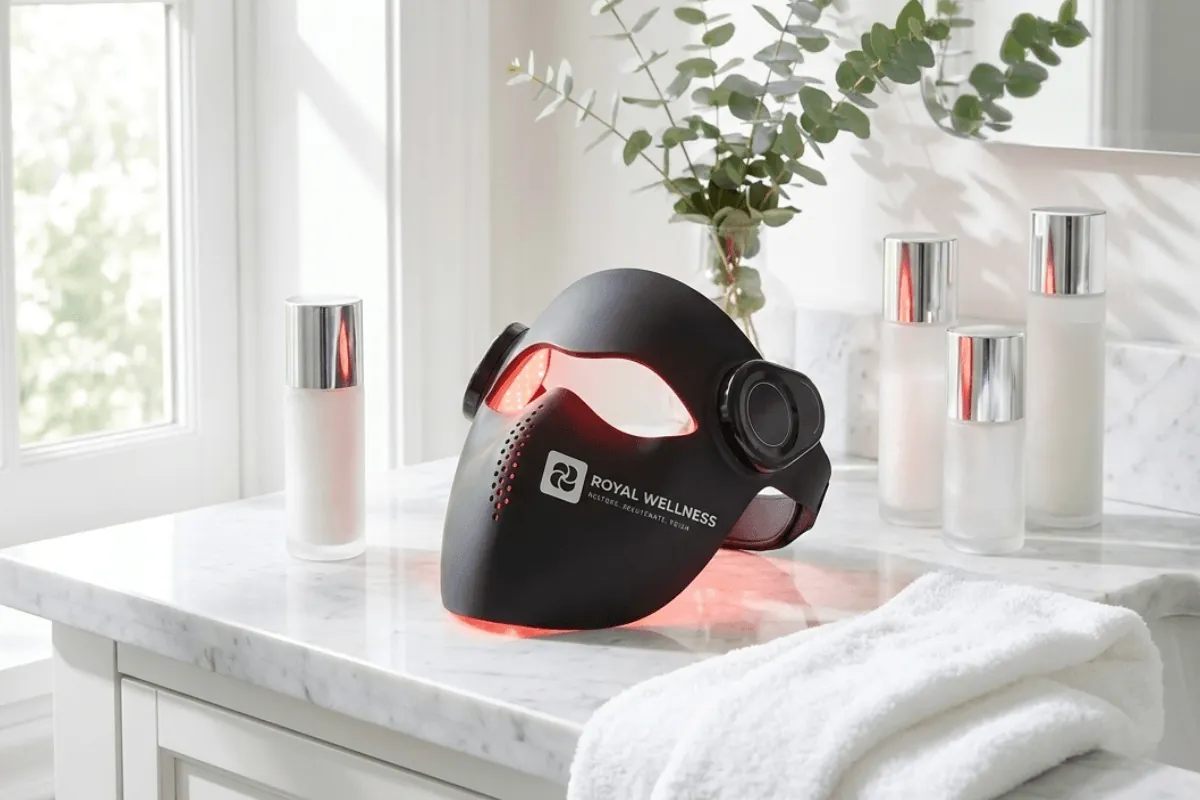
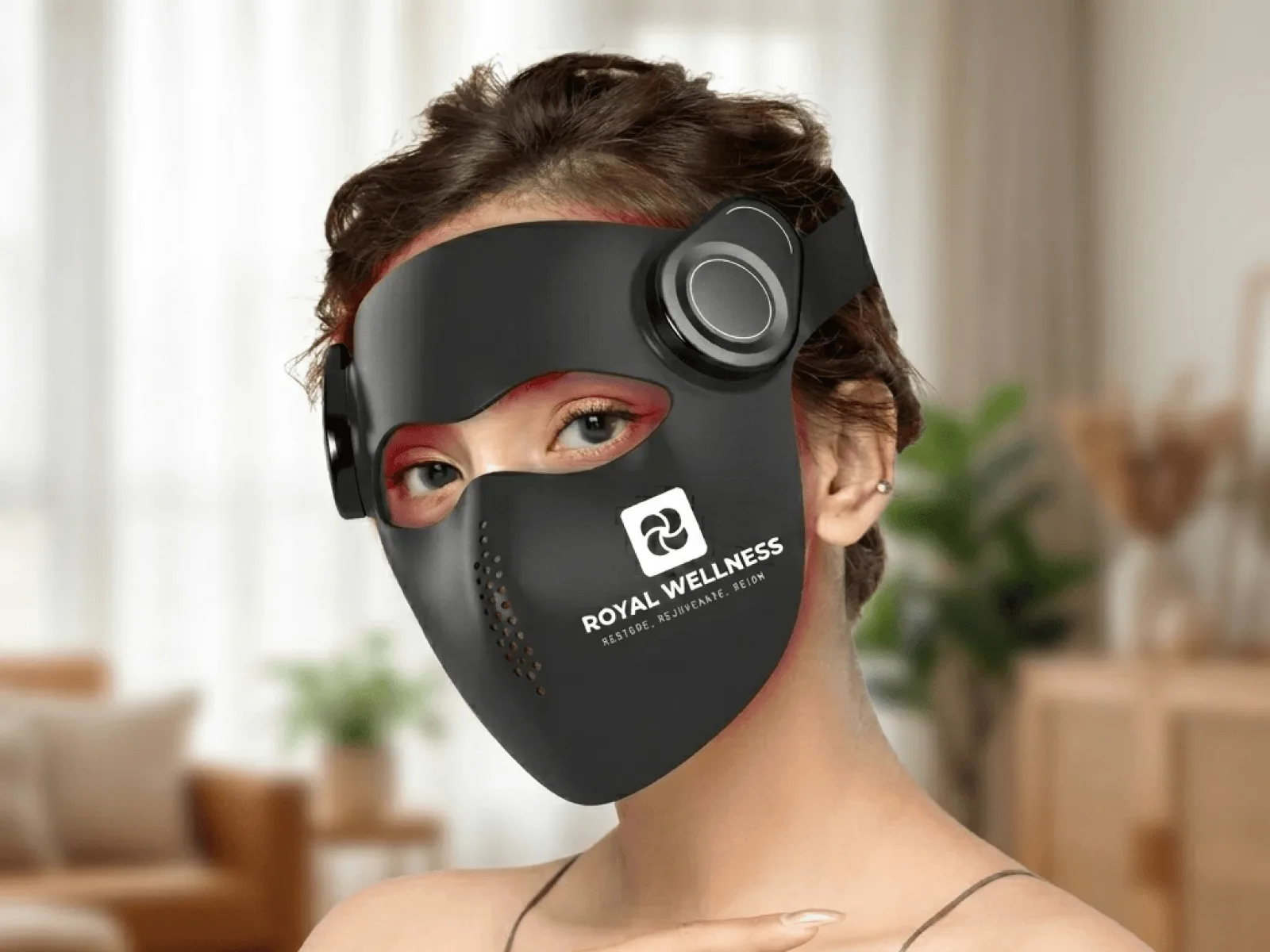
You have decided a mask is the form factor you want — it sits on your face hands-free, it is easy to use on the couch, and the facial anti-aging evidence for red light is genuinely strong. The problem is that every brand insists it sells the best red light therapy mask, the diode counts range from 66 to 648, prices swing from $350 to $800, and the spec sheets are written to confuse rather than clarify. So which one actually earns your money?
Here is the honest version up front: there is no single best mask for everyone, but there is a short, checkable list of things that separate a serious device from an expensive gimmick. This guide walks through the seven criteria that matter, then puts six real, currently-sold masks side by side — RoyalGLOW, Omnilux, CurrentBody, Shark, HigherDOSE, and TheraFace — with their real wavelengths, diode counts, and prices, so you can match the device to your goal instead of to the marketing. No mudslinging, no invented studies. If you would rather skip ahead, the device finder quiz maps your goals to a recommendation in about two minutes.
What makes the best red light therapy mask?
The best red light therapy mask is the one that puts clinically studied wavelengths across your whole face, at an adequate and safe dose, in a fit you will actually wear several times a week. Everything else — diode counts, app connectivity, celebrity endorsements — is secondary to those fundamentals. Below are the seven criteria worth judging every mask against, roughly in order of importance.
1. Wavelengths — the single most important spec
The wavelength (measured in nanometers, nm) decides both what your skin absorbs and how deep the light travels, and for facial rejuvenation the research clusters tightly around two bands. Visible red light (around 630-660 nm) is well absorbed in the upper-to-mid dermis where collagen-producing fibroblasts live, and near-infrared (around 830-850 nm) penetrates deeper. The most-cited randomized controlled trial in this space treated volunteers with red or red-plus-near-infrared light and measured a statistically significant increase in intradermal collagen density plus reductions in wrinkles and roughness versus untreated controls Wunsch 2014. A 2024 comprehensive review reaches the same conclusion, naming red and NIR as the workhorse wavelengths for collagen and elasticity Hernandez-Bule 2024.
The most-cited randomized controlled trial treated volunteers with red or red-plus-near-infrared light and measured a statistically significant increase in intradermal collagen density plus reductions in wrinkles and roughness versus untreated controls.
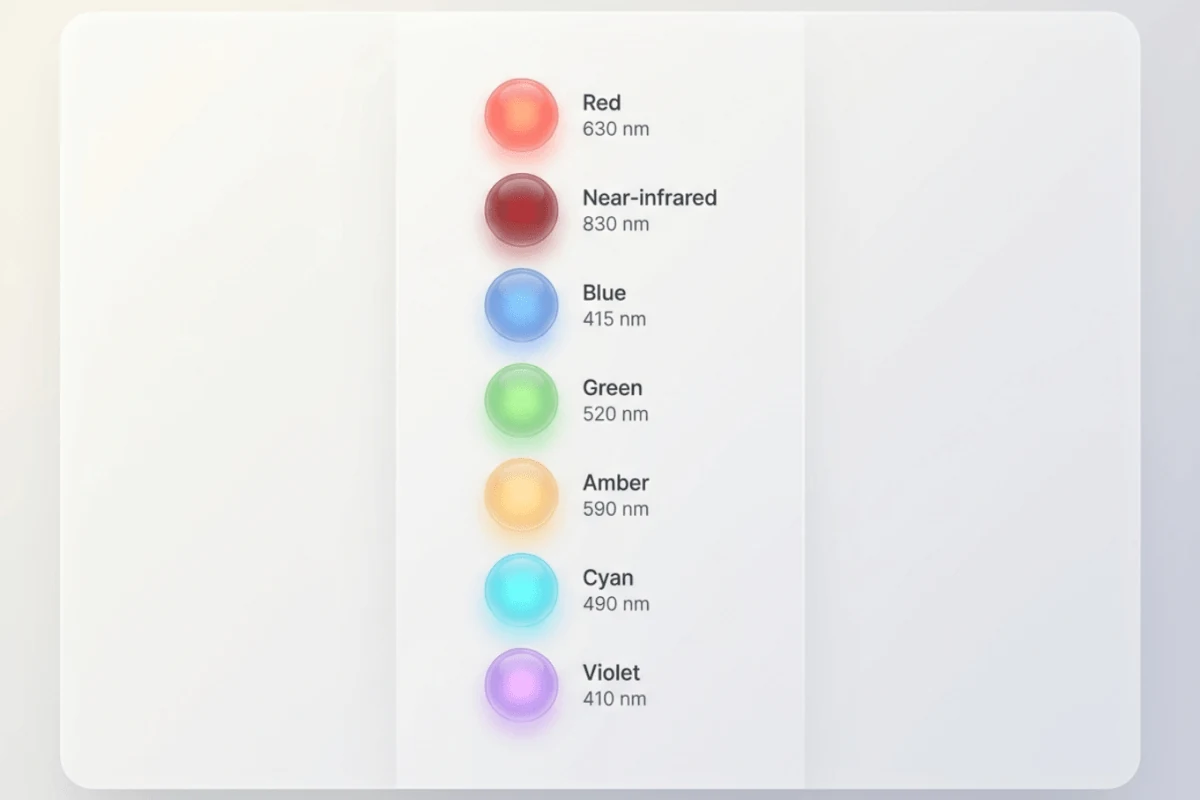
The practical rule: a mask should deliver validated red, near-infrared, or ideally both. Be a little skeptical of devices that lean heavily on the 700-770 nm range, which sits in a less-absorbed trough between the two useful peaks de Freitas 2016. Blue light (around 415 nm) is for acne, not collagen — useful if breakouts are your concern, largely irrelevant if wrinkles are. For a deeper look at what each color does, our 7-color LED light therapy chart breaks it down.
2. LED versus laser diodes
Almost every mask on the market uses LEDs (light-emitting diodes), which throw a broad, diffuse beam of a given wavelength; a small number use laser diodes, which are monochromatic and collimated, concentrating energy into a tighter, more coherent beam. Both can deliver the same therapeutic wavelengths, and the strongest clinical skin evidence to date is LED-based, so an LED mask is not a compromise. Laser diodes can push higher irradiance and, at longer wavelengths, reach deeper — tissue-modeling work confirms that longer wavelengths penetrate further Ash 2017. Whether the coherence of laser light adds a distinct benefit at the skin’s surface, beyond wavelength and dose, is still debated. In this roundup, the RoyalGLOW is the only mask pairing LED with medical laser diodes.
3. Diode count, irradiance, and why bigger numbers mislead
Diode count is the spec brands love to shout, and it is the one you should trust the least at face value. Raw diode counts are not comparable across brands because they count differently: some tally each single-color LED, while others use “tri-wick” or multi-chip diodes that fuse red, blue, and infrared into one housing, so a headline of 648 lights may mean only a third of those are the red or near-infrared you actually want for wrinkles. What matters is even, full-face coverage and adequate irradiance (intensity delivered at contact) in the right wavelengths — not the number on the box. Because masks sit directly against the skin, distance falloff is near zero, which is part of why even modest-wattage masks can deliver a useful dose.
The intensity delivered at contact, in the right wavelengths — what matters more than the number of diodes on the box.
4. FDA clearance — and what it does and does not mean
Nearly all reputable masks are FDA 510(k) cleared, not FDA approved, and the distinction matters. Clearance through the 510(k) pathway means the device was shown to be “substantially equivalent” to an already-cleared product, typically for full-face wrinkle treatment or mild-to-moderate acne; it signals that the FDA reviewed the device for safety and basic effectiveness for that specific indication. It does not mean the agency endorses every marketing claim, and it does not make one cleared mask automatically better than another. Treat “FDA cleared” as a baseline of legitimacy and then confirm the exact cleared indication for any mask you are weighing.
5. Fit and coverage
A mask’s entire advantage over a panel is fit — the light meets your face evenly, hands-free, with no gap to manage. The best red light therapy mask for your face is one that actually conforms to your face: flexible silicone masks mold to cheeks, nose, and brow so the diodes sit close to the skin, while some rigid masks leave gaps over contoured areas. Coverage also decides whether the delicate periocular skin gets treated — a relevant point given a randomized controlled trial found roughly a 30% reduction in periocular wrinkle volume with photobiomodulation Mota 2023. Check whether a mask covers the full face or leaves the under-eye and jawline short.
A randomized controlled trial found roughly a 30% reduction in periocular wrinkle volume with photobiomodulation.
6. Eye safety
Bright light directly on the face means eye protection is not optional. Good masks are designed with eye cut-outs, opaque eye zones, or a closed-eye protocol; laser-equipped devices in particular warrant care because collimated light concentrates energy. Never stare into the diodes, use whatever eye protection the manufacturer supplies, and if you have an eye condition, talk to a clinician first. This is one of the few places where a mask’s engineering can genuinely be safer or less safe than a competitor’s.
7. Price and value
Price should be the last filter, not the first. The masks below span roughly $350 to $800, and more money buys some combination of more coverage, more wavelengths, laser diodes, or extras like under-eye cooling — none of which help if the mask does not fit your routine. Because the biphasic dose response means more light is not endlessly better Hamblin 2017, an affordable mask used consistently will beat a premium one used occasionally. Buy for the habit you will keep.
The best red light therapy masks compared (2026)
Below are six real, currently-sold masks with their published specifications and approximate retail prices; verify current pricing and the exact FDA-cleared indication before you buy, since brands revise both. These are drawn from each brand’s live product pages and are meant to let you compare like for like, not to crown a universal winner. Prices are approximate 2026 retail in USD.
| Mask | Light sources | Wavelengths | Notable feature | Approx. price (verify) |
|---|---|---|---|---|
| RoyalGLOW (RoyalPRO Mask) | 288 diodes | 460 nm LED + 665 / 850 / 1064 nm laser | Only LED-plus-laser mask; adds deep 1064 nm | ~$799 |
| Omnilux Contour Face | 132 LEDs | 633 + 830 nm | Flexible silicone, well-studied, dermatologist favorite | ~$395 |
| CurrentBody Skin Series 2 | 236 LEDs | 633 + 830 + 1072 nm | Adds deep near-infrared (1072 nm) via LED | ~$470 |
| Shark CryoGlow | 160 tri-wick LEDs | Red 630 + blue + NIR 830 nm | Built-in under-eye cooling pads | ~$350 |
| HigherDOSE Red Light Mask | 132 diodes (66 dual-core) | 630 + 830 nm | Simple two-wavelength design, FSA eligible | ~$349 |
| TheraFace Mask | 648 light sources (216 tri-wick) | Red 633 + blue 415 + NIR 830 nm | Adds vibration; highest raw light count | ~$650 |
A few honest reads on this table. The RoyalGLOW (RoyalPRO Mask) is the priciest and the only one using laser diodes; its 665/850/1064 nm lasers cover red, standard near-infrared, and a deeper 1064 nm wavelength that most LED masks do not offer, while its 460 nm LED targets blemish-prone skin rather than collagen. Omnilux Contour Face is the value-and-evidence pick many dermatologists cite, with a clean 633/830 nm combination in flexible silicone. CurrentBody Series 2 and RoyalGLOW are the only two here reaching past ~1000 nm (via 1072 nm LED and 1064 nm laser respectively). Shark CryoGlow is unusual for bundling under-eye cooling, and TheraFace has the highest raw light count but, because those are tri-wick, only a share of the 648 are red or NIR. For a deeper head-to-head on four of these, see our dedicated RoyalGLOW vs Omnilux vs CurrentBody vs Shark comparison.
Notice that diode count and price do not track cleanly with wavelength quality: the $349 HigherDOSE and the $799 RoyalGLOW both deliver the two clinically central bands (red and near-infrared), and the difference is coverage, extra wavelengths, and laser technology — not whether the core science is present.
LED, laser, or both: which mask technology fits your goal?
The technology inside a mask should follow your goal, not the other way around — and for most facial anti-aging goals, a well-designed LED mask does the job the clinical literature actually supports. Here is how to think about the three options without falling for hype.
The clearest way to see it is myth versus fact:
- Myth: lasers are simply “stronger” and therefore better for skin. Fact: the pivotal skin-rejuvenation trials used LED light, and both LEDs and lasers can deliver the same collagen-relevant wavelengths Lee 2007. Lasers concentrate energy and can reach deeper at longer wavelengths, which is a real advantage for depth, but it does not make LED masks ineffective for the face.
- Myth: more wavelengths always mean more benefit. Fact: the two bands that carry most of the collagen evidence are red (630-660 nm) and near-infrared (830-850 nm) Barolet 2009. Extra wavelengths like 1064 or 1072 nm can add depth, and blue can help acne, but a focused two-wavelength mask used well beats a nine-wavelength mask used sloppily.
- Myth: a higher diode count means a stronger dose. Fact: because tri-wick diodes split their output across colors, and because dose depends on irradiance and time rather than bulb count, a bigger number can deliver less usable red and NIR. The response is also biphasic, so beyond the effective window, more light does not mean more result Avci 2013.
So who should consider what? If your only goal is facial fine lines and tone, a proven LED mask with 633/830 nm coverage is the sensible, evidence-backed default. If you want the deepest reach and are willing to pay for it, a device with a 1064 or 1072 nm wavelength — the RoyalGLOW via laser, or CurrentBody via LED — extends past the typical near-infrared band. If breakouts are also on your list, look for a mask that includes blue light. The underlying biology is the same across all of them; light absorbed by mitochondria raises cellular energy and nudges fibroblasts toward building collagen, as detailed on our science page.
Light absorbed by mitochondria raises cellular energy and nudges fibroblasts toward building collagen.
How to match a mask to your skin goal
Start from what you actually want to change, then let that pick the mask — the “best” mask for wrinkles, for a budget, or for a dermatologist’s checklist are three different answers. Use the quick map below, then confirm the wavelengths and fit against the criteria above.
| If your priority is… | Look for… | Reasonable picks (verify specs) |
|---|---|---|
| Fine lines and firmness | Red 630-660 nm + NIR 830-850 nm, full-face coverage | Omnilux, CurrentBody, HigherDOSE, RoyalGLOW |
| The deepest wavelength reach | A 1064 or 1072 nm band | RoyalGLOW (laser), CurrentBody (LED) |
| Lowest credible price | FDA-cleared, red + NIR, simple design | HigherDOSE, Shark, Omnilux |
| Under-eye puffiness plus light | Integrated cooling | Shark CryoGlow |
| Acne alongside anti-aging | Added blue (~415 nm) | TheraFace, Shark, RoyalGLOW |
Best for wrinkles. Prioritize even full-face coverage in the 630-660 and 830-850 nm bands and, above all, a mask you will use two to five times a week. The trials that moved wrinkle and collagen measures ran 8 to 15 weeks of consistent sessions Wunsch 2014, and a mask-format study specifically found reduced crow’s-feet depth and higher dermal density over three months of twice-weekly red LED use Couturaud 2023. For a full breakdown of what to realistically expect month by month, read red light therapy for collagen and wrinkles.
Best affordable. Around $350 you can still get FDA clearance and the two core wavelengths. Spend the savings on consistency, not on wavelengths you will not use.
Best “by a dermatologist” standard. No mask is magic because a dermatologist’s name is attached, but the clinician’s checklist is exactly the criteria above: validated wavelengths, adequate and safe dose, eye protection, and consistent use. If a mask clears those bars and fits your face, it meets the standard that matters.
Still torn between a mask and a full-face panel, or unsure a mask is even the right form factor? Our panel vs mask vs belt guide settles that question, and you can browse every option in the masks collection.
Safety and contraindications
Red and near-infrared light masks are well tolerated by most healthy adults, but a few groups should get medical clearance first, and everyone should protect their eyes. These are non-UV wavelengths, so they do not carry the DNA-damage risk of tanning, and trials consistently report few or no adverse effects — but “generally safe” is not “safe for everyone in every situation.”
- Eyes. Always use the eye protection supplied with your device or keep your eyes closed, especially with bright or laser-equipped masks, and never stare into the diodes.
- Pregnancy. Safety data for red light therapy in pregnancy is limited; talk to your provider before use.
- Photosensitizing medication. Some drugs increase skin’s light reactivity, including certain antibiotics (tetracyclines, fluoroquinolones), some diuretics, certain antidepressants and antipsychotics, and oral acne medication such as isotretinoin. If your medication is labeled for photosensitivity, get clearance first.
- Prescription retinoids on treated skin. Retinoids increase cell turnover and are themselves associated with photosensitivity Ferguson 1986. Many people apply retinoids at night and use light therapy separately; ask your dermatologist about timing.
- Active melasma or pigment disorders. Because visible light and heat can trigger or worsen melasma, people with active melasma should be cautious and consult a dermatologist.
- Photosensitive conditions. Lupus, porphyria, or a history of light-triggered rashes warrant medical advice before starting.
Follow the device program rather than improvising longer or more frequent sessions; more is not better, and the safest results come from consistent, sensible use. The red-to-near-infrared band of roughly 600-1000 nm is favored precisely because these longer wavelengths penetrate skin more deeply than shorter, higher-energy light, letting them reach the dermis Sorbellini 2018.
The bottom line
There is no universal best red light therapy mask, but there is a reliable way to find yours: judge every device against the same seven criteria — wavelengths, LED versus laser, diode count and irradiance, FDA clearance, fit and coverage, eye safety, and honest value — and ignore the rest of the marketing. For facial anti-aging, a mask that delivers validated red (630-660 nm) and near-infrared (830-850 nm) light across your whole face, comfortably enough to use several times a week, is what the evidence supports. Expect gradual, modest improvement in texture, firmness, and fine lines over 8 to 12 weeks, not a facelift, and plan to maintain the habit.
Where the six masks differ is at the edges: coverage, extra wavelengths, and technology. Most are LED-only, which is a proven approach — but if you specifically want the deepest wavelength reach in a mask, that is the gap the RoyalGLOW mask is built to close, pairing standard LED with 665, 850, and 1064 nm laser diodes to add a deeper band than a typical LED device, plus 460 nm for blemish-prone skin. Compare it against the field in our four-way mask comparison, or see the full lineup in the masks collection. Not sure a mask is even your best form factor? Take the quiz and let your goals decide in about two minutes.
- The best red light therapy mask is not the one with the most diodes or the loudest marketing — it is the one that delivers clinically studied red and near-infrared wavelengths across your whole face at a sensible dose, in a fit comfortable enough to wear several times a week.
- Seven criteria separate a serious mask from a gimmick: wavelengths, LED versus laser diodes, diode count and irradiance, FDA 510(k) clearance, fit and coverage, eye safety, and honest value.
- For collagen and wrinkles, the evidence clusters around visible red (around 630-660 nm) and near-infrared (around 830-850 nm); a good mask should cover at least one of these bands, ideally both.
- Most masks use only LEDs. In this comparison, the RoyalGLOW is the single device that pairs LED with medical laser diodes (665, 850, and 1064 nm), adding a deeper-reaching wavelength than a typical LED mask.
- Retail prices here range from roughly $350 to $800 (verify current pricing). More expensive is not automatically better — match the wavelengths, fit, and coverage to your goal, then buy the one you will actually use.
- Whichever mask you choose, protect your eyes, follow the program instead of doubling sessions, and get medical clearance first if you are pregnant, take photosensitizing medication, use retinoids on treated skin, or have active melasma.
FREQUENTLY ASKED
What is the best red light therapy mask for wrinkles?
For wrinkles specifically, the best red light therapy mask is one that delivers validated red (around 630-660 nm) and near-infrared (around 830-850 nm) light evenly across the full face, and that fits well enough for you to use it consistently. In controlled trials, these wavelengths increased intradermal collagen density and reduced fine lines and roughness, but results build over 8 to 12 weeks of regular sessions. No single mask is best for everyone — pick the one whose wavelengths, coverage, and comfort match how you will actually use it. Consistency beats specs on paper.
Are red light therapy masks recommended by dermatologists?
Dermatologists broadly recognize red and near-infrared LED phototherapy as a legitimate, low-risk approach to skin rejuvenation, and several popular masks are dermatologist-tested and FDA 510(k) cleared for full-face wrinkle treatment. That said, a mask being dermatologist-recommended is a marketing label, not a guarantee of results. What a clinician actually cares about is the same short list in this guide: correct wavelengths, adequate and safe dose, eye protection, and consistent use. If you have a skin condition or take medication, ask your own dermatologist before starting.
What is the best affordable red light therapy mask?
The most affordable credible masks tend to sit around $350 — including options from HigherDOSE, Shark, and Omnilux (verify current pricing). At that price you can still get FDA-cleared status and clinically studied red plus near-infrared wavelengths. The main trade-offs versus premium devices are usually coverage area, wavelength count, and extras like laser diodes or cooling. An affordable mask you use four or five times a week will out-perform a premium one that sits in a drawer, so buy for the routine you will keep.
How many LEDs should a red light therapy mask have?
There is no magic number, and raw diode counts are not directly comparable between brands. Some masks count each single-color LED, while others use tri-wick or multi-chip diodes that pack red, blue, and infrared into one housing, so a 'higher' number can actually deliver less usable red and near-infrared to your skin. What matters more than the headline count is even full-face coverage, the wavelengths present, and the irradiance (intensity) delivered at contact. Use diode count as a rough proxy for coverage, not as a score.
Is an LED or a laser mask better for skin?
For facial rejuvenation, the strongest clinical evidence uses LED light, and a well-designed LED mask is a proven, safe choice. Laser diodes are monochromatic and collimated, which lets them concentrate energy and, in the case of longer wavelengths like 1064 nm, reach deeper into tissue. Whether coherence adds a meaningful benefit at the skin's surface is still debated in the literature. The RoyalGLOW is the only mask here combining LED with 665, 850, and 1064 nm lasers; it is a reasonable pick if you specifically want the deeper wavelength, but an LED mask is not a downgrade for most facial goals.
How long until a red light therapy mask shows results?
Expect a slow, cumulative effect rather than an overnight change. Most clinical trials ran 8 to 15 weeks with sessions two to five times per week before measuring meaningful improvement in wrinkles, roughness, and firmness. Some people notice skin feels smoother or looks brighter within a few weeks, but fine-line and firmness changes build over about 8 to 12 weeks and then require ongoing maintenance to hold. Track progress with same-lighting photos every few weeks instead of judging day to day.
Do red light therapy masks need FDA approval?
In almost all cases these masks are FDA cleared, not FDA approved — a real and important difference. Most reach market through the 510(k) process by showing they are 'substantially equivalent' to an already-cleared device, typically for full-face wrinkle treatment or mild-to-moderate acne. Clearance means the FDA reviewed the device for safety and basic effectiveness for those specific indications; it does not mean the agency endorses every benefit a brand advertises. Treat 'FDA cleared' as a baseline of legitimacy, then verify the exact cleared indication for any mask you are considering.
REFERENCES
- 1. Wunsch A, Matuschka K. A Controlled Trial to Determine the Efficacy of Red and Near-Infrared Light Treatment in Patient Satisfaction, Reduction of Fine Lines, Wrinkles, Skin Roughness, and Intradermal Collagen Density Increase. Photomed Laser Surg. 2014;32(2):93-100. doi:10.1089/pho.2013.3616 (PMC3926176)
- 2. Lee SY, Park KH, Choi JW, et al. A prospective, randomized, placebo-controlled, double-blinded, and split-face clinical study on LED phototherapy for skin rejuvenation. J Photochem Photobiol B. 2007;88(1):51-67. PMID:17566756
- 3. Couturaud V, Le Fur M, Pelletier M, Granotier F. Reverse skin aging signs by red light photobiomodulation. Skin Res Technol. 2023;29(7):e13391. doi:10.1111/srt.13391 (PMC10311288)
- 4. Mota LR, Duarte IDS, Galache TR, et al. Photobiomodulation Reduces Periocular Wrinkle Volume by 30%: A Randomized Controlled Trial. Photobiomodul Photomed Laser Surg. 2023;41(2):48-56. doi:10.1089/photob.2022.0114 (PMID:36780572)
- 5. Barolet D, Roberge CJ, Auger FA, Boucher A, Germain L. Regulation of skin collagen metabolism in vitro using a pulsed 660 nm LED light source: clinical correlation with a single-blinded study. J Invest Dermatol. 2009;129(12):2751-2759. doi:10.1038/jid.2009.186 (PMID:19587693)
- 6. Avci P, Gupta A, Sadasivam M, et al. Low-level laser (light) therapy (LLLT) in skin: stimulating, healing, restoring. Semin Cutan Med Surg. 2013;32(1):41-52. PMID:24049929 (PMC4126803)
- 7. Hamblin MR. Mechanisms and applications of the anti-inflammatory effects of photobiomodulation. AIMS Biophys. 2017;4(3):337-361. doi:10.3934/biophy.2017.3.337 (PMC5523874)
- 8. Hernandez-Bule ML, Naharro-Rodriguez J, Bacci S, Fernandez-Guarino M. Unlocking the Power of Light on the Skin: A Comprehensive Review on Photobiomodulation. Int J Mol Sci. 2024;25(8):4483. doi:10.3390/ijms25084483 (PMC11049838)
- 9. Sorbellini E, Rucco M, Rinaldi F. Photodynamic and photobiological effects of light-emitting diode (LED) therapy in dermatological disease: an update. Lasers Med Sci. 2018;33(7):1431-1439. doi:10.1007/s10103-018-2584-8 (PMC6133043)
- 10. Ash C, Dubec M, Donne K, Bashford T. Effect of wavelength and beam width on penetration in light-tissue interaction using computational methods. Lasers Med Sci. 2017;32(8):1909-1918. doi:10.1007/s10103-017-2317-4 (PMC5653719)
- 11. de Freitas LF, Hamblin MR. Proposed mechanisms of photobiomodulation or low-level light therapy. IEEE J Sel Top Quantum Electron. 2016;22(3):7000417. PMC5215870
- 12. Ferguson J, Johnson BE. Photosensitivity due to retinoids: clinical and laboratory studies. Br J Dermatol. 1986;115(3):275-283. PMID:3530309
ABOUT THE AUTHORS
Our team reviews the peer-reviewed literature on red and near-infrared light therapy and translates it into honest, practical guidance — no hype, just what the evidence actually supports.