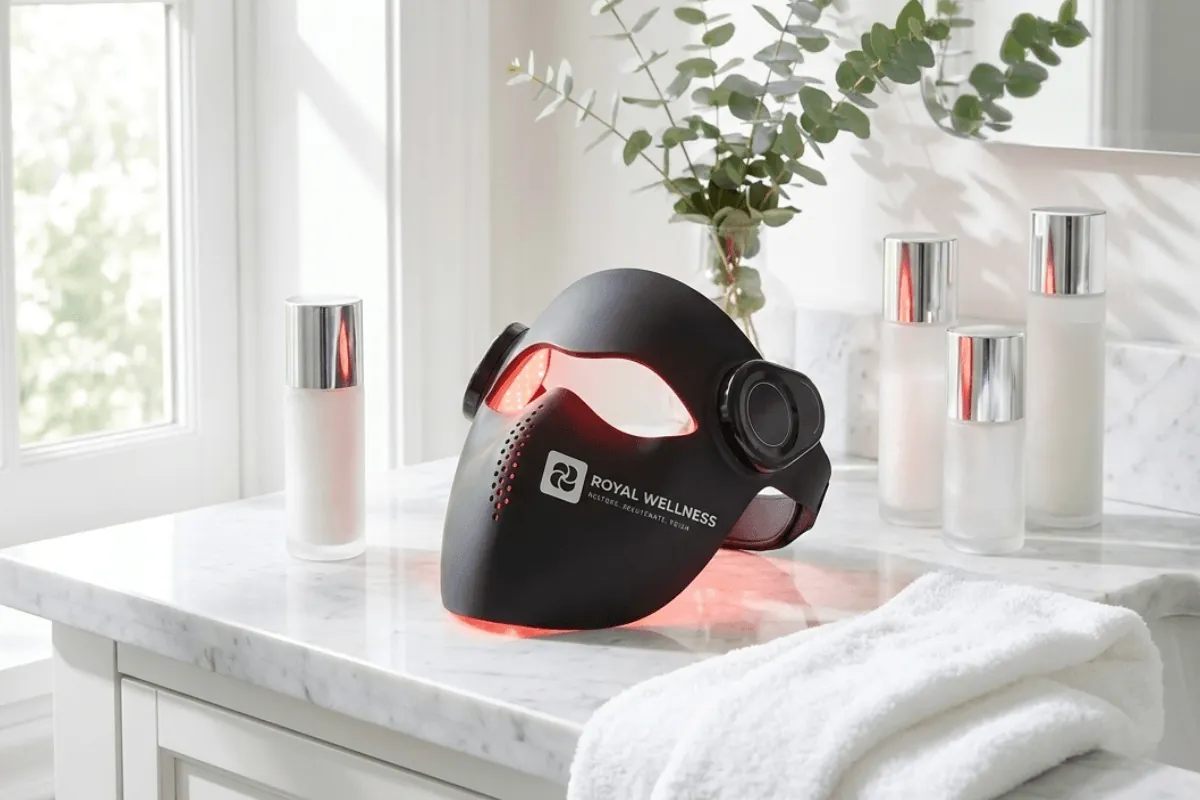
Red Light Therapy Cost: Owning a Device vs Paying Per Session
What does red light therapy cost? Compare per-session salon prices to owning a panel, see the break-even math, and how HSA/FSA fits in.
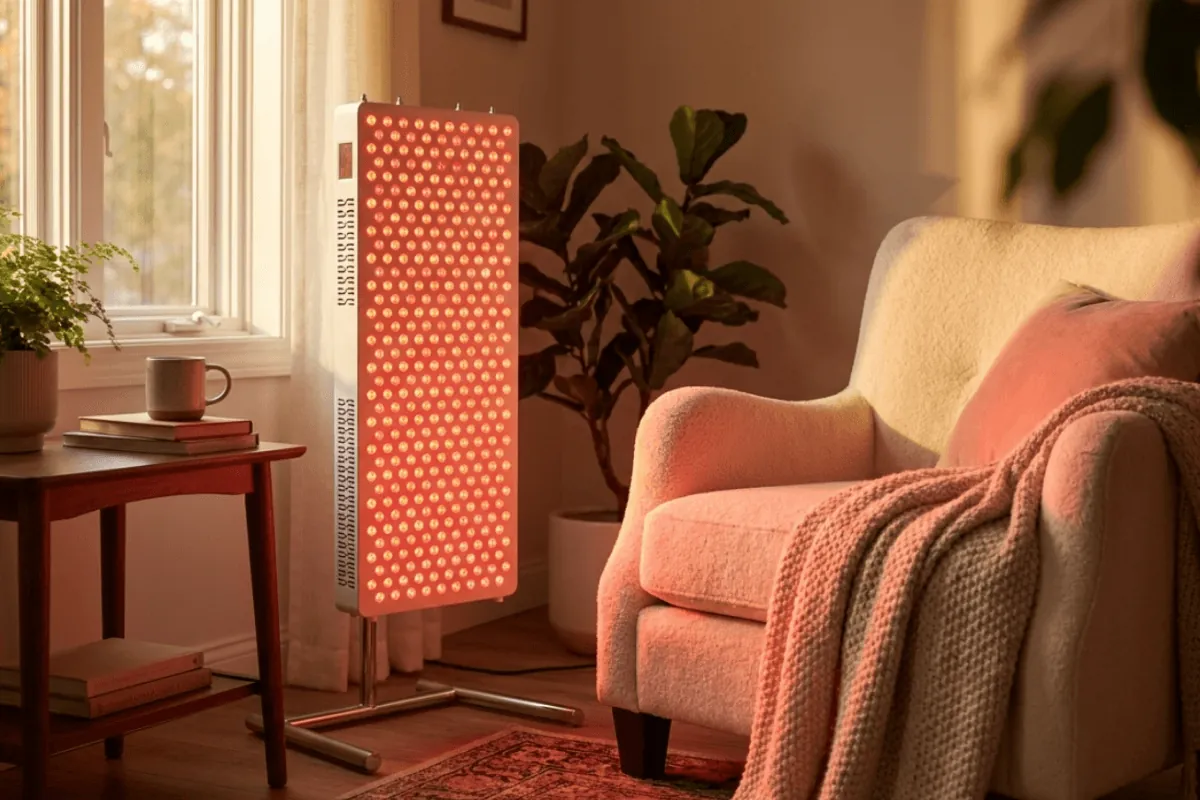
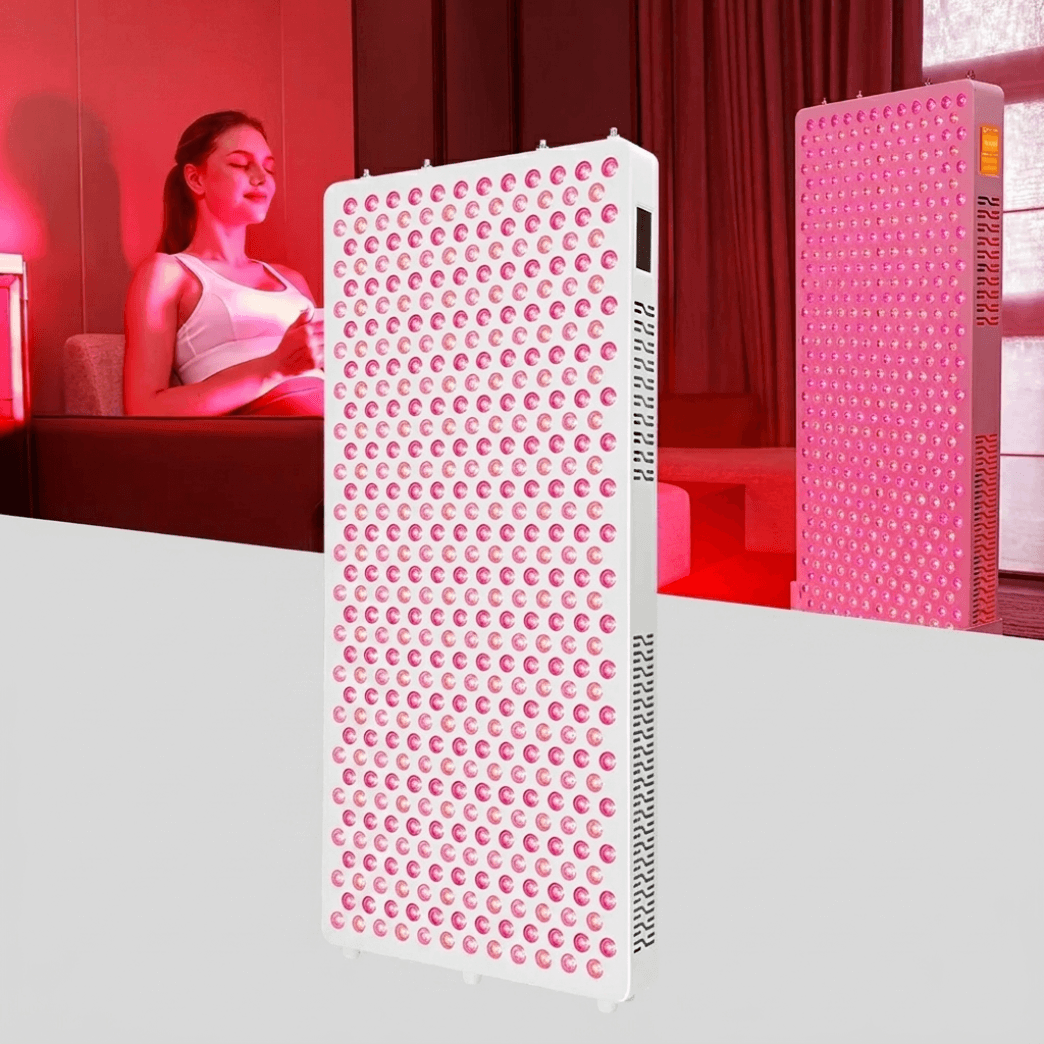
If you are trying to price out red light therapy, you have probably found a confusing spread: one studio quotes $25 a session, a med-spa quotes $200, and a home panel on the shelf costs anywhere from a few hundred to a few thousand dollars. So what does red light therapy cost, really, and which way of paying for it is the smart one for you?
Here is the short version. There are two paths. You can pay per session at a gym, salon, spa, or clinic, which runs about $25 to $60 for a standard panel and more for medical-grade beds. Or you can buy your own device once — roughly $400 to $2,000 for a home panel — and then use it as often as you like for the cost of a few dollars of electricity a year. If you plan to use red light therapy several times a week, owning almost always wins within a few months. If you will only use it occasionally, paying per session may be the cheaper, lower-commitment choice. This guide runs the actual numbers, including a break-even table, so you can decide with math instead of marketing.
The real red light therapy cost, at a glance
Red light therapy is priced in two completely different ways — per visit or per device — and comparing them fairly is the whole game. A per-session price looks small ($25 to $60) but repeats every single time you go. A device price looks large ($400 to $2,000) but you pay it once and then sessions are nearly free. The trap is comparing a single salon visit to a whole panel and concluding the panel is “expensive,” when the honest comparison is a device against all the sessions you would otherwise buy over a year or three.
Before the tables, it helps to separate the real cost buckets:
- Per-session pricing — what a studio charges for one visit. Driven by the equipment (small panel vs full-body bed), your location, and whether you buy single visits or packages.
- Membership pricing — a flat monthly fee for unlimited or discounted visits, either at a dedicated red light studio or bundled into a gym.
- Device purchase — the one-time cost of owning a panel, mask, belt, or bed.
- Running cost — electricity plus the (long) lifespan of the LEDs. For home devices this is small enough that many people forget it exists.
The rest of this article fills in real numbers for each, then puts them side by side. If you already know you want to own and just need to pick a form factor, our guide to panel vs mask vs belt covers that decision in detail.
The cost of red light therapy at home
A home red light device is a one-time purchase, and for panels the honest range runs from about $400 for a small desktop unit to roughly $2,000 for a full-body panel. Where you land depends almost entirely on coverage area — how much skin the device lights up at once — because that is what sets how quickly you can treat your whole body and how versatile the device is across goals.
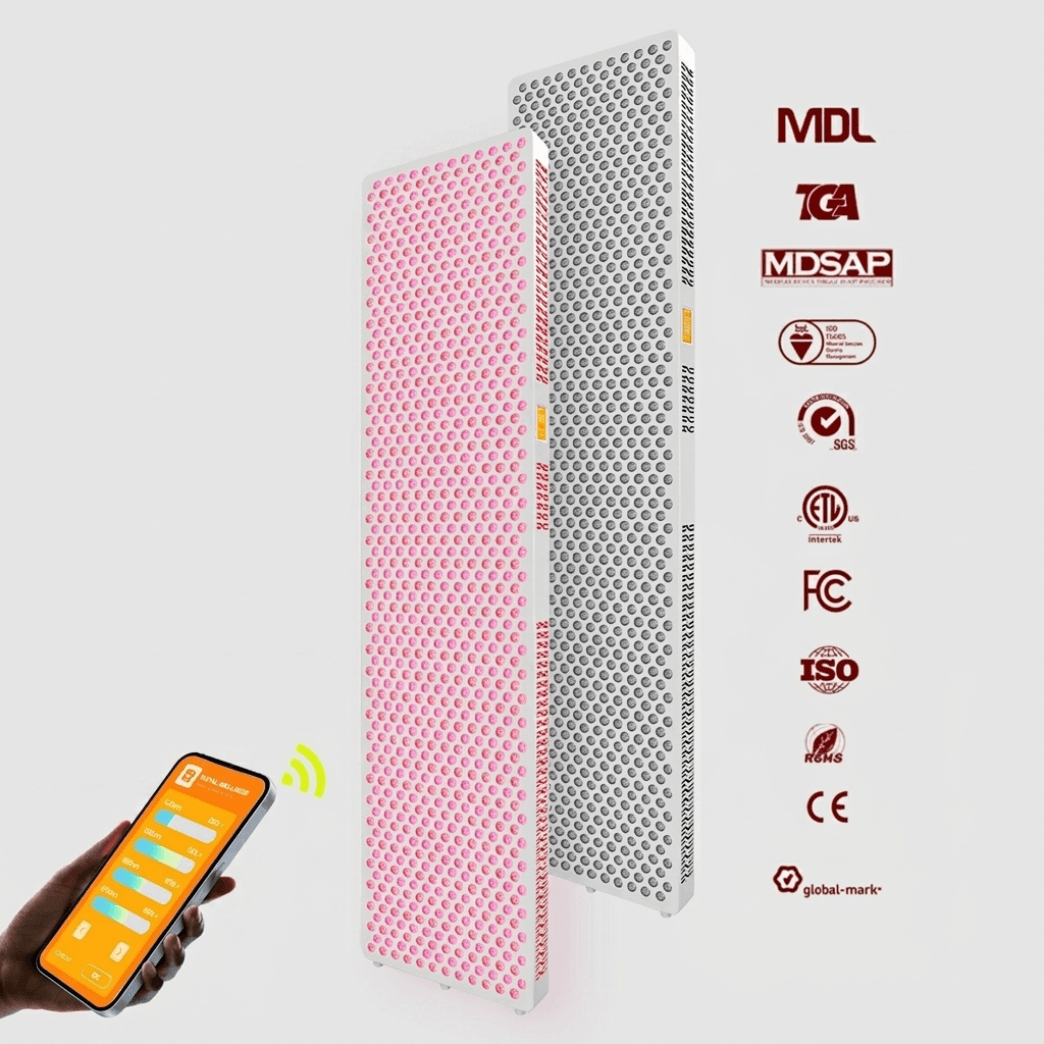
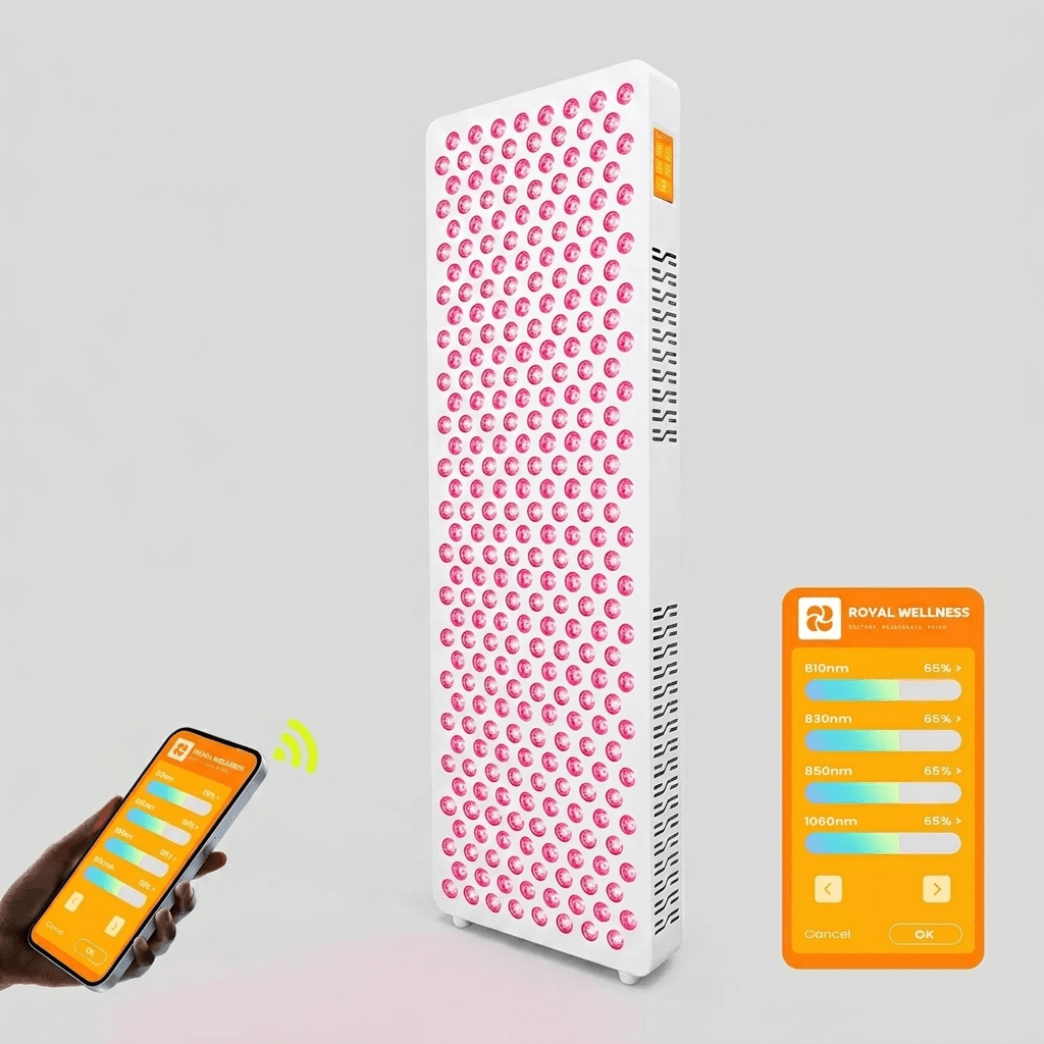
Here is how the RoyalPRO panel lineup maps to price and use case, alongside running cost. Treat these as current catalog prices; always confirm the live price before you buy.
| Device | Typical price | Coverage / best for | Cost to run per year* |
|---|---|---|---|
| RoyalPro 100 (desktop) | ~$399 | Face, hands, one small area at a time | A dollar or two |
| RoyalPro 300MAX (8W) | ~$799 | Targeted areas, small spaces | A few dollars |
| RoyalPro 600 | ~$999 | Half-body, versatile everyday home use | ~$2–$6 |
| RoyalPro 1200 | ~$1,999 | Full-body coverage in one session | ~$4–$10 |
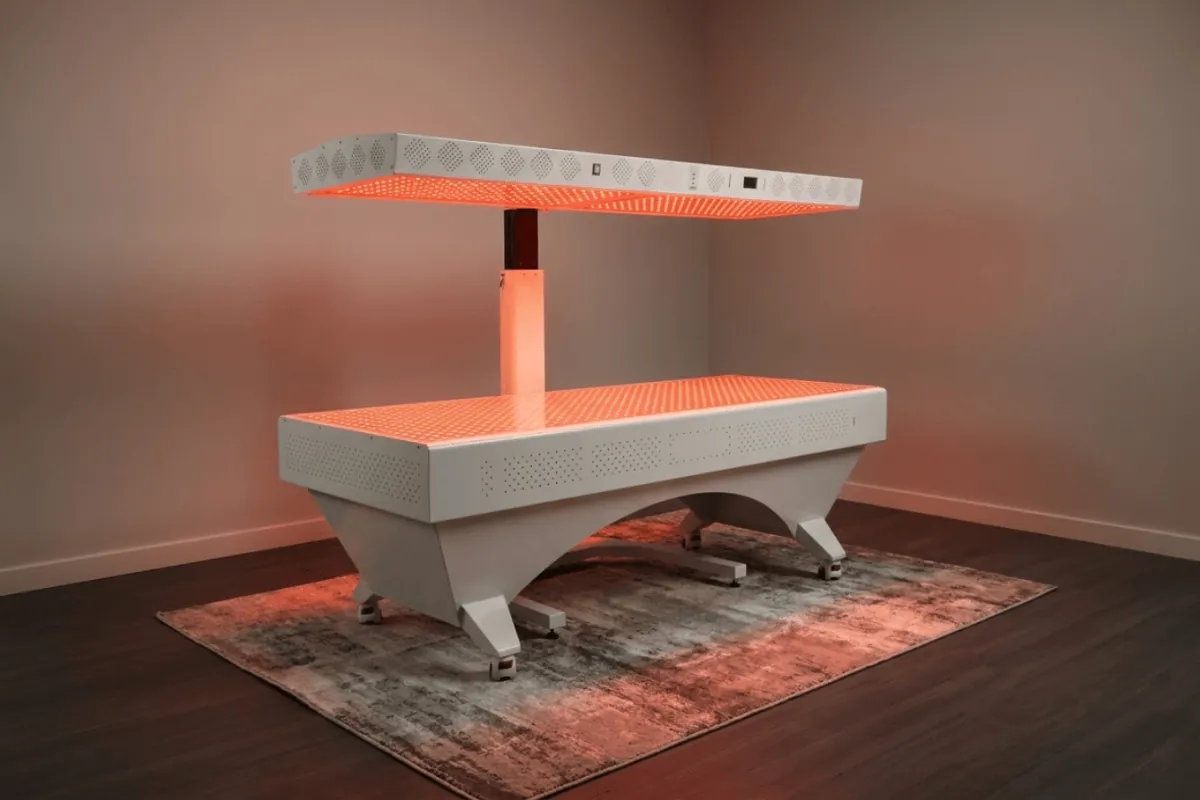
| RoyalPro2000L-B (bed) | ~$19,999 | Clinics, gyms, studios, heavy daily full-body | Commercial |
*Electricity estimate for roughly 20-minute sessions a few times a week at average U.S. rates. Quality LED arrays are rated for 50,000+ hours, so bulb replacement is rarely a near-term cost.
Two things surprise people here. First, running a panel is almost free: a typical home panel used four times a week for 20 minutes costs only a few dollars a year in electricity, with even large multi-panel home setups landing under about $20 annually. Second, the LEDs last a very long time — the 50,000-hour rating common to quality panels translates to decades of normal home use, so you are not quietly buying a device that dies in a year.
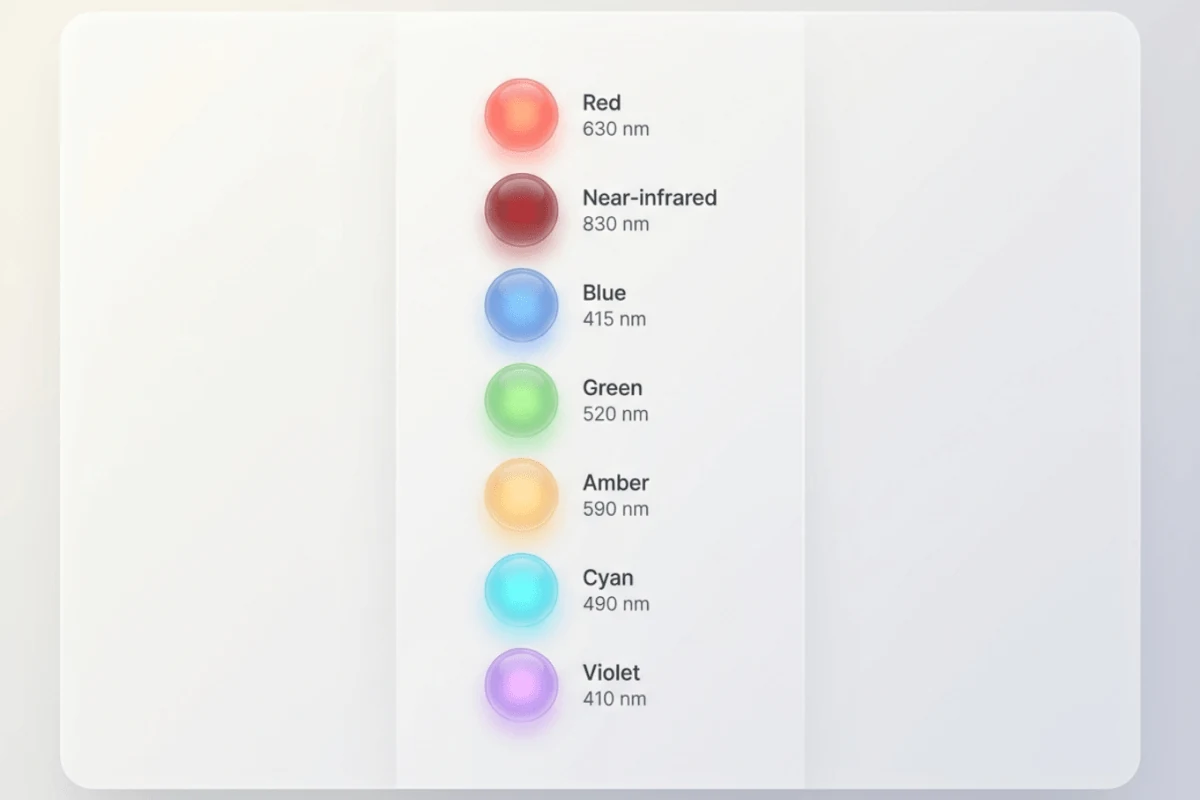
If you want the biology behind why wavelength and dose (not wattage on the box) determine whether a device actually does anything, our science page walks through the photobiomodulation mechanism de Freitas 2016, and tissue-penetration modeling shows that penetration depth increases with wavelength Ash 2017 — part of why longer near-infrared light is used to reach deeper tissue (see why 850nm penetrates deeper). The practical point for budgeting: a cheap device that skips validated wavelengths is not a bargain, it is a paperweight.
a cheap device that skips validated wavelengths is not a bargain, it is a paperweight.
For most people weighing cost against usefulness, a mid-size panel is the sweet spot. The RoyalPro 600 covers a large area, serves skin, recovery, and targeted goals from one unit, and sits at a price where the break-even against salon visits arrives fast. You can compare the full range on the panels page.
Red light therapy prices near me: sessions and memberships
A standard red light therapy panel session typically runs about $25 to $60, but what you actually pay depends heavily on the equipment and your city. Industry pricing surveys break it down roughly like this (Thervo 2026; verify current local pricing):
- Handheld or targeted sessions: about $25 to $100.
- Full-body panel sessions: about $50 to $200.
- Medical-grade / med-spa beds: about $200 to $400 for a premium full-body treatment.
Gyms and tanning-style salons with smaller panels sit at the low end; med-spas and clinics with full-body beds sit at the high end. Higher-cost-of-living cities charge more across the board, because rent, staffing, and equipment cost the studio more.
Memberships are where per-visit pricing gets interesting:
- Dedicated red light studios often sell unlimited monthly plans starting around $65 to $100 a month, which is a good deal if you go often enough to beat the single-visit price.
- Gym-bundled red light can be dramatically cheaper. Several national chains fold red light therapy into a mid-tier or premium membership — for example, a Planet Fitness Black Card–style plan (recently around $25 a month plus an annual fee — verify current pricing) includes red light access through its Total Body Enhancement booth, along with everything else you get from the gym. If you were going to pay for that gym anyway, the marginal cost of the red light perk is close to zero.
That last point matters for the honest version of this comparison: the cheapest path is not always “own a device.” If a gym you already want includes red light, that can beat buying, at least until you want daily home convenience or clinic-grade coverage.
Red light therapy cost math: buy a device vs pay per session
The break-even question is simple arithmetic: divide the device price by the per-session price, and that is how many salon visits it takes before owning is cheaper. After that point, every session on your own panel is essentially free. The only variables are how much you paid for the device and how much a session costs where you live.
Divide the device price by the per-session price, and that is how many salon visits it takes before owning is cheaper.
The table below uses a realistic salon panel session of $35 and a realistic protocol of 3 sessions per week (about 13 a month). Photobiomodulation is dose-dependent and cumulative — most skin and recovery trials ran sessions several times a week for weeks before measuring change — so a few times a week is the frequency that actually reflects how the research works Wunsch 2014.
| Device | One-time price | Salon sessions to break even* | Break-even time at 3×/week |
|---|---|---|---|
| RoyalPro 100 (desktop) | ~$399 | ~11 sessions | Under 1 month |
| RoyalPro 300MAX (8W) | ~$799 | ~23 sessions | ~2 months |
| RoyalPro 600 | ~$999 | ~29 sessions | ~2 months |
| RoyalPro 1200 | ~$1,999 | ~57 sessions | ~4–5 months |
| RoyalPro2000L-B (bed) | ~$19,999 | ~570+ sessions | Commercial / heavy use |
*At ~$35 per salon session. At $25 a session it takes more visits to break even; at $60 it takes fewer. Add a few dollars a year for electricity — negligible against the session savings.
Read the middle row the way most home buyers should: at three sessions a week against $35 salon pricing, a RoyalPro 600 pays for itself in about two months. Everything after that is savings. Even the full-body RoyalPro 1200 clears break-even in roughly a single season of consistent use.
The bed is the deliberate outlier. At about $19,999, a full-body RoyalPro2000L-B needs hundreds of equivalent sessions to justify itself as a personal purchase — which is exactly why it is built for clinics, gyms, and studios that run many clients through it, not for one household. If a bed specifically is what you are weighing, we break the numbers down in red light therapy bed cost and cover how to choose one in the red light therapy bed guide.
One-year and three-year cost of ownership
Zoom out past break-even and the gap becomes stark: over a year or three, paying per session costs multiples of what owning a single home panel does. This is the comparison that reframes a $999 panel from “expensive gadget” to “the cheap option.”
| Path | Up-front | Ongoing per year | 1-year total | 3-year total |
|---|---|---|---|---|
| Salon, 3×/week at $35 | $0 | ~$5,460 | ~$5,460 | ~$16,380 |
| Unlimited studio membership at $75/mo | $0 | ~$900 | ~$900 | ~$2,700 |
| Gym-bundled red light at ~$25/mo† | $0 | ~$300 | ~$300 | ~$900 |
| Own a RoyalPro 600 | ~$999 | ~$2–$6 | ~$1,003 | ~$1,013 |
†Only counts as a “red light cost” if you would not otherwise pay for the gym; if you already want the gym, the marginal red light cost is near zero.
A few honest takeaways from this table:
- Pay-per-visit is the most expensive path by a wide margin. At a genuine several-times-a-week cadence, single sessions run into the thousands per year.
- Owning is the cheapest path for regular users. After year one, a home panel costs almost nothing to keep using, so the three-year total barely moves.
- Memberships are the middle ground — and a bundled gym perk can undercut everything if the gym is already in your budget. That is the one scenario where not buying is clearly the frugal move.
The evidence base is worth keeping in mind when you decide how much to invest, because value only exists if the therapy does something. Photobiomodulation has the strongest support for skin rejuvenation Hernandez-Bule 2024, muscle performance and recovery Vanin 2018, and a range of skin and healing applications Avci 2013 — all of which reward consistent, repeated use, which is precisely what owning makes affordable.
Photobiomodulation has the strongest support for skin rejuvenation.
Does insurance cover red light therapy?
Assume the answer is no: traditional health insurance generally does not cover red light therapy sessions or devices, treating them as wellness rather than reimbursable medical care. There are narrow exceptions where a provider prescribes low-level light therapy for a specific diagnosed condition, but you should not budget around coverage. Before counting on any reimbursement, confirm it in writing with your insurer.
The more useful angle for most people is tax-advantaged health spending:
- HSA and FSA funds often can be used for red light therapy — but usually only when its primary purpose is to treat, mitigate, or prevent a diagnosed medical condition, not general wellness. Under IRS rules for medical expenses (IRS Pub. 502), qualifying use typically requires a Letter of Medical Necessity from a healthcare provider tying the device to a condition such as a diagnosed skin disorder, chronic musculoskeletal pain, or a documented recovery need.
- General goals do not qualify on their own. Wanting smoother skin, better sleep, or more energy without an underlying diagnosis usually will not meet the IRS standard.
- Rules and plan administrators vary. Some plans and third-party services streamline the Letter of Medical Necessity process; others are stricter. Check with your specific plan administrator and provider before you buy, and keep documentation.
Bottom line on payment method: insurance is unlikely to help, but pre-tax HSA/FSA dollars frequently can, which effectively discounts a qualifying device by your marginal tax rate. That can meaningfully shorten the break-even math above — just get the paperwork right first.
When paying per session (or a bed) still makes sense
Owning is not automatically right for everyone — per-session and membership models genuinely win in a few situations, and it is worth being honest about them. Buying a device is the cheaper long-run choice only if you actually use it regularly.
Paying per session or joining a membership is the smarter move when:
- You are occasional, not regular. If you would realistically go once every week or two, per-visit or a cheap bundled membership can cost less than a device that sits idle.
- You are still testing the habit. Red light therapy rewards consistency, and results are gradual Wunsch 2014. Trying a studio for a month is a low-risk way to learn whether you will stick with it before spending on hardware.
- You want a clinic-grade full-body bed without the outlay. A commercial RoyalPro2000L-B bed delivers whole-body coverage far beyond a home panel, and paying per session at a studio that owns one lets you access that experience without a five-figure purchase. If you are the business owner considering buying that bed, the red light therapy bed cost breakdown is the place to start.
- Space or lifestyle rules out a home unit. Not everyone has room for a panel or the routine to use it; a studio you pass daily can beat a device in a closet.
For nearly everyone else — anyone who will use red light several times a week for skin, recovery, or targeted goals — a home panel is the cost winner, and a versatile mid-size unit like the RoyalPro 600 is the most defensible buy.
Owning a home panel — pros
- After break-even, every session on your own panel is essentially free
- Runs on only a few dollars of electricity a year
- Quality LEDs are rated 50,000+ hours — decades of normal home use
- The cheapest path for regular users
Cons
- Higher up-front cost, roughly $400 to $2,000 for a panel
- Only the cheaper choice if you actually use it regularly
- Needs the space and routine to avoid becoming a device in a closet
- A bundled gym perk can undercut it if the gym is already in your budget
Safety and who should check with a clinician first
Red light therapy is generally well tolerated and non-UV, but a few groups should get medical clearance before starting, and cost should never tempt you into skipping that step. More light is not better — the response is biphasic, so an appropriate dose helps while an excessive one can work against you Hamblin 2017. Follow your device or studio’s distance and timing guidance rather than improvising longer, closer sessions.
Talk to a qualified clinician first if you:
- Are pregnant — safety data is limited, so get provider clearance.
- Take photosensitizing medication — some antibiotics, diuretics, certain antidepressants, and acne drugs such as isotretinoin increase light sensitivity.
- Use prescription retinoids on the treated skin, or have active melasma or another pigment condition that light and heat can aggravate.
- Have a photosensitive condition such as lupus or porphyria, or a history of light-triggered rashes.
- Have an eye condition — always use the eye protection supplied and never stare into the LEDs, especially with bright panels or facial masks.
None of these are reasons the therapy is unsafe for most people; they are reasons to confirm it is right for you before spending on sessions or a device.
The bottom line
Red light therapy costs one of two ways: a little at a time forever (about $25 to $60 a session, or $65 to $100 a month for a membership), or once up front for a device that then runs on a few dollars of electricity a year. For anyone who will use it regularly, the math is not close — at three sessions a week, a versatile home panel pays for itself in roughly two months and saves thousands over three years. Insurance almost certainly will not chip in, but HSA or FSA dollars often can with the right documentation, which sweetens an already strong case for owning.
Be honest with yourself about frequency, though. The whole cost advantage of owning depends on actually using the device, and results are gradual and cumulative, not instant. If you know you will show up several times a week, the limitation of pay-per-session pricing — that it never stops — is exactly what a one-time purchase closes. A mid-size, do-everything panel like the RoyalPro 600 covers skin, recovery, and targeted goals from one unit at a price that clears break-even fast; if you need whole-body coverage in one session, size up to the RoyalPro 1200, and if you are outfitting a clinic or gym, the RoyalPro2000L-B bed is built for high-volume use. Not sure which fits your goals and budget? Take the quiz for a two-minute recommendation, or browse the full lineup in the shop.
- There are two ways to pay for red light therapy: per session at a salon, spa, or gym (about $25 to $60 for a standard panel session, more for medical-grade beds), or once for your own device (roughly $400 to $2,000 for a home panel).
- Because a home panel costs about $2 to $6 a year to run and quality LEDs are rated for 50,000+ hours, owning usually beats paying per session within a few months if you use it several times a week.
- At a realistic 3 sessions a week, a versatile mid-size panel like the RoyalPro 600 pays for itself in roughly two months versus salon pricing, then the sessions are essentially free.
- Traditional health insurance generally does NOT cover red light therapy. HSA and FSA funds often can, but usually only with a Letter of Medical Necessity tied to a diagnosed condition (verify with your plan and provider).
- Memberships change the math: an unlimited studio plan runs about $65 to $100 a month, but a red light perk bundled into a gym you already pay for can be the cheapest path of all.
- A per-session salon or a full-body bed still makes sense for occasional users, people who want a clinic-grade bed without the $20,000 outlay, or anyone testing whether they will stick with it.
FREQUENTLY ASKED
How much does red light therapy cost?
It depends on whether you pay per visit or buy a device. A standard red light therapy session at a gym, salon, or spa runs about $25 to $60 for a panel, while medical-grade full-body beds at a med-spa can run $50 to $200 or more per session. Owning a home panel is a one-time cost of roughly $400 to $2,000, plus only a few dollars a year in electricity. If you plan to use it several times a week, buying is almost always cheaper over the first year. Prices vary by region and equipment, so verify current pricing locally.
How much is red light therapy per session near me?
It varies widely by equipment and location. A standard panel session at a gym or salon typically runs about $25 to $60, small handheld or targeted sessions about $25 to $100, and full-body panel sessions roughly $50 to $200. Med-spa and clinical beds are higher again, often around $200 to $400 for a premium full-body treatment. Because pricing moves constantly, always confirm the current rate at the specific studio near you.
Is it cheaper to buy a red light therapy device or go to a salon?
For regular users, buying is almost always cheaper. At three salon sessions a week (about $35 each), you would spend roughly $455 a month, so a versatile $999 home panel pays for itself in about two months and then costs only a few dollars a year to run. Paying per session or a monthly membership can be cheaper if you only go occasionally, or if red light is already bundled into a gym membership you would pay for anyway.
Does insurance cover red light therapy?
Generally, no. Traditional health insurance typically does not cover red light therapy devices or sessions, treating them as wellness rather than covered medical care. There are narrow exceptions when a provider prescribes it for a specific diagnosed condition, but you should assume it will not be covered and verify directly with your insurer before counting on reimbursement.
Is red light therapy HSA or FSA eligible?
Often yes, but usually with documentation. Under IRS rules, red light therapy can qualify for HSA or FSA funds when its primary purpose is to treat, mitigate, or prevent a diagnosed medical condition rather than general wellness, and most purchases require a Letter of Medical Necessity from a healthcare provider. General goals like smoother skin or more energy without an underlying condition usually do not qualify. Check with your plan administrator and a provider before you buy.
How much does it cost to run a red light panel at home?
Very little. Quality panels draw a modest amount of power for short sessions, so a typical home panel used about 20 minutes several times a week costs only a few dollars a year in electricity, with most home setups landing somewhere between about $2 and $20 annually depending on panel size and local rates. The LEDs themselves are rated for 50,000+ hours, so replacement is rarely a near-term cost.
Is red light therapy worth the cost?
That depends on your goals and how consistently you will use it. The clinical evidence for photobiomodulation is strongest for skin (collagen and wrinkles), muscle recovery, and some joint and pain applications, and results are gradual and require regular use. If you will use a device several times a week for goals the research supports, the per-session cost of ownership drops to almost nothing over time, which is where the value is. If you would only use it occasionally, paying per session or trying a membership first is the lower-risk way to find out.
REFERENCES
- 1. Thervo. How Much Does Red Light Therapy Cost? Consumer pricing survey. 2026. (Market pricing; verify current local pricing.) Thervo 2026
- 2. Internal Revenue Service. Publication 502: Medical and Dental Expenses (for use in preparing returns). U.S. Department of the Treasury. IRS Pub. 502
- 3. Hamblin MR. Mechanisms and applications of the anti-inflammatory effects of photobiomodulation. AIMS Biophys. 2017;4(3):337-361. doi:10.3934/biophy.2017.3.337 PMC5523874
- 4. Wunsch A, Matuschka K. A controlled trial to determine the efficacy of red and near-infrared light treatment in patient satisfaction, reduction of fine lines, wrinkles, skin roughness, and intradermal collagen density increase. Photomed Laser Surg. 2014;32(2):93-100. doi:10.1089/pho.2013.3616 PMC3926176
- 5. Vanin AA, Verhagen E, Barboza SD, Costa LOP, Leal-Junior ECP. Photobiomodulation therapy for the improvement of muscular performance and reduction of muscular fatigue associated with exercise in healthy people: a systematic review and meta-analysis. Lasers Med Sci. 2018;33(1):181-214. doi:10.1007/s10103-017-2368-6 PMID 29090398
- 6. de Freitas LF, Hamblin MR. Proposed mechanisms of photobiomodulation or low-level light therapy. IEEE J Sel Top Quantum Electron. 2016;22(3):7000417. doi:10.1109/JSTQE.2016.2561201 PMC5215870
- 7. Avci P, Gupta A, Sadasivam M, et al. Low-level laser (light) therapy (LLLT) in skin: stimulating, healing, restoring. Semin Cutan Med Surg. 2013;32(1):41-52. PMC4126803
- 8. Hernandez-Bule ML, Naharro-Rodriguez J, Bacci S, Fernandez-Guarino M. Unlocking the power of light on the skin: a comprehensive review on photobiomodulation. Int J Mol Sci. 2024;25(8):4483. doi:10.3390/ijms25084483 PMC11049838
- 9. Ash C, Dubec M, Donne K, Bashford T. Effect of wavelength and beam width on penetration in light-tissue interaction using computational methods. Lasers Med Sci. 2017;32(8):1909-1918. doi:10.1007/s10103-017-2317-4 PMC5653719
ABOUT THE AUTHORS
Our team reviews the peer-reviewed literature on red and near-infrared light therapy and translates it into honest, practical guidance — no hype, just what the evidence actually supports.